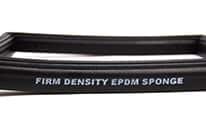
Foam Pads for Vacuum Lifters
In this case study, you’ll learn how Elasto Proxy helped a stone countertop manufacturer solve a material handling challenge. By applying our technical design, compound selection, and custom fabrication expertise,…

In this case study, you’ll learn how Elasto Proxy helped a stone countertop manufacturer solve a material handling challenge. By applying our technical design, compound selection, and custom fabrication expertise,…
 In this case study, you’ll learn how Elasto Proxy applied its expertise in seal design, compound selection, custom fabrication and logistics to supply rubber door seals for passenger rail cars. How can we help you solve your sealing and insulation challenges?
Manufacturers of mobile equipment need to source rubber parts that meet all of their application and business requirements. When a manufacturer of mass transit vehicles needed to replace the door seals on passenger trains, Elasto Proxy applied its expertise in technical design, compound selection, custom fabrication, and logistics. In solving this sealing challenge, Elasto Proxy improved the original seal design and helped the mobile equipment manufacturer meet the urgent needs of an important customer.
As the rail car manufacturer explained to us, the existing seals on some passenger cars had become worn and were leaking. The manufacturer’s customer, a major passenger rail service in the Northeastern United States, wanted to solve this problem quickly. In turn, Elasto Proxy needed to create new door seals in less than two weeks and send them to Philadelphia for installation. Since the “test train” for these replacement seals would remain at the station for less than 24 hours, ease-of-installation was also important. (more…)
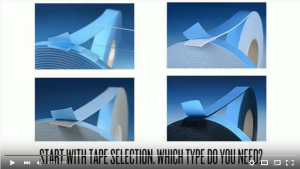 Acrylic foam tapes provide durable bonding, superior sealing, and effective insulation. Learn about the advantages of these PSA tapes, how technical buyers and product designers select them, and how different types of acrylic foams tapes are used with infrastructure and mobile equipment.
Acrylic foam tapes provide dependable, cost-effective bonding, sealing, and insulation for infrastructure and mobile equipment. These double-sided industrial tapes have an acrylic foam core and use a high-strength pressure-sensitive adhesive (PSA) with a release liner. The foam core distributes stress evenly, and the PSA provides permanent attachment without metal fasteners, messy liquid adhesives, or time-consuming setup or curing processes. Are acrylic foam tapes right for your application? Let’s take a look. (more…)
 For consumers, Cyber Monday is one of the biggest on-line shopping days of the year. For industrial buyers, the real deals are about value – and that means custom fabrication. Learn how Elasto Proxy adds value to your projects with custom sealing and insulation.
Ten years ago, a Senior Vice President for the National Retail Federation coined a phrase that describes what’s become an international marketing sensation. Cyber Monday, the marketing term for the first Monday after U.S. Thanksgiving, is now one of the biggest on-line shopping days of the year. The day that Ellen Davis named is aimed mainly at consumers, but industrial buyers like a bargain, too. Price is important, of course, but so are features. Yet neither matter if a product doesn’t meet your needs.
Custom fabrication isn’t the same as ordering an off-the-shelf product. It’s not like buying off-the-rack clothes on Black Friday, or ordering a blender on-line on Cyber Monday. Yes, Elasto Proxy has a down-loadable catalog of extruded rubber products. You can buy lengths of standard extrusions from us, and we invite you to learn more about all of our product groups – including molded parts. Where Elasto Proxy really adds value, however, is by solving your specific sealing and insulation challenges. (more…)
Happy Thanksgiving, everyone! Here at Elasto Proxy’s world headquarters in Boisbriand, Quebec, the leftovers are long gone from our Canadian Thanksgiving, which we celebrated on October 12 this year. Now it’s time for our Simpsonville, South Carolina office to enjoy a well-deserved holiday. Manufacturers have much to be thankful for this year, but consumer behavior will soon capture most of the headlines. What, if anything, can industrial buyers and design engineers learn? (more…)

When you were a kid, did you play with Rock ‘Em Sock ‘Em Robots? Part toy and part game, this childhood classic features two boxers – both robots – that are mechanically manipulated by the players. The Red Rocker and the Blue Bomber have been hitting each other since the 1960s, but today’s version of this simulated boxing match features less metal and more plastic. Plastics are generally lighter and cheaper than metals, but is plastic really tough enough for robots – even toy ones? Is rubber right for robots, too?
The answers may surprise you. (more…)
Custom fabrication is a type of manufacturing that turns stock items or materials into finished parts or products. Typically, these items or materials are made of rubber, plastic, metal, concrete, or wood, and are supplied in standard forms such as sheets, rolls, tubes, rods, billets, bars, extrusions, and slabs. Custom fabricators use many different types of production equipment to cut materials to size, and some companies also offer value-added services such as joining and assembly.
A custom fabricator’s capabilities determine whether parts and products can be supplied in low, medium, or high-volume quantities. Global companies like Elasto Proxy have a network of warehouses, and can release custom fabricated products according to customer sales forecasts. We can also ship finished products on demand. Custom fabrication thus adds flexibility to the manufacturing supply chain, but does it add value to your operations? Industrial buyers and product designers need to consider a variety of factors, especially during vendor selection. (more…)
Custom rubber gaskets that are used in drinking water systems need to be free from chemicals that can leach into water supplies and affect human health or cause unpleasant tastes and odors. Additives such as plasticizers, antioxidants, and solvents are designed to impart desirable material properties, but can react unfavorably with water treatment chemicals such as chlorine. Leachates from rubber gasket materials can also affect the formation of fungi, algae, and bacteria.
Technical buyers and product designers whose organizations specialize in drinking water systems are familiar with these problems already. Building and construction companies also need to understand the risks – and the requirements for mitigating them. By choosing a gasket fabricator that understands requirements such as NSF/ANSI 61, you can source the right materials and receive high-quality plumbing components that support your projects. (more…)
Splicing joins lengths of extruded rubber to create elastomeric products such as hollow O-rings, low-closure force seals, and large-diameter profiles that are too expensive to mold. Splicing methods vary, and choices include film splicing, cold bonding, C-press injection molding, and vulcanizing. By working with an experienced gasket fabricator, you can select the right splicing technique for your application.
Each splicing method offers advantages, but film splicing creates strong bonds without adhesives. This joining method also supports fast cycle times and creates strong corners that won’t crack. Film splicing isn’t new, but it’s important to understand how infrared splicing compares to traditional hot splicing. For larger seals, more durable splices, and an alternative to molded parts, IR splicing is a strong choice. (more…)
Mass transit systems need to operate efficiently while ensuring passenger safety and controlling costs. Bus accidents, train derailments, and subway delays capture the headlines, but the mass transit industry must manage other risks, too. Fires within a cabin, vehicle, or passenger car can do more than burn seats, wall panels, and other interior components. Smoke from combustion reactions can obscure escape routes. Burning materials that release toxic gases can also overwhelm passengers and employees, too. (more…)