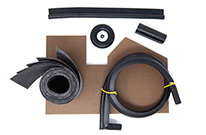
Sponge rubber gaskets seal out dust, water, and air. They also absorb shock, reduce vibration, and provide thermal or acoustic insulation. Because sponge rubber has a cellular structure, it’s easier to compress than solid rubber. Consequently, sponge rubber is used for sealing enclosures with uneven mating surfaces, low bolt loads, or lightweight doors.
Yet not all sponge rubber materials behave the same way.
Engineers have a choice of compounds, including EPDM, neoprene, nitrile, silicone, and polyurethane. Importantly, engineers can also specify sponge rubber that has a closed cell or open cell structure. There are applications for both, but making the right choice requires understanding some key performance characteristics.
This article from Elasto Proxy explains the structural differences between closed cell and open cell sponge. It also compares performance properties and applications. You’ll also learn about fabrication methods. Keep reading to learn more and contact Elasto Proxy for sponge rubber gaskets backed by added-value services like design reviews and help with compound selection.
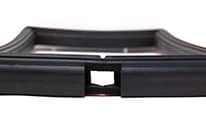
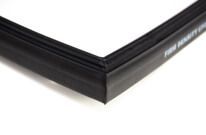
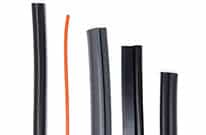
Elasto Proxy fabricates a variety of sponge rubber profiles into finished gaskets.
Understanding Cellular Rubber Structures
Sponge rubber contains internal cells that are formed during material manufacturing. Depending on their structure, these cells are either open or closed.
Closed Cell Sponge Rubber
Closed cell sponge rubber contains individual cells that are separated from each other. In other words, the cells aren’t connected. Because air and liquids can’t readily pass between these walled-off pockets, closed cell gaskets keep out fluids, dust, and environmental contaminants.
Open Cell Sponge Rubber
Open cell sponge gaskets contain individual cells that are interconnected. They still have walls, but these walls are passageways through which fluids (including air) can pass when the gasket is uncompressed. Under compression, however, open cells press together to slow or resist the movement of fluids.
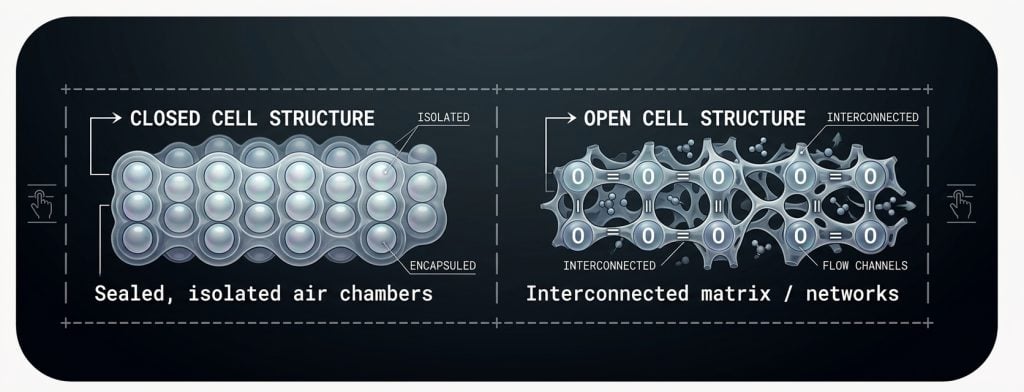
Closed cell sponge and open cell sponge have different structures. Source: Google Gemini.
Key Performance Characteristics
Deciding whether you need closed cell or open cell materials requires matching your application requirements to key performance characteristics.
Liquid Absorption and Weather Resistance
- Closed cells resist the passage of water. Because the cells don’t connect, water can’t wick through the gasket. This makes closed cell sponge a good choice for outdoor enclosures, automotive weather stripping, and doors exposed to rain, sunlight, or washdowns.
- Open cells are porous. Unless the gasket is compressed or sealed with an outer skin, open cells will absorb water, liquids, and oils. Consequently, open cell gaskets aren’t the best choice for water sealing. Instead, they’re a good choice for dust filtration and vibration dampening.
Compression Deflection and Firmness
- Closed cells contain a trapped gas (air) that makes them more difficult to compress. As a result, closed cell sponge usually has higher deflection values than open cell sponge with the same density (i.e., soft, medium, or firm).
- Open cells also contain air, but the air within them isn’t trapped. When a gasket is compressed, the air readily escapes through open passageways. This allows open cell sponge gaskets to compress under minimal clamping force.
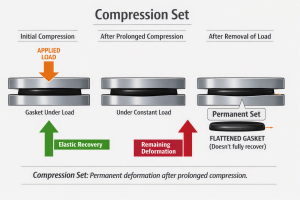
Compression Set and Recovery
- Closed cells have strong rebound memory under repeated cycling, provided that the gasket isn’t compressed beyond its recommended limits. Over time, excessive compression can rupture cell walls and prevent the gasket from returning to its original dimensions.
- Open cells have excellent long-term resistance to compression set because air flows freely without the buildup of pressure inside cellular walls. This provides cushioning, padding, and the ability to conform to irregular surfaces under low compressive force.
Acoustic Attenuation and Thermal Insulation
- Closed cells contain trapped pockets of air – a substance with low thermal conductivity. This makes them effective thermal insulators. Closed cells also provide a barrier against high-frequency sound transmissions, such as from ultrasonic welding or cleaning.
- Open cells trap and dissipate sound energy. Often, they’re used to absorb sounds inside generator enclosures and HVAC ducting. Open cell sponge is used with mid-to-high frequencies but is less effective against low frequency noise such as from diesel engines.
Elasto Proxy also converts sponge rubber sheets into finished products.
Fabricating Sponge Rubber Materials into Custom Products
Elasto Proxy distributes sponge materials, but we also fabricate rubber sheets and profiles into finished products that arrive ready-to-install. This includes sponge rubber gaskets for environmental sealing and custom products for thermal, acoustic, or thermal-acoustic insulation.
Water Jet Cutting
Elasto Proxy uses water jet cutting equipment to slice through sponge materials without tooling. Unlike die cutting, which can crush or deform soft sponge edges, water jet cutting makes clean cuts without damaging pressure. Because there isn’t a die to wait for or pay for, water jet cutting is a great choice for quick-turn prototypes and low-to-medium volume production runs.
Lamination
Some applications pose challenges that a single material can’t solve. That’s why Elasto Proxy laminates sponge rubber to other materials, including mass loaded vinyl – a sound barrier. We can also laminate cellular rubber to sound absorbing or sound dampening materials, and to metal foils that reflect radiant heat.
Pressure Sensitive Adhesives (PSA)
To simplify product assembly, Elasto Proxy can apply PSAs with release liners to sponge rubber products. For example, we can apply PSA tapes to sponge rubber profiles that we cut to length with our water jet equipment. Your installers just need to peel back the protective liner and press the custom gasket in place. There’s no messy glue or time-consuming cleanups.
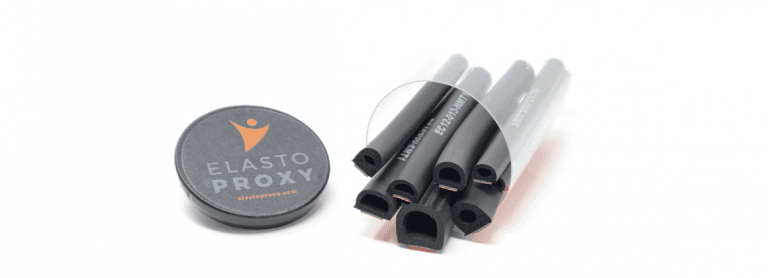
Click the image above to request Elasto Proxy’s Sponge Sample Kit.
Ask Elasto Proxy for Custom Sponge Gaskets
Deciding between closed cell and open cell sponge gaskets involves balancing sealing performance, compression force, temperature exposure, and acoustic requirements. Whether you need closed cell door seals or open cell acoustic insulation, Elasto Proxy is the rubber distributor and fabricator that does more.
In addition to custom fabrication services like water jet cutting, lamination, and PSA backings, we offer valued added services like design reviews and help with material selection. We can also simplify your operations by buying and storing all the sponge rubber materials you need in our warehouses and then fabricating products on demand or in response to your sales forecasts.
Ready to learn more?