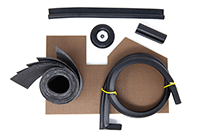
Rubber floor mats for mobile equipment protect cabin floors from damage and operators from slip-and-fall hazards. Rubber flooring that’s laminated to acoustic insulation also absorbs noise from the engine compartment, which is often directly below the cab where the operator sits. Rubber matting can even be used as a kick-plate to protect cabin walls from contact with an operator’s boots.
For mobile equipment manufacturers, choosing the right type of cabin flooring is an important design consideration. The metal floors that are used inside a cab are durable, but operators track mud, snow, dirt, and water inside. Rubber floor mats can protect these metal surfaces from rust, corrosion, and scratching. Sheet metal flooring can become slippery, but rubber surfaces can offer surer footing.
As manufacturers are discovering, rubber floor mats are part of a complete cabin solution that promotes operator safety and equipment performance. By understanding how rubber flooring is designed and made, manufacturers can determine if a custom-fabricated solution is the right choice. For starters, however, engineers may want to compare rubber to other flooring materials. (more…)

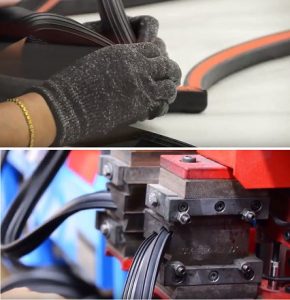 Cold bonding for finished gaskets joins cut lengths of rubber without the use of heat. This bonding technique isn’t performed under low-temperature conditions but is manual process that requires a brush and glue. By contrast, injection molding is a semi-automated process that uses a C-press machine with a heated barrel, metal plates, and tons of pressure. To join cut lengths, uncured rubber is used.
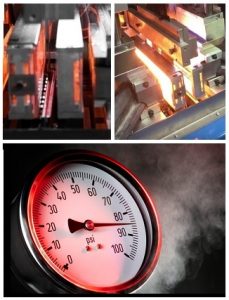 Hot splicing uses heat, pressure, and a film splice to join the ends of rubber profiles into bonded gaskets. This joining technique uses either a conventional heating source or infrared (IR) light and polyethylene (PE) film. Hot splicing creates strong bonds at the molecular level and generally provides better results than vulcanization, a bonding technique that uses uncured rubber instead of a film splice.
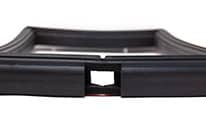
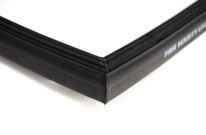
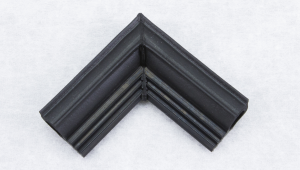 Rubber profiles come in lengths that are cut-to-size and fabricated into finished gaskets. Examples include picture frame or bezel gaskets, O-rings, and gaskets with rounded corners.
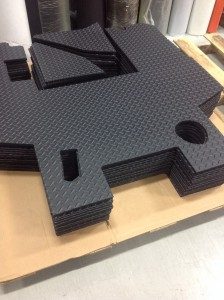 Rubber floor mats for mobile equipment protect cabin floors from damage and operators from slip-and-fall hazards. Rubber flooring that’s laminated to acoustic insulation also absorbs noise from the engine compartment, which is often directly below the cab where the operator sits. Rubber matting can even be used as a kick-plate to protect cabin walls from contact with an operator’s boots.
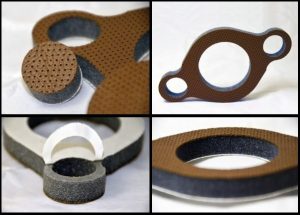 Custom cab insulation absorbs sound and provides a finished appearance to mobile equipment interiors. This acoustic insulation can be cut by hand and applied with spray adhesives, but that process is expensive, wasteful, and even hazardous to human health. Plus, manual cutting can result in cabin insulation that’s unappealing. Buyers who see mis-cuts may question the quality of your overall equipment design.
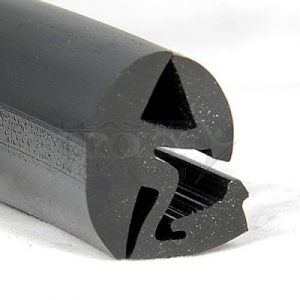 Window channels are rubber gaskets that hold window glass in place and help to secure window frames. They also eliminate rattling and provide protection against wind, water, dust, and debris. Applications for window channels include mobile equipment, defense, medical and health, stainless steel and food equipment, infrastructure, and aerospace.
 Industry 4.0 is a catchphrase and buzzword that you can no longer afford to ignore. This fourth phase of the Industrial Revolution isn’t just about the increased digitization of manufacturing. It’s not just about advances in automation either. Industry 4.0 could change how your company competes and whether or not you’ll continue to win. Industry 4.0 isn’t just about technology. It’s about profitability.
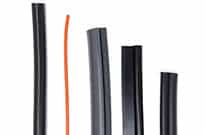
 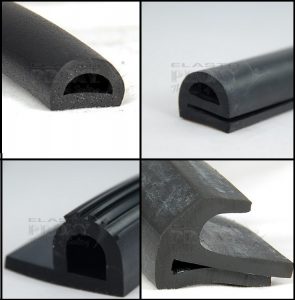 There are four common shapes for extruded rubber seals. Do you know which shape is the right choice for your gasket application? Engineers and seal designers can choose P-shapes, D-shapes, E-shapes, and lip seals. Purchasing agents can either order cut lengths or buy spliced gaskets.