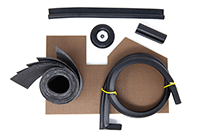
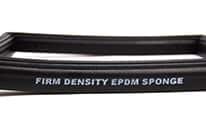
Seal Rounded Corners by Starting with These Three Measurements

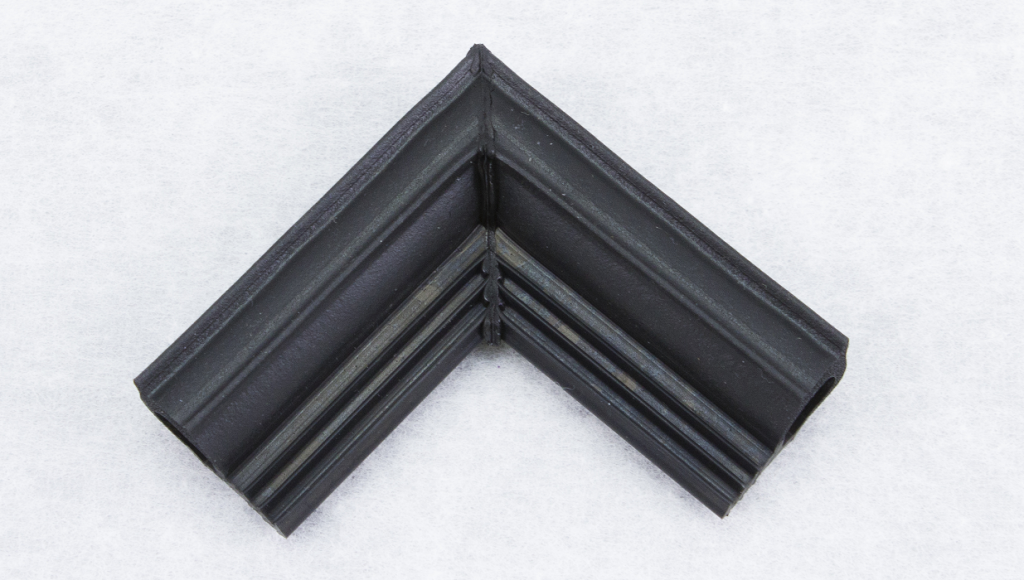
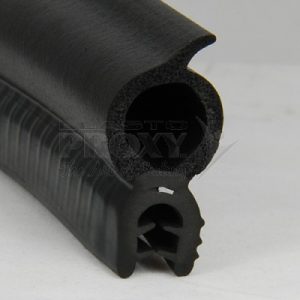
Seal Rounded Corners with Bulb Trim Seals Do you need to seal rounded corners against wind, water, dust, or dirt? Bulb trim seals are industrial rubber products that provide sealing and insulation for machine doors, vehicle hatches, and equipment enclosures. They’re designed to seal rounded corners and have separate bulb and retainer sections. Each of these sections can use a different material and have a different durometer or hardness.
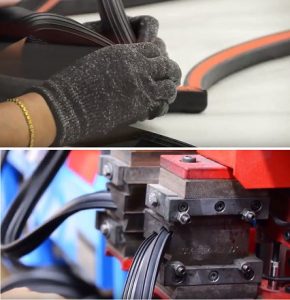
With bulb trim, the bulb section compresses to form a seal when the door, hatch, or enclosure is closed. The trim or retainer section attaches to a flange or substrate. To choose bulb trim for your application, you need to specify the bulb size, bend radius, and flange thickness. By choosing the right bulb size, you can avoid over-compression. The right bend radius and flange thickness help to avoid kinking and leakage. (more…)

Continue ReadingSeal Rounded Corners by Starting with These Three Measurements

What’s in the Elasto Bag? Sealing and Insulation Samples for Mobile Equipment

Do you need thermal, acoustic, or thermal-acoustic insulation for forestry, mining, construction, or other types of mobile equipment? Maybe you need cabin flooring or floormats instead. The Elasto Bag, a…

Continue ReadingWhat’s in the Elasto Bag? Sealing and Insulation Samples for Mobile Equipment

Cold Bonding vs. Injection Molding for Rubber Gaskets

Finished Gaskets - BlogCold bonding for finished gaskets joins cut lengths of rubber without the use of heat. This bonding technique isn’t performed under low-temperature conditions but is manual process that requires a brush and glue. By contrast, injection molding is a semi-automated process that uses a C-press machine with a heated barrel, metal plates, and tons of pressure. To join cut lengths, uncured rubber is used.
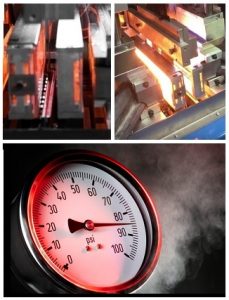
By understanding how these joining processes work, engineers can make better decisions about which types of finished gaskets to choose. It’s also important to understand the advantages of disadvantages of each bonding technique. In this week’s article, we’ll compare cold bonding with injection molding in terms of capabilities, costs, and quantities. (more…)

Continue ReadingCold Bonding vs. Injection Molding for Rubber Gaskets

Hot Splicing vs. Vulcanizing for Rubber Gaskets

Bonded GasketsHot splicing uses heat, pressure, and a film splice to join the ends of rubber profiles into bonded gaskets. This joining technique uses either a conventional heating source or infrared (IR) light and polyethylene (PE) film. Hot splicing creates strong bonds at the molecular level and generally provides better results than vulcanization, a bonding technique that uses uncured rubber instead of a film splice.
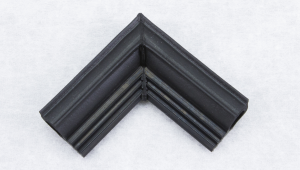
Choosing the best way to bond rubber gaskets can be a complex decision, however. The profile material is just one of many considerations. You also need to consider the size and shape of the seal, production quantities and costs, and the way that lengths of rubber are cut. In addition, it’s important to inspect and install your gaskets properly to ensure reliable sealing and prevent avoidable waste.

Is hot splicing better than vulcanizing for the rubber gaskets that you need? Let’s take a closer look. (more…)

Continue ReadingHot Splicing vs. Vulcanizing for Rubber Gaskets

What’s the Best Way to Bond Rubber Gaskets?

Bonding GasketsRubber profiles come in lengths that are cut-to-size and fabricated into finished gaskets. Examples include picture frame or bezel gaskets, O-rings, and gaskets with rounded corners.
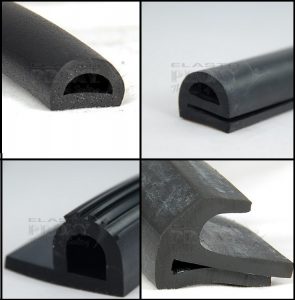
There are four ways to bond or join the ends of rubber profiles.

  • Hot Splicing
  • Vulcanization
  • Cold Bonding
  • Molding

Each bonding or joining method has its advantages, but what’s the best choice for your application? Let’s examine each method in detail so that you can make the right decision. (more…)

Continue ReadingWhat’s the Best Way to Bond Rubber Gaskets?

Gasket Shapes for Extruded Rubber Seals

Shapes for SealsThere are four common shapes for extruded rubber seals. Do you know which shape is the right choice for your gasket application? Engineers and seal designers can choose P-shapes, D-shapes, E-shapes, and lip seals. Purchasing agents can either order cut lengths or buy spliced gaskets.

In this article from Elasto Proxy, you’ll learn when to choose and how to use the four common shapes for extruded rubber seals. We also invite you to stay tuned for a series of short videos that will explain what you need to know about P-seals, D-seals, E-seals, and lip seals. (more…)

Continue ReadingGasket Shapes for Extruded Rubber Seals

The True Costs of Industrial Rubber Products

True CostsWhat are the true costs of industrial rubber products such as seals, gaskets, and insulation? Buying rubber materials and fabricating them in-house may seem cost-effective, but is your company really saving money? For that matter, are you sacrificing quality, consistency, and potential sales opportunities for a questionable cost savings?
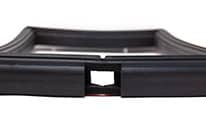
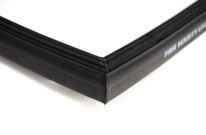
Companies that want to know the true costs of industrial rubber products need to understand the full scope of their manufacturing costs. Typically, these costs are divided into three categories: direct labor, direct material, and manufacturing overhead. If any of these costs are incorrect, your financial statements may under-report inventory value and the cost of goods sold.

In this article from Elasto Proxy, we’ll examine each category of manufacturing costs so that you can consider how your in-house operations compare to outsourced fabrication. By understanding your true costs, you can make better business decisions and strengthen your manufacturing operations. (more…)

Continue ReadingThe True Costs of Industrial Rubber Products

Four Ways to Cut Rubber Products

Cut Rubber ProductsWhat’s the best way to cut industrial rubber products like seals, gaskets, and insulation? Manual cutting, die cutting, water jet cutting, and abrasive water jet cutting each offer advantages. They also meet different business and technical requirements. As this article from Elasto Proxy explains, choosing the right cutting method for your application requires a complete and careful analysis. (more…)

Continue ReadingFour Ways to Cut Rubber Products

Nitrile Rubber Products for Sealing and Insulation

Nitrile RubberWhen is nitrile rubber the right choice for sealing and insulation? This common elastomer is known by many names, including Buna-N, NBR, and acrylonitrile butadiene. There are plenty of trade names for nitrile, too. No matter what you call it, nitrile rubber offers good resistance to oils, fuels, and chemicals. Temperature and environmental conditions are limiting factors, however, and may require the selection of a more expensive material such as Viton™.

In this article from Elasto Proxy, you’ll learn about nitrile’s advantages and disadvantages. You’ll also examine NBR compounds, compare commercial and specialty Buna-N, and consider some typical nitrile applications. Elasto Proxy supplies specialty nitrile products to a variety of industries and can create a custom sealing solution that meets your specific requirements. Nitrile isn’t the only oil-resistant elastomer, but it’s a cost-effective choice compared to some other compounds.

Nitrile Advantages and Disadvantages

Nitrile rubber provides good-to-excellent resistance to many oils and solvents. Examples include:

  • animal and vegetable oils
  • crude petroleum oil
  • kerosene and gasoline
  • liquified petroleum (LP) gases
  • motor oils
  • mineral oil based hydraulic fluids
  • silicone greases and oils

For engineers and buyers, it’s important to understand that nitrile’s resistance to petroleum oils is limited by temperature. According to most chemical resistance charts, nitrile resists petroleum oil at temperatures up to 250° F (121° C). If your application requires both oil resistance and higher temperature resistance, a fluorocarbon such as Viton™ may be required instead. Nitrile is also unsuitable for highly polar solvents such as acetone, which is used in some food processing and medical applications.

Nitrile’s advantages include good physical properties such as resistance to compression set, tearing, and abrasion. Typically, NBR or Buna-N comes in durometers (Shore A) ranging from 20 to 95 for applications that require a softer or harder rubber. Nitrile resists water, but provides poor resistance to weather, ozone, and aging. Acrylonitrile butadiene is also unsuitable for some applications because Buna-N won’t withstand temperatures that are colder than -40° F (-40° C).

Nitrile Compounds and Specialty Grades

Through compounding, material suppliers have developed different types of nitrile with enhanced material properties. For example, hydrogenated nitrile butadiene rubber (HNBR) can withstand slightly higher temperatures than NBR and provides improved resistance to polar fluids. Carboxylated nitrile butadiene rubber (XNBR) has a higher compression set than Buna-N and offers improved tear and abrasion resistance. Nitrile can also be blended with polymers such as polyvinyl chloride (PVC).

For engineers and buyers, choosing the right type of nitrile may involve comparing commercial rubber to specialty grades. Commercial grades generally cost less and are available in higher minimum order quantities (MOQs). Specialty grades generally cost more and have larger MOQs, but they’re custom compounds with improved properties. ASTM D2000 provides a standard way to describe elastomers and uses the designations BF, BG, BK, and CH with both standard and specialty nitrile. (more…)

Continue ReadingNitrile Rubber Products for Sealing and Insulation

Commercial Grade Rubber vs. Specialty Rubber: Make the Right Choice

Commercial Grade RubberCommercial grade rubber provides sealing and insulation for a wide variety of applications. Compounds such as commercial grade EPDM, silicone, and neoprene also cost less than specialty rubber materials that meet standards, approvals, or regulatory requirements from organizations such as ASTM International, Underwriters Laboratories (UL), and the U.S. Food and Drug Administration (FDA).

For engineers, choosing the right rubber means understanding when a specialty material is required, and when a commercial grade rubber is sufficient. Engineers want to make sure that the products they design meet application requirements, but over-specifying an elastomer can incur unnecessary costs. In addition to paying more per unit of material, you may have to buy greater minimum order quantities (MOQs).

In this article from Elasto Proxy, we’ll consider the differences between commercial grade rubber and specialty rubber in terms of some real-world examples. You’ll also learn about some best practices that can strengthen your seal designs. (more…)

Continue ReadingCommercial Grade Rubber vs. Specialty Rubber: Make the Right Choice