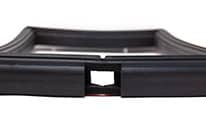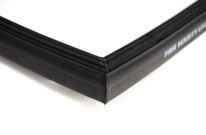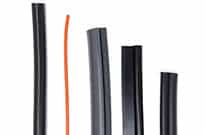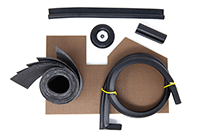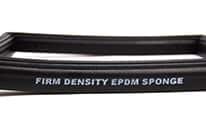
Neoprene (polychloroprene) is a flame-resistant and self-extinguishing rubber material. It has limited resistance to fuels and strong chemicals but withstands water, sunlight, ozone, and weather. Common applications for neoprene products include seals, gaskets, and insulation for outdoor enclosures such as HVAC units.
Elasto Proxy supplies neoprene rubber for distribution, but we also fabricate neoprene sheets and extrusions into finished products. Keep reading to learn about neoprene’s advantages, disadvantages, compatibility, applications, and design considerations. Elasto Proxy can also help you with material selection, so contact us today.
Elasto Proxy can help you determine whether neoprene or nitrile is the rubber that you need.
Advantages of Neoprene
Neoprene is a cost-effective elastomer with the following advantages.
- Weather and ozone resistance: Neoprene maintains its properties under prolonged exposure to sunlight (i.e., UV), ozone in the air, and outdoor conditions.
- Moderate chemical resistance: This rubber also provides moderate resistance to dilute acids and alkalis. Examples include dilute hydrochloric acid and sodium hydroxide solutions.
- Flame retardancy: Neoprene is inherently resistant to combustion and does not require specialized additives to resist the spread of flame.
- Mechanical durability: Neoprene provides good tensile strength, abrasion resistance, and resilience under dynamic loads such as from blowing wind or rotating machinery.
- Water resistant: – Polychloroprene, as this rubber is also known, resists fresh water, salt water, and moisture. Thicker materials, especially closed-cell foams, are considered to be waterproof.
- Thermal stability – This synthetic rubber maintains its properties at temperatures ranging from -40°C to +120°C (-40°F to 248°C). Some specialized grades can withstand higher temperatures.

Disadvantages of Neoprene
Neoprene has some limitations that engineers need to consider, especially when compared to other rubber materials.
- Limited fuel resistance: Neoprene provides only limited resistance to fuels such as gasoline, diesel, and ethanol. Nitrile provides better fuel and oil resistance.
- Lower thermal ceiling: The highest temperature that polychloroprene can withstand is significantly less than silicone’s.
- Density and weight: Neoprene is heavier than EPDM or SBR, especially in solid grades. This can affect lightweighting, a design consideration in products such as electric vehicles.
- Cost: Neoprene offers a middle ground between commodity rubbers and high-performance fluoroelastomers (FKM) such as Viton.
- Electrical insulation limitations: Neoprene is not recommended for high-voltage environments. EPDM or silicone are typically used instead.

Neoprene Compatibility
The table below summarizes neorpene’s compatibility with common chemicals and
- Excellent: Minimal or no effect
- Good: Minor effect; suitable for most applications
- Fair: Noticeable effect; limited use
- Poor: Not recommended
Substance / Condition | Compatibility | Notes |
Water (fresh/salt) | Excellent | Maintains sealing and flexibility |
Oils (minerals, lubricating) | Good | Moderate swelling possible |
Fuels (gasoline, diesel) | Fair | Limited resistance; not for continuous immersion |
Aromatic hydrocarbons (benzene, toluene) | Unsatisfactory | Rapid degradation |
Acids (mild, dilute) | Good | Suitable for weak acids |
Strong acids (HCl, H2SO4) | Unsatisfactory | Not recommended |
Alkalis (mild) | Good | Performs well in dilute bases |
Solvents (ketones, esters) | Unsatisfactory | Severe attack and swelling |
Ozone / UV | Excellent | Long-term outdoor durability |
Flame / Heat | Good | Inherently flame-resistant, moderate thermal stability |

Neoprene Applications
Neoprene products are used in many different industries, including mobile equipment, defense, and aerospace. Heavy trucks, ambulances, military land systems, aircraft refueling systems, the mass transit industry, and makers of mining, construction, and forestry equipment use neoprene components such as:
- Vibration mounts
- Shock absorber seals
- Hose covers
- Power transmission belts
- Tail light seals
Buildings, bridges, electrical systems, and industrial machinery applications use neoprene parts such as:
- Seals for windows, HVAC units, and electrical or electronic enclosures
- Expansion joints and bearing pads
- Noise isolators in power transformers
- Weather stripping for fire doors
Elasto Proxy uses MTAP to help guide customers through material selection.
Design Considerations
Consider the following before selecting neoprene rubber for your seal or gasket design.
- Chemical exposure: Avoid neoprene in environments with strong solvents, aromatic hydrocarbons, or concentrated acids and alkalis.
- Temperature limits: Specify neoprene only within its service temperature range of -40°C to +120°C (-40°F to 248°C).
- Mechanical load: Neoprene’s abrasion resistance is strong, but dynamic seals under high pressure may require reinforcement.
- Environmental durability: This elastomer is excellent for outdoor use, including in marine environments where there is salt spray or contact with salt water.
Ask Elasto Proxy for Neoprene Materials and Products
Elasto Proxy is a fabricator and distributor that can help you select the right rubber for your seals and gaskets. With our network of warehouses, we can buy all the neoprene rubber that you need and release it to you on-demand or according to your sales forecast. We can also fabricate ready-to-install nitrile products that save you time and money during assembly.
Ready to get started? Contact us today.