Nitrile rubber (NBR, Buna-N) offers excellent resistance to petroleum-based fuels and oils. However, this synthetic rubber has some limitations that engineers need to consider when selecting materials for seals and gaskets. If you’re considering using nitrile for your application, it’s important to consider these tradeoffs.
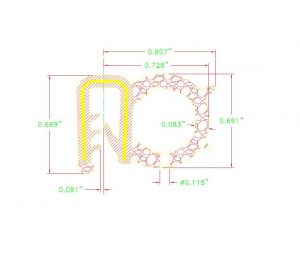
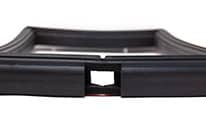
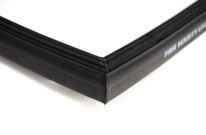
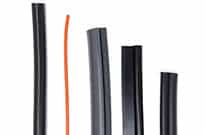
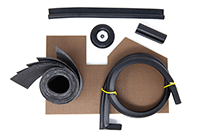
Elasto Proxy supplies nitrile rubber for distribution, but we also fabricate nitrile sheets and extrusions into finished products like fuel door seals for mobile equipment. Keep reading to learn about nitrile rubber’s advantages, disadvantages, compatibility, applications, and design considerations. Elasto Proxy can also help you with material selection, so contact us today.
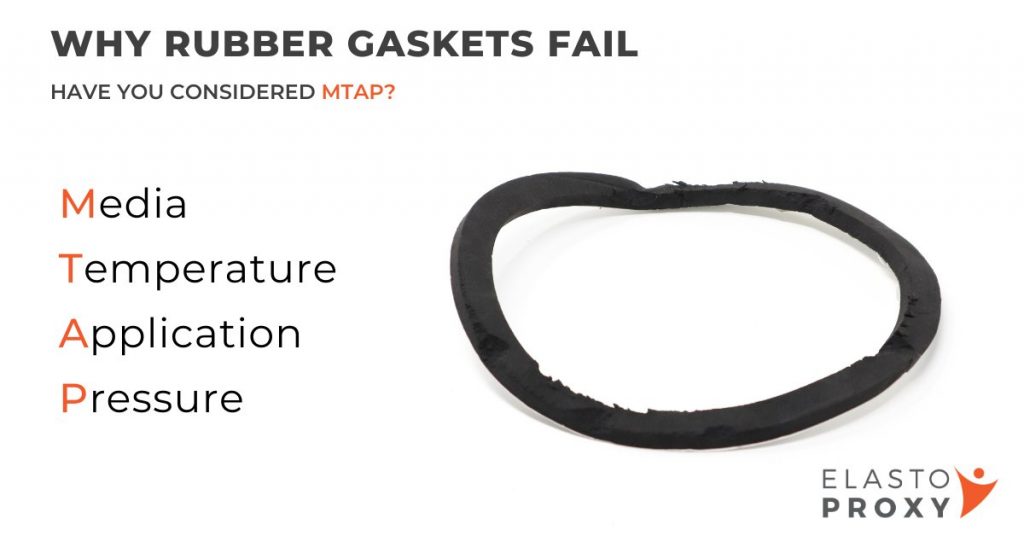
Elasto Proxy uses MTAP to help guide customers through material selection.
Advantages of Nitrile
Nitrile provides a good balance of mechanical and chemical properties for demanding environments.
- Excellent fuel and oil resistance: NBR is known for its resistance to petroleum-based oils, hydraulic fluids, and fuels like diesel and gasoline.
- Good abrasion resistance: Buna-N resists the abrasion that occurs when seals are subjected to rubbing and friction, such as from moving parts in machinery.
- Wide range of durometers: Nitrile comes in durometers that range from 30 to 90 Shore A. That’s roughly the difference between a pencil eraser and a hockey puck.
- Good tensile strength and tear resistance: This rubber resists pulling or stretching without breaking. It also resists tearing when there’s a cut or snag in the material.
- Cost-effective: NBR costs less than fuel-resistant elastomers like fluorocarbons (FKM), including brand names like Viton.
- Low gas permeability: This is an important property for airtight, fuel-and-oil resistant seals that are used in pumps, valves, and packaging machines.
- Moderate heat resistance: Standard nitrile performs reliably at temperatures from -40°C to +108°C (-40°F to +226°F). Special grades can resist lower or higher temperatures.
Disadvantages of Nitrile
Despite its advantages, nitrile rubber has some limitations you’ll want to consider.
- Poor UV and ozone resistance: Unless it’s specially formulated, nitrile degrades when exposed to UV rays from the sun or ozone in the air.
- Limited resistance to weathering: NBR can withstand extreme environmental conditions for only a limited amount of time before damage or degradation occurs.
- Poor resistance to polar solvents: Methanol and ethanol, substances that are used in some fuels, cause nitrile to swell or degrade. Ketones and esters are also problematic.
- Reduced flexibility at low temperatures: Standard grades of Buna-N can become brittle below -20°C (-4°F), temperatures that are not uncommon in cold-weather winter climates.
- Lacks flame resistance: Unless it’s compounded with flame retardants, nitrile won’t meet flammability standards like UL 94.
- Limited steam resistance: NBR isn’t suitable for exposure to high-temperature steam in applications like power generation, industrial heating, or steam sterilization.

Nitrile Compatibility
The table below summarizes nitrile’s material compatibility with some common chemicals and environmental conditions.
Substance / Condition | Compatibility | Notes |
Motor oil, diesel, gasoline | Excellent | Fuel systems and engine seals |
Hydraulic fluids (petroleum-based) | Excellent | Hydraulic seals and O-rings |
Water (up to 100°C) | Good | Fine for short-term exposure |
Alcohols (methanol, ethanol) | Poor | Causes swelling and degradation |
Ketones (acetone, MEK) | Poor | Rapid deterioration |
Esters (ethyl acetate) | Poor | Not recommended |
Silicone oils | Good | Generally compatible |
Brake fluids (glycol-based) | Poor | Not suitable |
Refrigerants (R-134a, R-12) | Fair to Good | Depends on the formulation |
UV and ozone exposure | Poor | Requires additives or coatings |
Low temperatures (<-30°C) | Fair to Poor | Use special low-temp grades |
High temperatures (>+100°C) | Fair | Degrades over time |
Acids (dilute sulfuric, nitric) | Fair to Poor | Limited resistance |
Alkalis (sodium hydroxide) | Fair | Short-term exposure may be OK |
Chlorinated solvents (TCE, PCE) | Poor | Causes rapid swelling and breakdown |
Compatibility Ratings
- Excellent: Minimal or no effect
- Good: Minor effect; suitable for most applications
- Fair: Noticeable effect; limited use
- Poor: Not recommended
Nitrile Applications
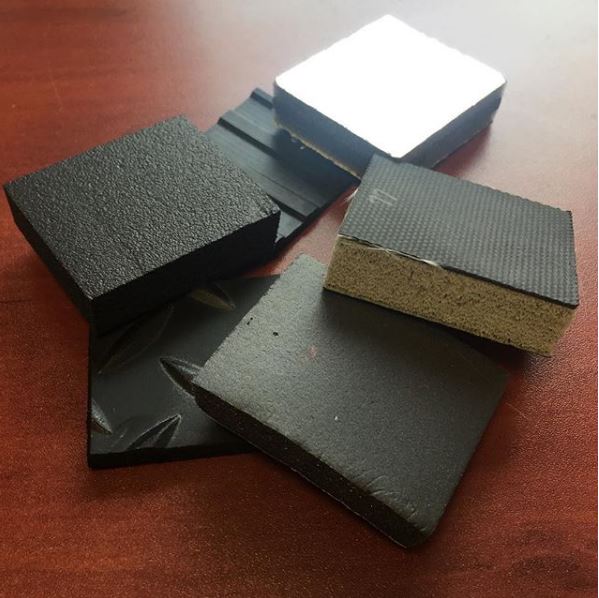
Nitrile’s material properties make it a popular choice for these and other applications.
- Automotive and Mobile Equipment: Fuel hoses, valve cover gaskets, and oil pan seals
- Industrial machinery: Pump seals, compressor gaskets, hydraulic seals, and diaphragms
- Aerospace: Fuel system components and hydraulic actuators and seals
- Oil and gas: Downhole seals and blowout preventer elements
Design Considerations
Consider the following before selecting nitrile rubber for your seal or gasket design.
- Fuel and oil resistance: Nitrile provides excellent resistance to petroleum-based fuels and oils. However, it has poor resistance to ethanol, which is blended with gasoline for create E85 (85% ethanol) for vehicles with flexible-fuel systems.
- Chemical compatibility: Nitrile resists some but not all chemicals. Short-term exposure to alkalis may be acceptable, but NBR has limited resistance to acids.
- Outdoor use: Standard Buna-N offers poor resistance to sunlight and ozone. However, UV stabilizers and other additives can enhance performance.
- Temperature range: Standard NBR operates from -40°C to +108°C. For lower or higher temperatures, specialized formulations are available.
Ask Elasto Proxy for Neoprene Materials and Products
Elasto Proxy is a fabricator and distributor that can help you select the right rubber for your seals and gaskets. With our network of warehouses, we can buy all the nitrile rubber that you need and release it to you on-demand or according to your sales forecast. We can also fabricate ready-to-install nitrile products that save you time and money during assembly.
Ready to get started? Contact us today.