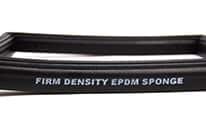
EPDM offers excellent environmental resistance and is often used in outdoor applications. This rubber material resists water, weather, sunlight, and ozone but has limitations with certain oils and hydrocarbons. Engineers like EPDM because of its durability and cost-effectiveness, but it’s important to consider all of EPDM’s properties to ensure a successful project.
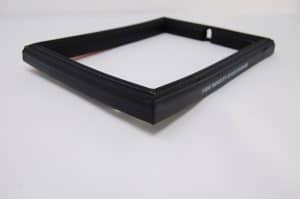
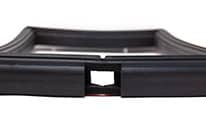
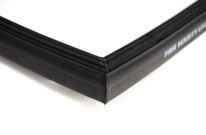
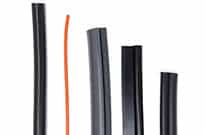
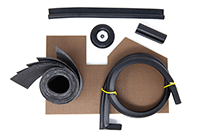
Elasto Proxy supplies EPDM rubber for distribution, but we also fabricate EPDM sheets and extrusions into finished products like door seals and flat gaskets. Keep reading to learn about EPDM’s advantages, disadvantages, compatibility, applications, and design considerations. We can help you with material selection, so contact us today.
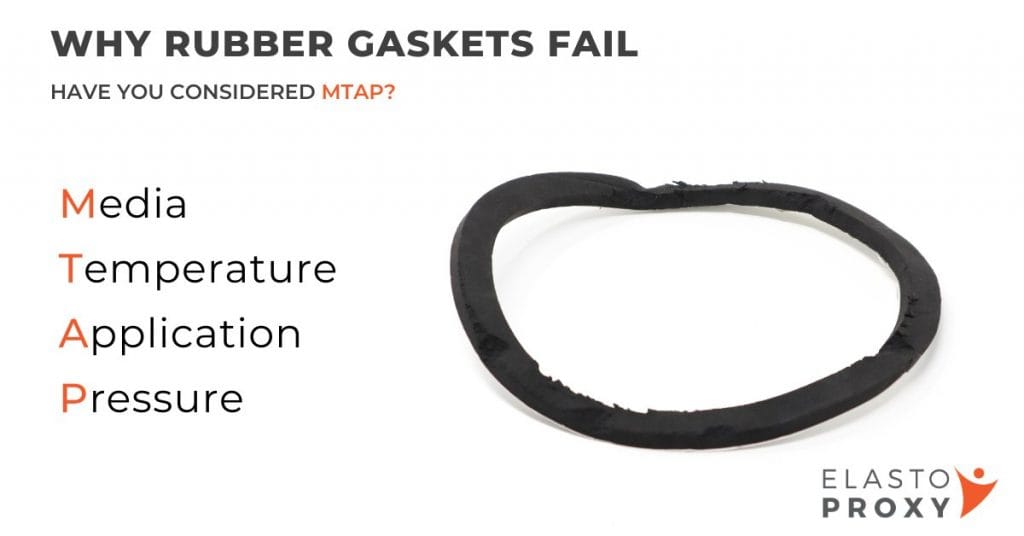
Elasto Proxy invented MTAP to help our customers with material selection.
Advantages of EPDM Rubber
EPDM rubber withstands demanding environments and maintains its material properties over time. Its main advantages include:
- Weather Resistance: This rubber material resists rain, snow, ozone, sunlight, and a range of temperatures, making it ideal for outdoor applications and long-term use.
- Low Temperature Flexibility: Even at low temperatures, EPDM retains its flexibility, which is critical for dynamic sealing applications like the door gaskets on mobile equipment.
- Temperature Range: EPDM compounds perform well at temperatures ranging from -40°C to +120°C. Some formulations can tolerate intermittent temperatures up to 150°C.
- Chemical Resistance: This elastomer is compatible with water, steam, alcohols, and certain acids and alkalis (i.e., polar substances).
- Electrical Insulation: Because it’s durable and resists the flow of electricity, EPDM is used for electrical insulation in cables and enclosures.
- Low Permeability: EPDM restricts the flow of fluids like water or gases because its internal pores are not well-connected. This supports its use in sealing applications.
- Cost Efficiency: This rubber material is relatively inexpensive and generally costs less than silicones or thermoplastic elastomers (TPE).
Disadvantages of EPDM Rubber
Despite its many advantages, EPDM rubber has some important limitations.
- Poor Compatibility with Hydrocarbons: EPDM degrades when exposed to petroleum-based oils, fuels, and fluids. It has poor resistance to mineral oils and silicone oils.
- Limited Abrasion Resistance: Compared to elastomers like nitrile and polyurethane, this rubber has less resistance to mechanical wear and tear.
- Non-Recyclable: Unlike TPEs, which also resist outdoor conditions, EPDM compounds are not recyclable.

EPDM Compatibility
The table below summarizes EPDM’s material compatibility with some common chemicals and environmental conditions.
Substance / Condition | Compatibility | Notes |
Ozone | Excellent | No cracking or degradation under prolonged exposure |
UV Light | Excellent | Withstands sunlight
|
Water | Excellent | Stable in both cold and hot water environments |
Steam | Good | Suitable for low-pressure steam, but may degrade under high pressure |
Acids (Dilute) | Good | Compatible with many dilute acids (e.g., acetic acids) |
Alkalis (Dilute) | Good | Stable in dilute sodium hydroxide and ammonia solutions |
Alcohols (Methanol, Ethanol) | Good | Minimal swelling or degradation |
Ketones (Acetone, MEK) | Fair | Minimal swelling or degradation |
Hydraulic Fluids (Petroleum-based) | Poor | Rapid degradation and swelling |
Fuels (Gasoline, Diesel) | Poor | Severe swelling and breakdown |
Mineral Oils | Poor | Causes softening and loss of mechanical properties |
Silicone Oils | Fair | Limited compatibility |
Brake Fluids (Glycol-based) | Good | Suitable for systems that use glycol-based fluids
|
Chlorinated Solvents | Poor | Degrades rapidly |
Ammonia Gas | Good | Stable under typical concentrations |
Nitric Acid (Concentrated) | Poor | Aggressive oxidizer; do not use |
EPDM Applications
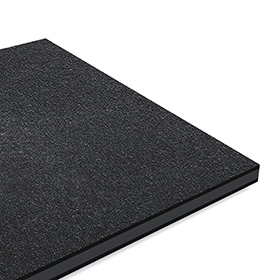
EPDM’s material properties make it a popular choice for these and other engineering applications.
- Automotive and Mobile Equipment: Door seals, window gaskets, under-hood parts, and flooring
- HVAC Systems: Duct insulation and sealing components
- Electrical: Cable jacketing and insulating barriers
- Construction: Roofing membranes, expansion joint seals, and waterproofing systems
- Processing: Seals and gaskets for handling water, steam, and mild chemicals.
Design Considerations
Consider the following before selecting EPDM rubber for your sealing or insulation project.
- Chemical Exposure: Ensure that there is no contact with fuels, oils, or other incompatible chemicals (e.g., petroleum-based brake fluids).
- Temperature Range: Confirm that the range of service temperatures falls within EPDM’s limits.
- Consider Alternatives: Nitrile and fluorosilicone are better choices if there’s contact with oils, fuels, or solvents. Silicone resists higher temperatures, and TPEs are recyclable.
Ask Elasto Proxy for EPDM Materials and Products
Elasto Proxy is a fabricator and distributor that can help you select the right rubber for your sealing or insulation project. With our network of warehouses, we can buy all the EPDM rubber that you need and release it to you on-demand or according to your sales forecast. We can also fabricate ready-to-install EPDM products that save you time and money during assembly.
Ready to get started? Contact us today.