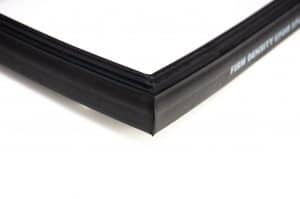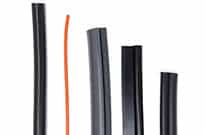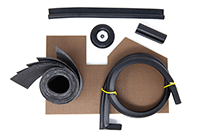
Do you need help with material selection for industrial rubber products like seals, gaskets, and insulation? Elasto Proxy is a rubber fabricator and distributor that offers help with material selection. We work with various elastomers, especially the ones you’ll learn about in this article. Keep reading to learn more and contact us if you’re a manufacturer with a sealing or insulation challenge.
EPDM
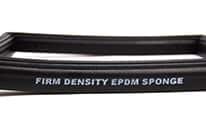
EPDM is an acronym for Ethylene Propylene Diene Monomer, a synthetic rubber that’s suitable for outdoor use. EPDM has excellent resistance to weather, ozone, and sunlight, but it’s incompatible with petroleum products and vulnerable to high temperatures. In cars, trucks, and heavy equipment, EPDM is often used for door seals, window gaskets, hoses, and other parts.
The table below provides highlights of EPDM’s material compatibility.
High | Medium | Low |
Water, steam & aqueous solutions | Some lesser aggressive hydrocarbons or mixed fluids | Petroleum‑based oils, fuels (gasoline, diesel, mineral oil) |
Alkaline and diluted acid fluids | Lower grades of fuels or oils in ambient/short‑term exposure | Hydrocarbon solvents (non‑polar) |
Alcohols and polar solvents | Some esters/ketones at moderate conditions | Concentrated mineral oil lubricants/hydrocarbon blends |
Neoprene
Neoprene is unusual in that it’s self-extinguishing. This synthetic rubber excels at resisting oils, weather, ozone, and aging. Neoprene maintains good mechanical robustness across a range of temperatures, but it’s moderately affected by strong ketones, ethers, and concentrated acids. Avoid prolonged exposure to these substances.
The table below provides highlights of neoprene’s material compatibility.
High | Medium | Low |
Acetic Acid 20 % | Isopropyl Alcohol | Acetate Solvents / Ethers |
Butyl Alcohol | Carbon Dioxide (Wet or Dry) | Ketones |
Hydraulic Oils (Petroleum & Synthetic) | Fuel Oils | Concentrated Acids |
Nitrile
Nitrile is sometimes called nitrile butadiene rubber (NBR) or Buna-N. This synthetic elastomer provide excellent resistance to oils, fuels, and many nonpolar solvents while also offering strong mechanical durability. Despite these advantages, nitrile performs poorly when exposed to ozone or weather. It’s also susceptible to damage from certain ketones, strong acids, and aromatic solvents.
The table below provides highlights of nitrile’s material compatibility.
High | Medium | Low |
Petroleum Oils | Alcohols | Aromatic Solvents |
Hydraulic Fluids | Ammonia (Cold Gas) | Ketones |
Gasoline/Kerosene/Fuel Oil | Dilute Acids | Strong Acids |
TPE
Thermoplastic elastomers (TPE) combine rubber’s flexibility with plastic’s processability. TPE’s excellent chemical resistance is comparable to neoprene’s, and it also offers good abrasion and weather resistance. TPE swells significantly in aromatic and halogenated solvents, however, and thinner grades can weaken with prolonged exposure to polar solvents or high temperatures.
The table below provides highlights of TPE’s material compatibility.
High | Medium | Low |
Dilute Acids & Alkalis | Aliphatic Hydrocarbons | Aromatic and Halogenated Solvents |
Aluminum Salts | Neutral Alcohols (e.g., Ethanol, IPA) | Ketones (e.g., Acetone) |
Ammonia (Cold Gas and Solutions) | Weak Esters | Strong Oxidizing Acids |
SBR
SBR is an acronym for Styrene-Butadiene Rubber, a synthetic rubber that’s a cost-effective alternative to natural rubber. With its abrasion resistance and aging stability, SBR is used in hoses, belts, and tires. Yet SBR lacks resistance to ozone, weathering, heat, and polar chemicals. Plus, it’s unsuitable for outdoor or high-temperature use.
The table below provides highlights of SBR’s material compatibility.
High | Medium | Low |
Calcium Chloride | Calcium Bisulfite | Steam Below 400°F |
Calcium Carbonate | Sucrose Solutions | Paraffins |
Strontium Acetate | Sulfolane | Butyl Cellosolve |
Silicone
Silicone is a polymer that withstands extreme temperatures and resists ozone, water, and weather while remaining inert to most polar substances. It maintains its mechanical properties with thermal cycling but lacks abrasion resistance. Silicone is also susceptible to damage from certain ketones, strong acids, and aromatic solvents.
The table below provides highlights of silicone’s material compatibility.
High | Medium | Low |
Water & Aqueous Solutions | Steam (Short-Term Exposure) | Fuels & Aromatic Mineral Oils |
Fatty Acids & Animal/Plant Oils | Aliphatic Hydrocarbons | Small Non-Polar Solvents (e.g., Paint Thinners) |
Silicone Oils & Greases | Weak Acids or Bases | Strong Concentrated Acids and Alkalines |
Butyl
Butyl offers outstanding impermeability to gases and moisture, provide excellent ozone and weather resistance, and delivers reliable performance with many organic and inorganic chemicals. Despite these advantages, butyl is highly susceptible to non-polar hydrocarbons fuel oils and aromatic solvents. Exposure to these substances can cause severe swelling and degradation.
The table below provides highlights of butyl’s material compatibility.
High | Medium | Low |
Acetaldehyde | Isopropyl Alcohol | Fuel Oil / Diesel Fuel |
Ammonia (Cold Gas) | Hydrofluoric Acid (Cold) | Aromatic Hydrocarbons (e.g., Toluene, Benzene, Naphtha) |
Calcium Compounds (Chloride, Carbonate, Bisulfite) | Petroleum Oils (SAE 10–40 Lubricants) | Ketones and Ethers (e.g., MEK, Acetone) |
Viton
Viton is a brand name for a class of synthetic rubbers known as fluoroelastomers or FKM. Viton excels in extreme environments and offers superior resistance to high temperatures, fuels, oils, mineral acids, and hydrocarbons. Viton is weakened by ketones, esters, amines, strong organic acids, and polar solvents. These substances can cause swelling and degradation.
The table below provides some highlights of Viton’s material compatibility.
High | Medium | Low |
Aromatic Hydrocarbons (Benzene, Toluene) | Acetic Acid (5–80%) | Acetone & Acetate Solvents
|
Adipic Acid | Isopropyl Alcohol | Diacetone Alcohol |
Acetylene | Ammonium Hydroxide (10%) | Amines & Ammonia |
Polyurethane
Polyurethane is suitable for heavy-duty applications because of its high mechanical toughness, specifically abrasion resistance, load-bearing strength, and tearing durability. However, polyurethane hydrolyzes in hot water or stream and is vulnerable to strong oxidizing agents and aromatic solvents. These substances can cause swelling or breakdown.
The table below provides highlights of polyurethane’s material compatibility.
High | Medium | Low |
Aluminum Compounds | Acetic Acid 5–30% | Steam Above ~40 °C |
Calcium Compounds | Ammonium Hydroxide | Aromatic Solvents |
Ammonia Gas (Cold) | Isopropyl Alcohol (IPA) | Ketones & Strong Oxidizers |
Fluorosilicone
Fluorosilicone is a type of silicone with fluorine additions. It withstands extreme temperatures and resists fuels, oils, ozone, and weathering. Fluorosilicone has low abrasion resistance and tensile strength, however. It is also relatively expensive and degrades in ketones, brake fluids, amines, and hydrazine.
The table below provides highlights of fluorosilicone’s material compatibility.
High | Medium | Low |
Many Petroleum Fuels & Mineral Oils | Dilute Acids & Weak Alcohols
| Ketones (Acetone, MEK)
|
Freons (e.g., R12, R22) | Ether Solvents | Brake Fluids, Amines, Hydrazine |
Other Non-Polar Oils (e.g., Silicone Oils) | Some Refrigerants (e.g., Mixed Freons) | Dynamic Sealing Applications (Abrasion) |
Get Help Selecting Rubber Materials
Do you work for a manufacturer? Do you need low-to-medium volumes of industrial rubber products like seals, gaskets, and insulation? Elasto Proxy is the rubber fabricator and distributor that provides greater value. In addition to help with material selection, our value-added services include design reviews and much more. Let us know what you need.