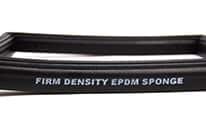
EPDM Rubber Gaskets for Sealing and Insulation
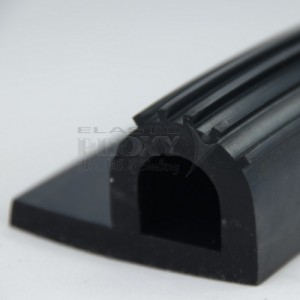
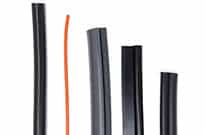
When is EPDM rubber the right choice for sealing and insulation? EPDM seals and gaskets are used widely with vehicles and equipment, but this synthetic elastomer has unsatisfactory resistance to gasoline, diesel fuel, and motor oil. EPDM’s advantages are numerous, however, and this cost-effective compound is often a better choice than silicones – especially in outdoor environments.
If you’re wondering whether EPDM is the right choice for your sealing and insulation application, Elasto Proxy invites you to take a closer look at this M-class elastomer. The M in M-class indicates that EPDM is part of ASTM D1418, a common specification for characterizing rubber compounds. Often, design or product engineers use ASTM specs to designate the rubber material on a part drawing.
In this article, we’ll examine EPDM’s advantages and applications. We’ll also consider its disadvantages – and consider how EPDM rubber compares to some other materials. Finally, we’ll look at how EPDM is supplied and fabricated. (more…)
 How is silicone rubber used for sealing and insulation? Silicones have valuable properties, but engineers need rubber that meets specific requirements. If you’re wondering whether silicone seals, gaskets, or insulation are the right choice for your application, consider some of the uses for this versatile polymer. The examples you’ll read about aren’t the only uses for silicone, but they’re representative.
 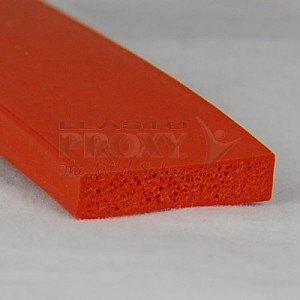 When is silicone rubber the right choice for sealing and insulation? Silicones have many desirable properties, but can cost more than other polymers. That’s why some engineers avoid them – even though silicone prices have fallen. At the same time, newer materials such as thermoplastic elastomers (TPE) are interesting but even more expensive.
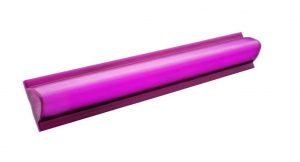 TPE profiles are replacing EPDM rubber in applications such as mobile equipment, food equipment, and infrastructure. Unlike EPDM, thermoplastic elastomers (TPE) are recyclable. That’s especially important in Europe, where manufacturers are moving away from petroleum-based materials.
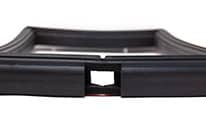
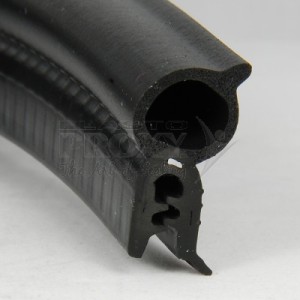 Bulb trim seals are used with doors, hatches, and enclosures. They have two sections: the bulb and the retainer. The bulb section provides sealing and insulation under compressive force. The trim or retainer section presses onto a flange or substrate.
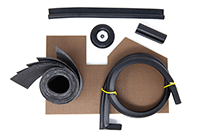
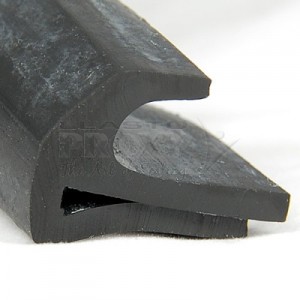 When a manufacturer of water filtration systems needed a rubber gate seal that would last longer and resist ultraviolet (UV) light, Elasto Proxy provided a value-added solution. This custom gasket doesn’t just resist exposure to water, contact with metal and concrete, and disinfection with UV light. The gate seal also supports ease-of-installation and is ready to ship from Elasto Proxy’s warehouse in Newmarket, Ontario.
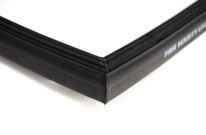
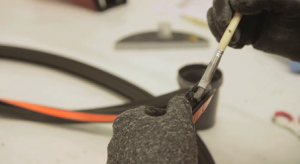 Cold bonding for rubber gaskets joins lengths of material without the use of heat. This bonding technique doesn’t require low-temperature conditions, but is called “cold” because no heat is applied to the gasket. By contrast, hot splicing requires either a conventional heat source or infrared (IR) light. Vulcanization and molded corners for rubber gaskets also involve heating gasket materials.
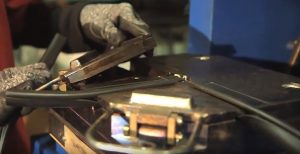 Molded corners for rubber gaskets are recommended for applications that require rounded joints, the ability to withstand stretching, or high cycle times. Molding is more expensive than hot splicing or vulcanization, but it’s the only way to create radisued corners. C-press injection molding, a bonding method for rubber gaskets, is ideal for low-to-medium volume quantities but suitable only for solid profiles.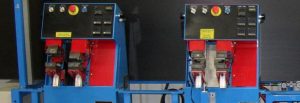
 Flame retardant rubber helps to protect people and property from the devastating effects of fire. By stopping or slowing the spread of flame, these elastomers reduce the rate and intensity of burning. They can also limit the release of smoke and toxins while increasing the amount of time that people have to escape from life-threatening situations. Applications for these specialized compounds include electronic enclosures and the interiors of buses, trains, and subways.