Rubber Basics: Five Things You Need to Know
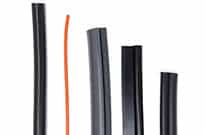
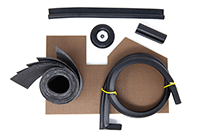
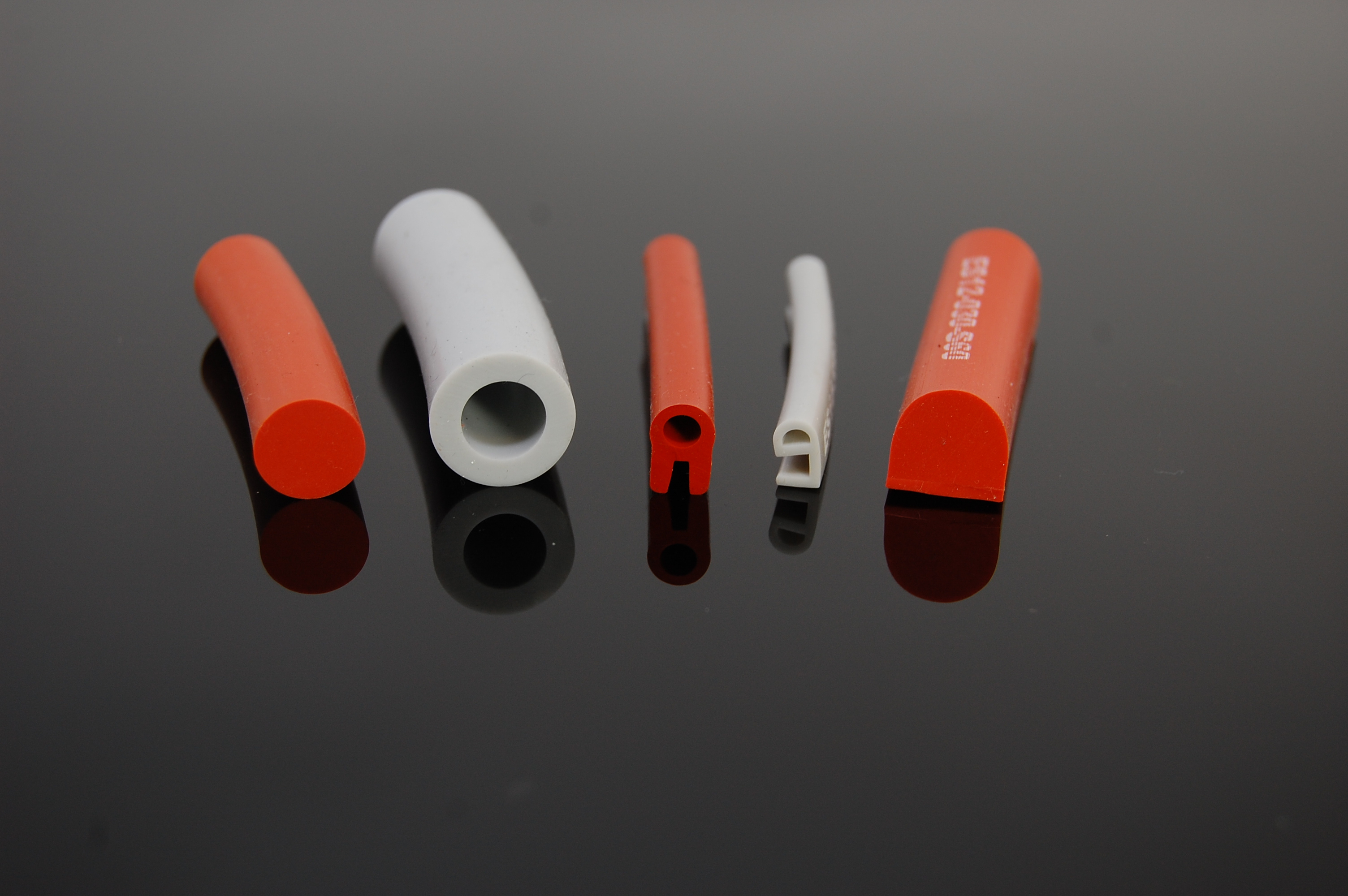
Some engineers and buyers already know which type of rubber they need for sealing and insulation. Others may ask if rubber comes in colors other than black (yes, it does),…
The Elasto Proxy Blog is starting the New Year with a quick look back at how we helped readers solve their sealing and insulation challenges in 2017. Whether you’re new to the Blog or a veteran reader of our 275 posts, we hope you’ll enjoy this review and will let us know what you’d like to read about in 2018.
Here are the top sealing and insulation posts of 2017. (more…)
Last Sunday, Elasto Proxy employees and their families participated in the Course de la Famille Deux-Montagnes (Two-Mountains Family Race) in the town of Deux-Montagnes, Quebec. For more pictures of Team…
Railcar rubber products need to meet flame smoke, and toxicity (FST) standards that protect human health and safety. Fires that burn railcar seats, floors, wall panels, and other interior components don’t just cause immediate injuries and fatalities. Flames can release smoke that obscures escape routes. Burning rubber that releases toxic gases can also overwhelm passengers and employees.
Suppliers offer compounds that meet FST standards, but design engineers still facing a challenging task. The flame, smoke, and toxicity standards for railcar materials vary widely. Designers need to familiarize themselves not just with different standards, but with standards used in different countries. By partnering with the right fabricator, however, you can source the right rubber products for sealing and insulation. (more…)
IDEX is the world’s most strategically important tri-service defense exhibition. For OEMs, military buyers, and prime contractors, this global event is the place to find technologies for land, air, and sea. The International Defense Exhibition and Conference (IDEX) is also where defense subcontractors present key component-level solutions for military programs and projects. That’s why Elasto Proxy, a leading custom-fabricator of specialty seals and insulation, will highlight four unique solutions at IDEX 2017. (more…)
The Elasto Proxy Blog is starting the New Year by looking back at how we helped readers solve their sealing and insulation challenges in 2016. We’ve come a long since January 11, 2011, that day six years ago when we published our very first (and very short) blog entry.
Whether you’re new to the Blog or a veteran reader of our 225+ posts, Elasto Proxy is glad to have you with us. Here are our Top 6 Blog Posts from 2016 in terms of views. What would you like to read about in 2017? (more…)
For fluorosilicone gaskets, manufacturers of pharmaceutical equipment choose Elasto Proxy.
The pharmaceutical industry uses solid dosage processing equipment to manufacture finished doses of medication in tablet or capsule form. Often, these solid doses are coated to mask the medicine’s taste or odor, protect the drug in the stomach, and to control its release profile. Tablet coating equipment rotates pills and ensures that coatings are applied evenly. This pharmaceutical equipment features stainless steel construction and includes components such as pumps, spray nozzles, and electric motors.
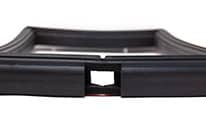
When a major manufacturer of solid dosage processing equipment needed to replace the door and side gaskets on a tablet coating machine, the company asked Elasto Proxy to supply the sealing solution. The manufacturer was refurbishing some used equipment, and needed two side gaskets and one door gasket rather than hundreds or even thousands of parts. Each of the bonded gaskets was thick and large, and the rubber that was required was fairly expensive. Elasto Proxy custom-fabricated a cost-effective solution that met all of the equipment manufacturer’s requirements. (more…)
What are your New Year’s resolutions for 2016? Do you plan to get fit, lose weight, make new friends, or make more money? Just as importantly, how will you achieve your goals?
Here at Elasto Proxy, we share your excitement about the New Year. Like you, we also understand that success requires careful planning and consistent execution. If you’re looking to learn about specialty seals and custom insulation, this is the place to start.
So how will the Elasto Proxy Blog inform and engage you in 2016? First, let’s take stock of where we are. (more…)

Pittsburgh, Pennsylvania is still nicknamed the Steel City, but there are no longer any steel mills within the city’s limits. During the 1970s and 1980s, the mills began to close and hundreds of thousands of jobs disappeared. Today, the Edgar Thompson Steel Works in nearby North Braddock is all that’s left of this once-mighty industry. Pittsburgh has re-invented itself, however, and now has a diversified economy that’s based largely on healthcare, education, and high-tech industries.
There’s a role for rubber and plastic in each of these sectors – and with steel, too. When Elasto Proxy visits Pittsburgh this week, we look forward to helping partners solve their sealing and insulation challenges. As an experienced custom fabricator, Elasto Proxy specializes in custom rubber and plastic parts for demanding applications. So whether you need rubber exhaust gaskets for stainless steel mufflers, plastic arms for industrial robots, or sanitary seals for medical devices, Elasto Proxy is ready to help. (more…)
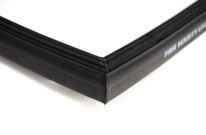
Learn about hot splicing for rubber gaskets, and how vulcanization creates O-rings, door gaskets, window gaskets, and other spliced seals.Hot splicing or vulcanization is a cost-effective joining technique for creating continuous seals or endless gaskets from cut lengths of rubber products. First, a heat-activated adhesive is applied to the ends of sponge or solid profiles. In addition to rectangular profiles, rubber products such as round cords, industrial tubing, and irregularly-shaped rubber profiles can be hot spliced, too.
Next, the ends of the profiles are pressed together and placed in a hot mold or vulcanizing press. The heat activates the rubber-based glue, and pressure from the mold or press creates a reliable, attractive joint for continuous sealing. Proper dwell time is important, and hot spliced gaskets should be stored under controlled conditions in warehouse environments according to standards such as DIN 776 or ISO 2230.