What happens when you bolt a rubber gasket between two metal flanges? The initial clamping force creates a seal and the rubber fills surface irregularities on the flange faces. Over time, however, bolt tension decreases – even if the fasteners aren’t visibly loose. This reduction in clamping force is caused by bolt relaxation, a phenomenon that occurs when a gasket is under constant load.
For engineers, it’s important to understand how bolt relaxation affects long-term gasket performance. If bolt relaxation becomes excessive, fluid leaks and gasket movement may occur. This article from Elasto Proxy examines bolt relaxation, explains why it happens, explores the factors that influence it, and reviews some practical examples.
Keep reading to learn more and contact Elasto Proxy for industrial sealing solutions. We’re not just a gasket fabricator. We’re a manufacturing partner that offers value-added services like design reviews and help with material selection.
What Is Bolt Relaxation?
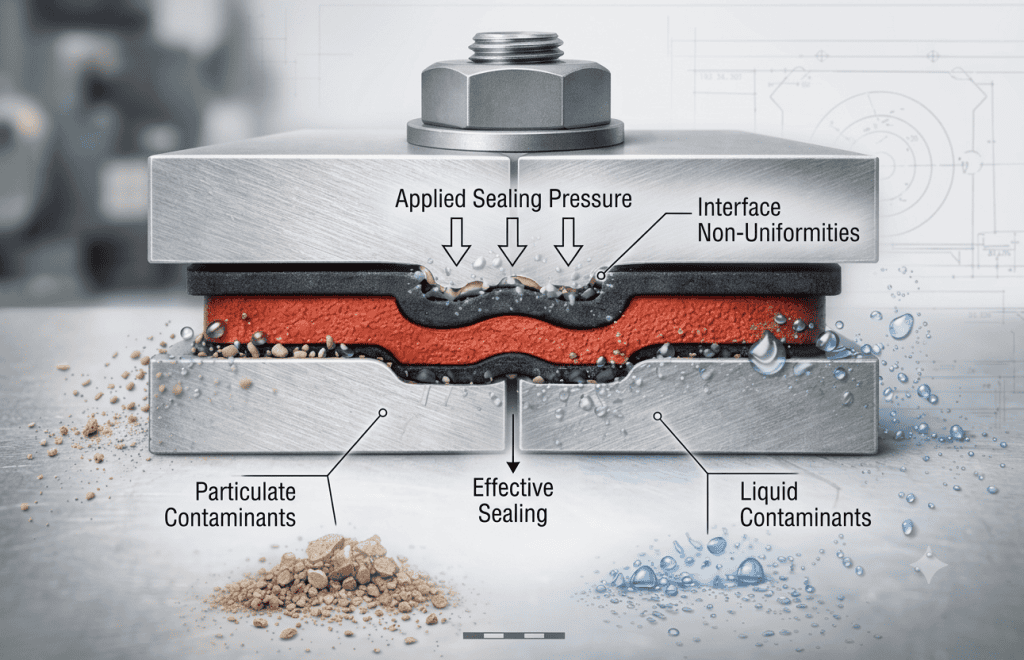
Bolt relaxation is the gradual reduction of compressive stress within a bolted joint. That’s why it’s sometimes called stress relaxation or load loss instead. No matter what you call it, bolt relaxation happens over time and under a constant strain – stretching or deformation that happens when an external force is applied.
Metal stretches, too. When a bolt is tightened, it stretches slightly to exert a continuous clamping force on the gasket. For its part, the gasket pushes back on the flanges pressing against it – just like a metal spring. Unlike metal, however, rubber exhibits viscoelastic behavior. That means it’s both viscous (fluid-like) and elastic (solid-like) when compressed.
When a rubber gasket is compressed , there’s an immediate elastic response. The gasket compresses instantly and generates an initial sealing stress. Over time, however, there’s delayed viscous flow. The molecular chains within the rubber slowly realign themselves to relieve the internal stress caused by compression.
Practically speaking, what does this mean? As rubber yields to a continuous load, the physical thickness of the gasket decreases. It’s typically not a large amount, but it’s significant enough. As the gasket thins, the stretched bolt contracts and the amount of bolt tension declines. In other words, bolt relaxation has occurred.
Why Does Bolt Relaxation Matter?
Rubber gaskets must maintain a minimum gasket stress to preserve a tight seal against differential pressure, fluid dynamics, and environmental exposure.
If the amount of bolt relaxation is too great, the joint faces several distinct failure modes:
- Fluid and Gas Leaks: If the internal system pressure is greater than the minimum gasket stress, media will bypass the seal.
- Flange Torque Loss: Fasteners lose their preload, making them more susceptible to backing out under vibration.
- Increased Maintenance Costs: Joints that relax too much require frequent retorquing. This adds to maintenance costs and the risk of over compressing the gasket.
Key Factors That Influence Bolt Relaxation
There are four factors that affect bolt relaxation in rubber gaskets.
Temperature
Temperature is the main accelerator of bolt relaxation.
- High Temperatures: Excessive heat can cause rubber to lose its properties. A compound that retains 80% of its sealing force at 23°C may lose 50% or more of its initial force at 100°C.
- Low Temperatures: Cold temperatures cause rubber to stiffen and shrink. Thermal contraction of a rubber gasket can cause a sudden drop in clamping force.
Gasket Geometry and Thickness
A gasket’s cross-section affects its rate of creep – the slow, continuous permanent deformation of a solid material over time when subjected to a constant load or stress.
- Thicker Gaskets: They seal uneven flanges but undergo viscous creep. Compared to thinner gaskets, they experience greater absolute bolt relaxation.
- Unconfined vs. Confined Gaskets: Flat gaskets that are squeezed between flat flanges relax more quickly than gaskets (such as O-rings) that are seated in fully confined grooves.
Material Type and Cure Method
Different rubber materials perform differently under long-term compressive loads. Their behavior depends on the rubber’s molecular structure, but also on the cure system that’s used. Curing is the process through which a rubber achieves its final properties during material manufacturing.
- Silicone: Exceptional resistance to bolt relaxation across extreme temperatures (-60°C to +200°C). It maintains a consistent sealing force long after other rubbers have relaxed.
- EPDM: Excellent load retention in ambient, water, and steam environments. Peroxide-cured EPDM offers significantly lower relaxation rates than sulfur-cured EPDM.
- Nitrile (NBR): Good resistance to oil and fuels, but exhibits moderate to high stress relaxation over time – especially at temperatures above 100°C.
- Neoprene: Moderate relaxation performance. Suitable for general-purpose applications with low clamping force requirements, but prone to creep under high static loads.
- Fluorosilicone: Superior long-term force retention at high temperatures and in aggressive chemical environments.
Fastener Rigidity and Joint Elasticity
The elasticity of the joint itself also plays an important role:
- Long, flexible bolts store more elastic energy and compensate better for small amounts of creep.
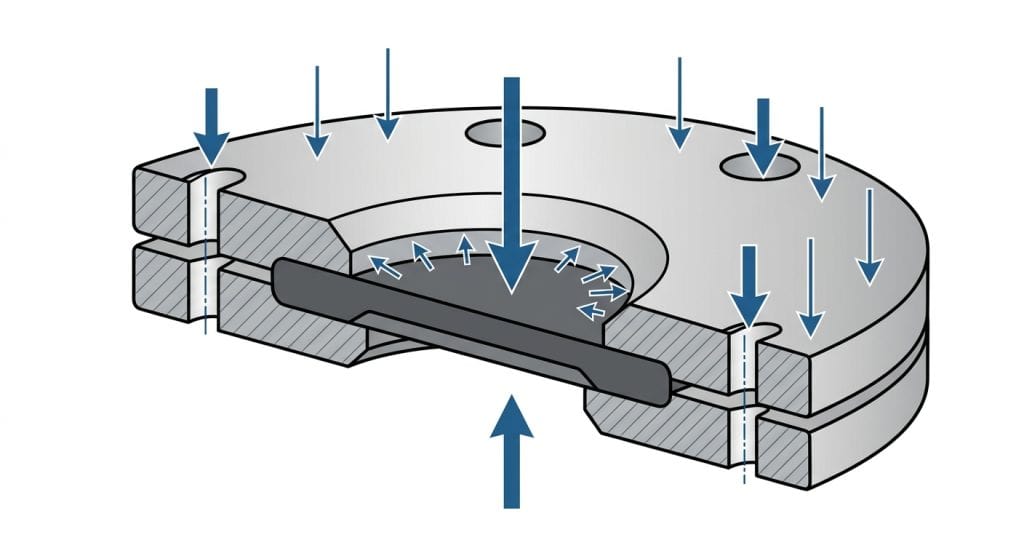
- Rigid flanges prevent non-uniform load distribution (flange rotation), which concentrates stress on the outer edge of the gasket and accelerates localized creep.
Practical Engineering Examples
Selecting the right material and joint design requires balancing stress relaxation against media and temperatures. Consider these scenarios.
Outdoor Heavy Equipment Enclosure
- Challenge: Large door hinges and latches apply static pressure on an EPDM perimeter gasket exposed to seasonal temperature shifts (-40°C to +70°C) and vibration.
- Solution: A peroxide-cured EPDM sponge or dual-durometer profile. Peroxide cross-linking stabilizes the polymer network, reducing bolt and latch relaxation over years of weathering.
High-Temperature Industrial HVAC Duct / Heat Exchanger
- Challenge: Flanged joints operating at 180°C continuously lose bolt torque, resulting in hot air weeping past the seal.
- Solution: Replace standard NBR or neoprene flat gaskets with a high-grade silicone profile. Silicone maintains high sealing stress at elevated temperatures; NBR undergoes rapid stress relaxation.
Hydraulic Power Unit Reservoir Cover
- Challenge: An oil-filled fluid reservoir using a thick neoprene flat gasket experiences fluid seepage near the mid-span between bolts.
- Solution: The thick gasket allowed excess creep, leading to localized bolt relaxation and flange deflection. Switching to a thinner fluorosilicone gasket with stiffer flanges restores uniform joint force and eliminates the leak.
Design Strategies to Minimize Bolt Relaxation
Consider these design strategies to minimize bolt relaxation.
- Use Peroxide-Cured Elastomers: When possible, specify peroxide-cured compounds over sulfur-cured options.
- Minimize Gasket Thickness: Use the thinnest possible profile that can still accommodate flange flatness tolerances.
- Optimize Fastener Stretch: Design joints with adequate bolt length-to-diameter ratios or use spring/Belleville washers to absorb minor thickness reductions.
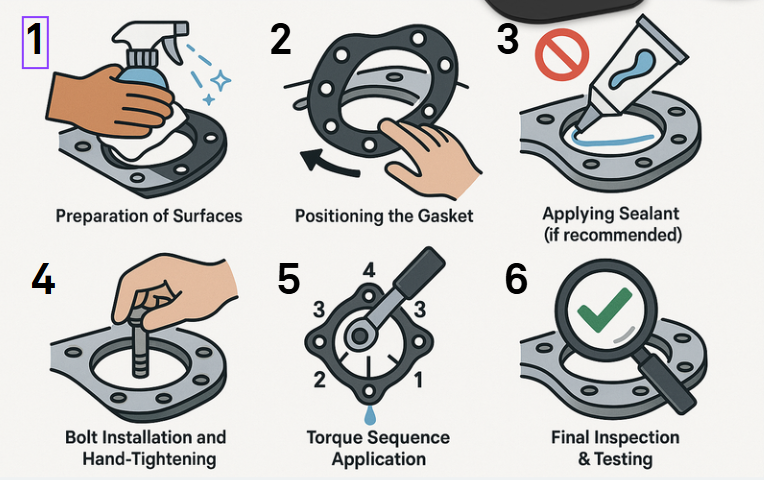
- Follow Proper Torque Sequences: Torque bolts in crisscross stages to ensure uniform initial stress distribution across the gasket profile.
Choose Value-Added Gasket Fabrication from Elasto Proxy
Bolt relaxation is a critical factor in long-term sealing performance. Initial bolt torque seals a joint on day one, but it’s low stress relaxation that keeps the joint sealed over time. If you’re designing a gasket, remember that Elasto Proxy performs design reviews and help with material selection. We’re not a just a gasket fabricator. We’re a value-added manufacturing partners.