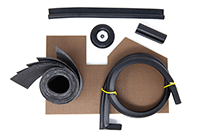
Rubber gaskets fill gaps, contain fluids or gases, dampen vibrations, and prevent environmental contamination. Engineers understand that material selection, durometer, and seal geometry affect performance, but there’s a question that sometimes comes up during scheduled maintenance, equipment rebuilds, or field repairs. Can you reuse a rubber gasket?
The short answer is “sometimes”, but a better answer is “only under specific conditions, and only with certain gasket types”. Reusing a rubber gasket might seem like a cost-saving measure, but the risks include leaks and premature failure. That can cost you more than just time and money in the end. There’s also the frustration and inconvenience of unplanned downtime.
This article examines the engineering considerations behind gasket reuse, explains how compression and material degradation affect sealing reliability, and outlines inspection criteria that engineering and maintenance teams can use. Keep reading to learn more and contact Elasto Proxy if you’re looking for a gasket fabricator that’s a value-added partner instead of just a parts provider.
Rubber Materials and Their Reusability
Rubber materials vary in how they behave over time and in response to specific environmental conditions. There are thousands of different rubber formulations, but there are three main structures: solid, sponge, and foam. Each has different mechanical properties.
- Solid rubber offers strong sealing force and good dimensional stability. Some, but not all, solid rubber gaskets can be reused. Generally, it depends on whether the solid rubber gasket has avoided excessive compression or chemical degradation.
- Sponge rubber compresses more readily and relies upon its cellular structure for sealing. Once compressed, sponge rubber may exhibit permanent deformation (i.e. compression set). This makes gasket reuse risky.
- Foam rubber is generally not a candidate for reuse. That’s because the cells in foam rubber collapse under load, and these gaskets rarely return to their original thickness.
The specific compound, or formulation, also plays an important role. Here are a few commonly used rubber compounds.
- Silicone resists heat and compression better than many elastomers.
- EPDM performs well in outdoor environments but is still subject to permanent deformation.
- Nitrile handles oil well but can harden over time.
These behaviors directly affect whether a gasket can be reused without compromising sealing performance.
Compression Set: The Critical Factor
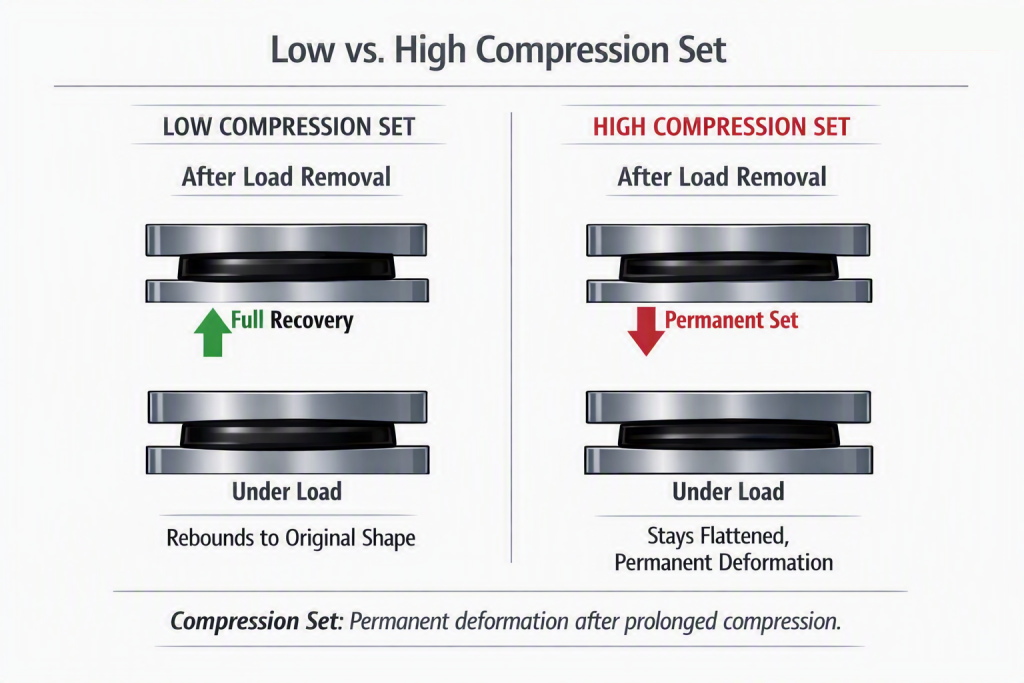
The most important consideration in gasket reuse is compression set – the permanent deformation that occurs when rubber is compressed for an extended period. If a rubber gasket has a high compression set, it won’t rebound to its original thickness when a compressive force (such as a closed door) is removed.
Even if a gasket seems intact, compression set can undermine sealing reliability.
Environmental and Operational Degradation
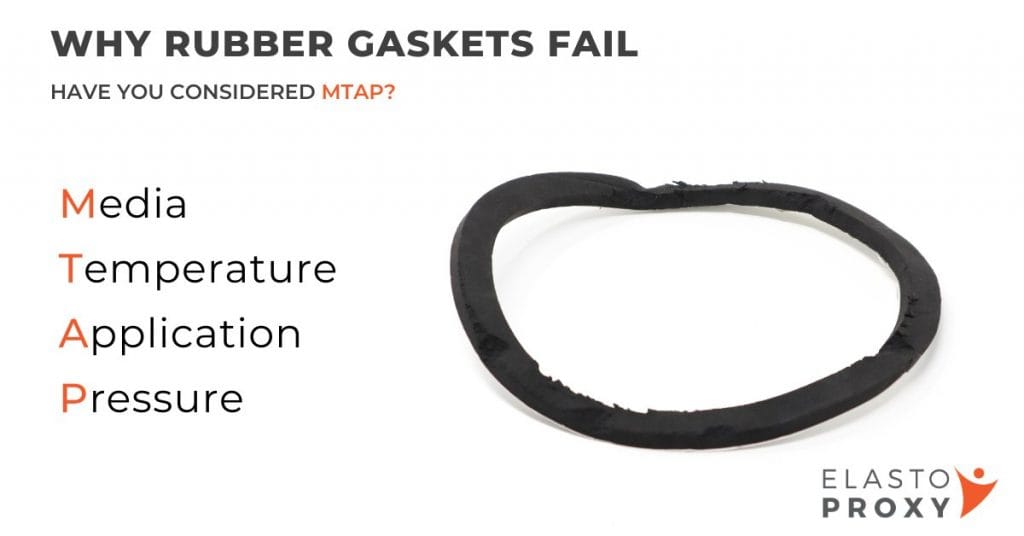
Long-term compression isn’t the only thing that causes seal failure. Gaskets degrade over time because of environmental exposure. Before reusing a gasket then, consider these factors:
- Heat Aging: High temperatures accelerate hardening, cracking, and loss of elasticity.
- Chemical Attack: Oils, fuels, coolants, cleaning agents, and process chemicals can swell, soften, or embrittle rubber.
- Sunlight and Ozone Exposure: Outdoor applications may show surface cracking or chalking.
- Mechanical Wear Abrasion, shear loading, or repeated movement can damage sealing surfaces.
If a rubber gasket has been exposed to any of these conditions, do not reuse it.
Fastening Methods and Their Impact on Reuse
There are different ways to attach a rubber gasket to substrate. These fastening methods also affect whether a gasket can be reused.
- Adhesive Backings: Flat gaskets with adhesive backings are generally single‑use seals. Removing the gasket typically tears the adhesive layer or distorts the rubber material.
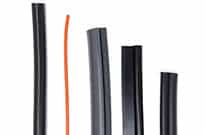
- PSA Tapes on Extrusions: Pressure-sensitive adhesive (PSA) tapes on extruded profiles lose tack after removal. Gasket reuse can compromise alignment and sealing reliability.
- Mechanical Fastening: Gaskets that are held in place with bolts, clips, or channels have the highest potential for reuse, but only if the material isn’t over-compressed or degraded.
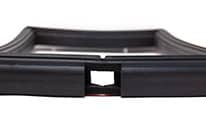
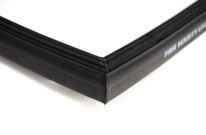
With bonded gaskets, it’s also worth considering the specific bonding method. Gaskets with hot spliced, vulcanized, or molded corners may be reusable if the joint remains intact. However, cold-bonded joints are more prone to separation during gasket removal.
Inspection Criteria for Determining Reuse
When evaluating gaskets for reuse, engineers and maintenance personnel need to use a structured inspection process.
- Visual Inspection: Look for cracks, tears, swelling, discoloration, or surface hardening.
- Dimensional Check: Measure thickness and width to detect compression set or distortion.
- Elasticity Test: Gently flex the gasket. If it feels stiff or brittle, discard it.
- Surface Integrity: Check for glazing or contamination.
- Joint Condition (Extrusions): Inspect bonded corners for separation or misalignment.
If a rubber gasket fails any of these checks, do not reuse it.
When Reuse Is Acceptable
Gasket reuse may be acceptable under the following conditions:
- The gasket is made from a solid rubber with low compression set.
- The application involves low clamping force and moderate temperatures.
- The gasket was installed for a short duration.
- The gasket shows no signs of chemical or mechanical degradation.
- The gasket was mechanically fastened, not taped or bonded with adhesives.
Examples include temporary test setups, prototype assemblies, or low-pressure enclosures.
When Reuse Is Not Recommended
Do not reuse a gasket if it’s
- Made from sponge or foam rubber.
- Uses an adhesive backing or PSA tape.
- Shows visible compression set.
- Seals critical systems such as HVAC plenums, battery enclosures, fuel systems, or electronics housings.
- Was exposed to high heat, chemicals, or UV.
- Has bonded corners that show wear or separation.
In these cases, the risk of gasket leakage or failure outweighs any potential cost savings.
Thinking about Reusing a Gasket?
Rubber gasket reuse is possible in some scenarios but proceed with caution. Compression set, material degradation, and fastening method all affect whether a gasket can be safely reused. In applications involving safety, containment, or critical performance, gasket replacement is the best and safest practice.
Do you need help with evaluating gasket reuse, selecting materials, or sourcing new gaskets? Elasto Proxy is an experienced gasket fabricator with value-added services. In addition to water jet cutting, gasket taping, and a choice of bonding methods, we can review your designs and help you with material selection.