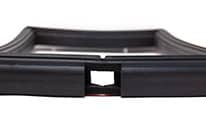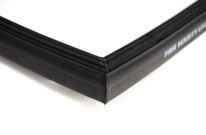
Certified Transit Grade (CTG) Seals Resist Flame, Smoke, and Toxicity (FST)

Video - CTG Seals Resist FST
Video – CTG Seals Resist FST

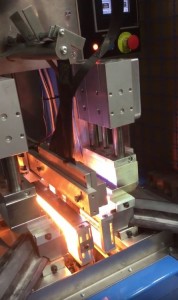
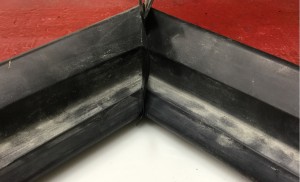
Elasto Proxy custom-fabricates EPDM gaskets made of certified transit grade (CTG) rubber that resists flame, smoke, and toxicity (FST). Technical buyers and design engineers who source custom-fabricated CTG seals can meet mass transit industry requirements and precise project specifications.

Mass transit systems need to operate efficiently while ensuring passenger safety and controlling costs. Bus accidents, train derailments, and subway delays capture the headlines, but the mass transit industry must manage other risks, too. Fires within a cabin, vehicle, or passenger car can do more than burn seats, wall panels, and other interior components. Smoke from combustion reactions can obscure escape routes. Burning materials that release toxic gases can also overwhelm passengers and employees, too. (more…)

Continue ReadingCertified Transit Grade (CTG) Seals Resist Flame, Smoke, and Toxicity (FST)

Rubber Sheets for Flooring, Sealing, EMI Shielding, and Insulation

Rubber Sheets - Video
Video – Rubber Sheets from Elasto Proxy

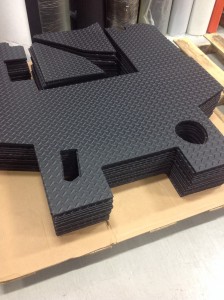
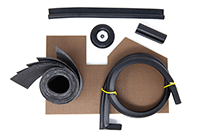
Rubber sheets aren’t only used for flooring. They’re also used for environmental sealing, EMI shielding, and sandwich-style insulation against heat, noise, and vibration. Choose standard sheet stock or specialty sheeting, and ask Elasto Proxy to use water jet cutting and laminating or adhesives to create your custom solution.

Rubber sheets are used for sealing and insulation in industrial, commercial, and military applications. Many different types of rubber sheet stock are available, but an off-the-shelf product may not be right for your application. By working with a custom fabrication specialist, industrial buyers and designer engineers can source standard or specialty elastomers and then have rubber sheeting cut to size. Elastomeric sheets with laminates or adhesives already applied can also speed sheet installation. (more…)

Continue ReadingRubber Sheets for Flooring, Sealing, EMI Shielding, and Insulation

Industrial Tubing for Low Compression Sealing and Shock Absorption

Video - Industrial Tubing from Elasto Proxy
Video – Industrial Tubing from Elasto Proxy

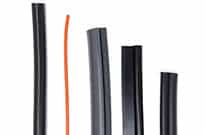
Industrial tubing that’s made of rubber or plastic provides low compression force sealing and shock absorption. So whether you’re thinking about replacing metal tubing, or wondering which type of rubber tubing or plastic tubing is right for your application, Elasto Proxy is ready to help.

Industrial tubing is used in fluid transport, electrical sheathing, and structural applications. Metal tubes resist high temperatures and provide physical strength, but typically cost more than rubber or plastic tubes. Some metals are also subject to rust, corrosion and scaling – problems that can reduce flow rates and cause higher pressure drops. For industrial buyers and design engineers then, choosing the right type of industrial tubing begins with material selection. What type of tubes do you need for your application? (more…)

Continue ReadingIndustrial Tubing for Low Compression Sealing and Shock Absorption

Fluorosilicone Gaskets for Sealing and Insulation

Fluorosilicone Gaskets
Video: Fluorosilicone Gaskets from Elasto Proxy

Fluorosilicone gaskets combine the high and low temperature resistance of silicones with the fuel and oil resistance of fluorocarbons. Some fluorosilicone gasket materials also resist abrasion and provide EMI shielding. Is fluorosilicone the right rubber for your gasketing application?

Fluorosilicones combine the temperature resistance of silicones with the fuel, oil, and solvent resistance of fluorocarbons. Applications for these extreme-environment elastomers include automotive, aerospace, defense, electronics, and semiconductor manufacturing.

For technical buyers and design engineers, however, choosing the right rubber can involve more than just specifying a temperature range, oil or fuel type, and industry. Is flurosilicone rubber right for your sealing and insulation application? If so, what type of fluorosilicone compound do you need? Some provide specialized properties that you might not expect.  (more…)

Continue ReadingFluorosilicone Gaskets for Sealing and Insulation

How to Choose Rubber Edge Trim

Video: Rubber Edge Trim from Elasto Proxy

Rubber edge trim protects metal surfaces and provides sealing and insulation. Learn how to choose edge trim for your application, and how durometer (hardness), core type, and elastomer type affect product selection. Then when you’re ready, download the product catalog.

Rubber edge trim is used to finish and protect exposed metal edges while providing sealing and insulation. Applications include car doors, truck cabs, machine guards, kitchen equipment, and other sheet metal surfaces. For technical buyers and design engineers, choosing the right edge trim means selecting the right rubber based on the application requirements. Buyers and designers also need to specify rubber edge trim with wire cores or segmented cores. Durometer, or the rubber’s hardness, is also important. (more…)

Continue ReadingHow to Choose Rubber Edge Trim

Rubber Channels for Sealing and Insulation

Rubber Channels from Elasto Proxy
Video: Rubber Channels from Elasto Proxy

Rubber channels keep window glass from rattling and seal out wind, weather, and water. Learn how to select rubber channels for your application, and how custom channels are fabricated from standard rubber profiles.

Rubber channels help to secure window frames and hold window glass in place. They eliminate rattling and provide protection against weather, water, dust, rust, and drafts. Most rubber channels are formed through extrusion, a manufacturing process that creates profiles with complex cross-sections and a smooth surface finish. Beaded rubber channels contain stainless steel beads to support installation without stretching or pulling. Unbeaded glass run channels with coated linings are also available.  (more…)

Continue ReadingRubber Channels for Sealing and Insulation

Neoprene Gaskets for Oil Resistance and Outdoor Sealing

Video: Neoprene Gaskets

Neoprene gaskets are made of oil-resistant elastomers that also provide weather resistance and environmental sealing. Learn more about neoprene rubber’s applications and advantages, and how finished neoprene gaskets are custom-fabricated from standard neoprene profiles.

Neoprene gaskets provide resistance to oils, greases, and waxes; oxidation and ozone; and weathering and water immersion. A type of synthetic rubber (SR), neoprenes are a large family of elastomeric materials that are available in various types or grades. Some are compounded with EPDM or NBR to impart specific properties. Chemical, temperature, and flame resistance varies by neoprene compound, but neoprene rubber is generally known for its oil resistance and use in outdoor applications. (more…)

Continue ReadingNeoprene Gaskets for Oil Resistance and Outdoor Sealing

Extruded Rubber Seals: Five Types You Need to Know

Extruded Rubber Seals - Video
Video: Extruded Rubber Seals

Extruded rubber seals support complex cross-sections and a smooth surface finish. They include bulb, bulb trim, lip, door, and accordion seals. You’ll find all five types in Elasto Proxy’s catalog, along with many other rubber extrusions that are ready for custom fabrication.

Rubber profiles are made of elastomeric compounds and produced through molding or extrusion. Lengths of standard rubber products are then custom-fabricated to meet application requirements such as length. Rubber molding processes such as injection, compression, and transfer molding have their advantages, but extrusion supports the creation of rubber profiles with complex cross-sections and a smooth surface finish. As a custom fabricator, Elasto Proxy stocks extrusions made of solid rubber and sponge rubber, and can convert these standard products into specialty seals that meet your specific requirements. (more…)

Continue ReadingExtruded Rubber Seals: Five Types You Need to Know

Adhesive Taping vs. Mechanical Fastening

Video: How to Attach Taped Rubber Parts

Learn how adhesive taping attaches rubber parts to plastic, metal, and glass surfaces – and why taped gaskets provide a strong, reliable alternative to mechanical fasteners such as bolts and screws. Then, download the Make It or Buy It? E-Book. 

Rubber parts such as door seals, edge trim, and weather stripping can be attached to plastic, metal, or glass surfaces. Mechanical fasteners like screws and bolts are strong and reliable, but installation is time-consuming. The use of adhesive tapes can speed assembly, but taping also offers other important advantages. By understanding these benefits, and how high-strength adhesive tapes compare to mechanical fasteners, you can choose the best attachment method for your rubber parts. If taping is right for your sealing or insulation application, you can then decide which type of taping you need. (more…)

Continue ReadingAdhesive Taping vs. Mechanical Fastening