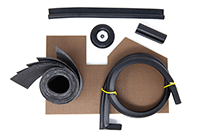
Thermal Acoustic Insulation for Reducing Heat and Sound (Part 1)
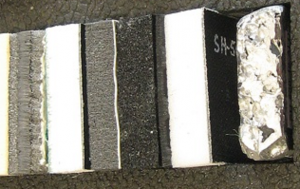
This is the first in a two-part series about thermal acoustic insulation from Elasto Proxy, a global supplier of specialty “insulation sandwiches” that reduce both heat and sound.
Thermal acoustic insulation is used to reduce heat and sound in commercial, industrial, and military applications. In manufacturing and processing facilities, this multi-functional insulation is used with machine enclosures, pipes, and valves. On-road and off-road, composite structures that include both thermal and acoustic materials are also found in the floors, doors, side panels, and engine bays of mobile equipment and military vehicles.
Many different types of insulating materials are available, but you don’t need to have a PhD in material science to make the right choice. In this two-part series from Elasto Proxy, you’ll learn why you need thermal acoustic insulation, how thermal insulation and acoustic insulation work, and about two solutions from Elasto Proxy that may be right for your application. You’ll also learn how we manufacture these two products, and how we can custom-fabricate a specialty “insulation sandwich” to satisfy your application’s particular appetite. (more…)

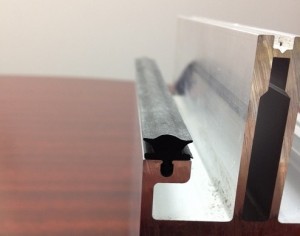 Custom skylight seals need to meet demanding environmental and load testing requirements. When a skylight company faced a sealing challenge, Elasto Proxy provided the perfect solution on a tight timetable.
  Infrastructure projects need sealing and insulation solutions that reduce risk and strengthen product designs. That’s why the industry chooses Elasto Proxy.
 Elasto Proxy, an experienced provider of sealing and insulation solutions, strengthens supply chains in the stainless steel and food equipment industries. Through design assistance, compound selection, and custom-fabrication, we support projects from prototyping to production. Elasto Proxy also offers value-added solutions that speed installation and optimize inventory management. Our rubber and plastic parts arrive ready-to-install, and we can ship them on-demand or according to your sales forecast.
  For over 25 years, Elasto Proxy has strengthened manufacturing supply chains by providing low-to-medium volumes of specialty seals and insulation. Through design assistance, compound selection, and custom fabrication, we support the medical and healthcare industries from prototyping to production. Elasto Proxy also offer solutions that speed installation and optimize inventory management, saving you time and money.
 For fluorosilicone gaskets, manufacturers of pharmaceutical equipment choose Elasto Proxy.