Elasto Proxy makes unmanned underwater vehicle (UUV) parts for sealing and insulation. We support UUV prototyping and production in Canada, the United States, and Europe.
Unmanned underwater vehicles (UUVs) must withstand continuous hydrostatic pressure, saltwater corrosion, biofouling, temperature gradients, acoustic loading, and shock and vibration. Whether it’s during launch, recovery, or propulsion, these conditions place extreme demands on the rubber and plastic parts that provide sealing and insulation.
From hull penetrations and battery pods to sonar arrays and propulsion housings, UUVs need rubber and plastic components that maintain watertight integrity, ensure electrical reliability, and preserve acoustic performance. Whether you’re designing a UUV for military or civilian use, it’s important to understand the conditions that these parts face.
This article provides an engineering‑level overview of how sealing and insulation supports UUV performance across major subsystems. Keep reading to learn more, and contact Elasto Proxy if you’re designing an unmanned underwater vehicle and need these or other components.
The Unmanned Underwater Vehicle Environment
UUVs face environmental challenges far beyond those of unmanned surface vessels (USVs).
- Hydrostatic pressure increases by ~1 atmosphere (atm) every 10 meters (m) of depth.
- Saltwater corrosion aggressively attacks metals – and even some polymers.
- Biofouling can degrade seals and increase drag, which reduces fuel efficiency and speed.
- Thermal gradients can cause material contraction, expansion, and seal failure.
- Acoustic transparency is essential for sonar and sensor performance.
- Shock and vibration can cause structural fatigue or failure.
That’s why the rubber and plastic parts for an unmanned unwater vehicle need to provide:
- Watertight sealing under static and dynamic pressure
- Chemical resistance to seawater, oils, fuels, and hydraulic fluids
- Thermal stability across cold‑water and warm‑water environments
- Acoustic compatibility for sonar and hydrophone systems
- Electrical insulation for high‑voltage battery and propulsion systems
- Mechanical damping to protect sensitive electronics from vibrations

Hull and Pressure Boundary Sealing
The pressure hull is the UUV’s primary structural element. This rigid, watertight internal structure protects internal electronics, batteries, and payloads from external pressure and seawater. Rubber and plastic parts are used at hatches, penetrations, joints, and modular interfaces.
Hatch and Access Panel Gaskets
Access points for maintenance require rubber seals that remain watertight under compression and repeated cycling. Several different types of elastomers are used.
- EPDM sponge provides excellent seawater, UV, and ozone resistance
- Silicone rubber exhibits stable properties across wide temperature ranges
- Fluorosilicone resists direct contact with fuels and oils.
- Nitrile (NBR) is used in oil‑exposed compartments.
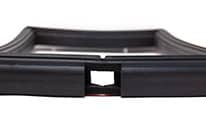
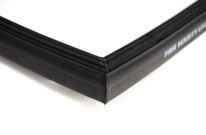
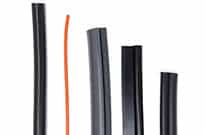
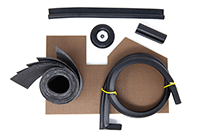
Elasto Proxy fabricates these gaskets from rubber extrusions that are water jet cut to size and then joined in the corners to provide leak-free sealing.
Hull Penetration Seals
The hull of an unmanned underwater vehicle contains openings (penetrations) for electrical and fiber-optic cables, hydraulic lines, sonar transducers, thruster shafts, and pressure-compensated oil reservoirs. These penetrations use the following sealing solutions.
Sealing solutions include:
- Cable glands with compression seals
- Overmolded cable boots made from neoprene or chloroprene
- Bulkhead connector O‑rings made from fluorocarbon (FKM)
- Shaft seals using PTFE‑reinforced lip geometries
Elasto Proxy supplies these and other molded parts in high or low volumes. Various materials are used, but thermoplastic elastomers (TPEs) are becoming increasingly popular because they’re both lightweight and recyclable.
Structural Joint Seals
Modular UUVs with interchangeable payload systems can have bolted hull sections. The joints between these sections need seals that can withstand hydrostatic pressure, accommodate hull flexing, resist compression set, and maintain sealing after repeated assembly/disassembly cycles.
Engineers commonly specify:
- Compression seals for static joints that don’t allow movement
- Shear‑resistant seals for dynamic loading that occurs with changes in direction or position
- Dual‑durometer gaskets that combine a rigid, high-durometer base for stable attachment with a soft, low-durometer bulb for superior sealing.
Elasto Proxy fabricates these products at our headquarters near Montreal, Canada and at our U.S. manufacturing facility in Simpsonville, South Carolina.
Propulsion System Sealing and Insulation
The propulsion systems for unmanned underwater vehicles use electric thrusters, pump‑jets, or hybrid powertrains. Rubber and plastic parts protect these systems from vibration, thermal stress, and the ingress of water.
Thruster Shaft Seals
Thruster shafts need seals that prevent seawater intrusion while minimizing friction. Types include:
- PTFE‑reinforced lip seals for low drag
- Mechanical face seals for high‑pressure environments
- Viton® O‑rings for chemical and temperature resistance
Motor Mounts and Vibration Isolators
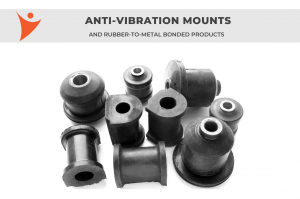
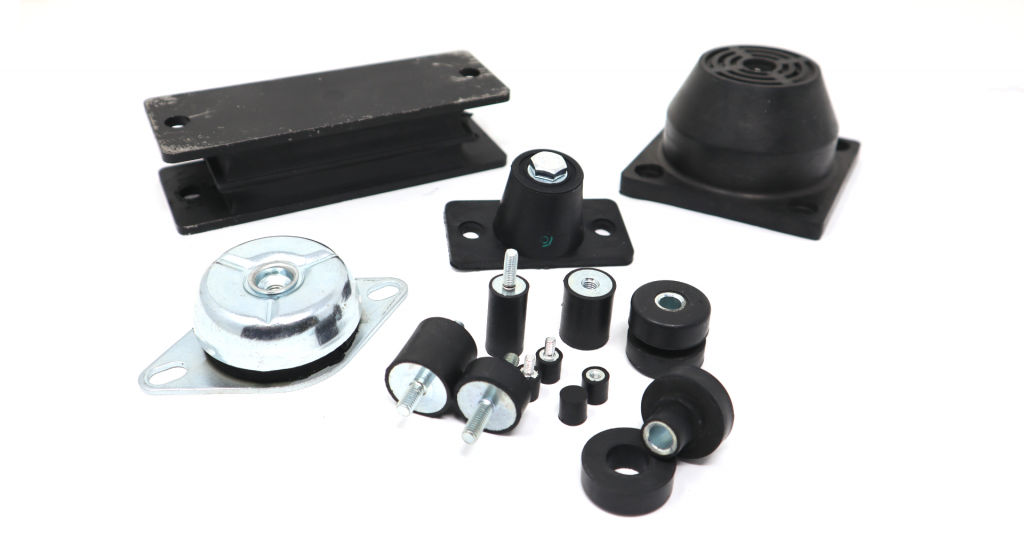
Electric motors generate high‑frequency vibrations that can interfere with sonar and inertial navigation systems. To decouple vibrations and reduce a UUV’s acoustic signature, they use motor mounts and vibration isolators. These rubber-to-metal assemblies typically use natural rubber, EPDM, or silicone as the elastomer.
Cooling System Hoses and Seals
High‑power thrusters and hybrid UUVs often require liquid cooling. Hoses that transport coolant and seals that contain it need seals that resist glycol-based fluids and pressure cycling. Rubber products include fluorosilicones hoses for fluid transport and Viton® O-rings for pump housings. Tubing made of polyurethane, a type of plastic, provides abrasion resistance.

Sensors, Sonar, and Electronics Protection
Unmanned underwater vehicles depend upon acoustic, optical, and inertial sensors for navigation and other mission-critical functions. Rubber and plastic parts protect these systems from water, vibration, and electromagnetic interference (EMI).
Enclosure Gaskets
Electronics housings may require IP68‑level sealing or pressure‑balanced oil‑filled (PBOF) configurations. Enclosure gasket materials include:
- Closed‑cell EPDM for moisture resistance
- Silicone foam for thermal stability
- Conductive silicones for EMI shielding
- UL94‑rated materials for fire protection
Enclosure gaskets are used in UUV navigation computers, motor controllers, and communication modules.
Cable Boots and Harness Protection
Cable boots protect electrical connectors at sonar arrays, thruster pods, external sensors, and towed modules. Molded TPE boots and heat-shrink tubing provide strain relief and electrical insulation.
Acoustic Windows and Transducer Interfaces
Sonar performance depends upon the acoustic properties of UUV components. Parts include polyurethane acoustic windows for soundproofing, rubber isolation mounts that reduce hull-borne noise, and acrylic or polycarbonate optical windows for cameras.
EMI Gaskets
Electrically conductive elastomers such as particle-filled silicones protect sensitive electronics from electromagnetic interference. These EMI gaskets combine environmental sealing with electrical conductivity and corrosion resistance. They’re installed around enclosure doors, connector interfaces, and antenna housings.

Battery and Power System Protection
Many UUVs are powered by high‑capacity lithium‑ion or lithium‑polymer battery packs. Rubber and plastic components provide mechanical protection, thermal insulation, and environmental sealing.
Battery Enclosures
Battery enclosures, or battery pods, often include:
- Gasketed access doors
- Pressure‑equalization vents
- Thermal insulation layers
- Cable channels and strain reliefs
Enclosure panels are made from glass-filled nylon, polycarbonate, or marine-grade composites. Thermal insulation typically uses silicone foams or rubber sheets with micro-pores.
Vent Seals
Temperature fluctuations, charging cycles, and depth-induced compression cause battery compartments to experience pressure changes. Vent seals allow pressure equalization while blocking the ingress of water. Silicone seals are often used.
Connector Boots and High‑Voltage Insulators
UUV power systems use TPE insulators for high-voltage connectors and rubber strain reliefs to prevent cable fatigues. They also used overmolded connector boots for protection against corrosion.

Payload and Mission System Sealing
UUV payloads include side-scan sonar, synthetic aperture sonar (SAS), environmental sensors, mine countermeasure systems, and optical and infrared cameras. Rubber and plastic parts help ensure that these payloads remain operational under pressure.
Sonar and Acoustic System Interfaces
Acoustic systems need materials that don’t distort or attenuate sound waves. Components include acoustic-grade polyurethane windows, rubber isolation mounts, and sealing boots for underwater connectors.
Camera and Optical Payload Sealing
Optical systems need rubber and plastic components that won’t cause fogging, distortion, or mechanical damage. Rubber and plastics parts include:
- Optical‑grade acrylic or polycarbonate windows
- Silicone gaskets with low levels of outgassing
- Rubber mounts for shock absorption
Modular Payload Bay Seals
Modular UUVs with interchangeable payloads use compression seals and quick‑disconnect boots. These components allow rapid reconfiguration while maintaining watertight integrity.
Deck Hardware, Launch/Recovery, and Safety Components
Although UUVs operate underwater, they interact with launch and recovery systems (LARS) on ships or shore facilities. Rubber and plastic parts include:
- Bumpers and fenders to absorb impact
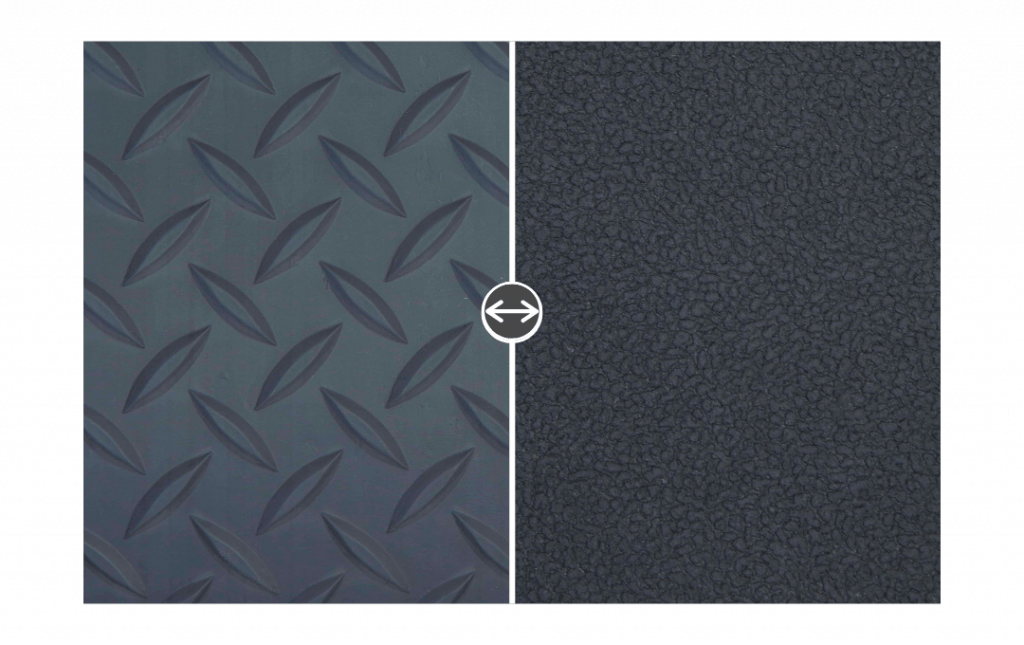
- Rubber mats for anti-slip surfaces
- Plastic fairings to reduce drag and protect thruster housings
Materials such as EPDM, natural rubber, ABS, and polycarbonate are commonly used.
Ask Elasto Proxy for Unmanned Underwater Vehicle Parts
From pressure hull gaskets and shaft seals to acoustic windows and battery insulation, rubber and plastic components are essential to UUV performance. These materials don’t just provide watertight sealing. They can also provide thermal and acoustic insulation, vibration damping, chemical and corrosion resistance, and electrical insulation.
Engineers who design next‑generation UUVs deserve a manufacturing partner instead of just a parts provider. Elasto Proxy is a rubber fabricator and distributor, but we’re also a value-added manufacturer that offers services like design reviews, help with material selection, parts kitting, custom packaging, and warehousing.