Among NATO allies, defense spending on naval ships is rising with the tides of geopolitical uncertainty. Canada’s National Shipbuilding Strategy (NSS), one of the largest naval recapitalization efforts in Canadian history, is accelerating modernization with lifetime program costs of over $80B. In Europe, nearly all NATO maritime nations are replacing Cold War ships with new systems, an effort with expenditures that will eventually exceed €200B. In the United States, the FY2025 National Defense Authorization Act (NDAA) allocated over $30B for U.S. Navy shipbuilding and repairs.
Despite these investments, naval repair and maintenance cycles have struggled to keep pace. The U.S. Government Accountability Office (GAO) has repeatedly documented delays in shipyard overhauls. Similar challenges exist in Canada and Europe, where dry‑dock capacity and skilled labor availability are bottlenecks. Governments are now taking aggressive steps to address these issues, but prime contractors and Tier 1s need strong supply chains to build, repair, and maintain naval vessels. Component-level suppliers with added-value services are part of the solution.
Elasto Proxy supplies rubber and plastic components to the naval industrial base (NIB), but we’re more than a parts provider. We’re a value-added manufacturer that makes it easier for you to buy, store, and install seemingly minor but truly indispensable components. From sealing and insulation to EMI shielding and mechanical and electrical protection, Elasto Proxy supports naval projects in Canada, the United States, and Europe. Keep reading to learn more about the solutions we offer and contact us for a quote or for more information.
Sealing for Naval Ship Doors, Hatches, and Access Panels
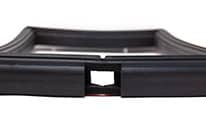
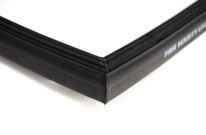
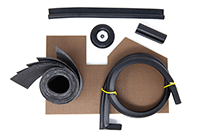
Water intrusion is a persistent threat to naval ships. It can damage electronics, corrode structural components, and compromise structural integrity. Bulb trim, rubber seals with rounded or radiused corners, are installed on doors, hatches, and access panels to prevent water infiltration and keep out the external environment. EPDM, silicone, or neoprene products are typically used.
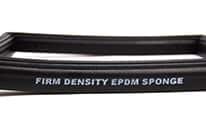
Bulb trim uses compression sealing to maintain watertight integrity. These rubber gaskets also dampen vibrations and insulate naval ship compartments. EPDM bulb trim offers strong resistance to saltwater, sunlight, and ozone. Fire‑resistant bulb trim that meets MIL‑R‑6855 or ASTM D2000 standards is used in areas requiring flame and smoke control.
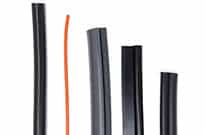
Elasto Proxy sources coils of bulb trim that we offer for distribution or fabricate into finished gaskets. Outsourced fabrication may seem expensive but consider the opportunity cost of using skilled labor to cut and bond rubber instead of work metal. Welders and other skilled laborers are in high demand, and meeting tight timetables requires all hands on deck.

Thermal and Acoustic Insulation for Engine and Boiler Rooms and Compartments
Shipboard engine rooms, boiler rooms, and compartments with machines can be hot and loud. Thermal and acoustic insulation is essential for sailor safety and equipment longevity. With submarines and surface combatant vessels, effective insulation also supports acoustic signature reduction, a concern for maximizing stealth and survivability.
Thermal insulation materials include silicone foam, fiberglass-reinforced composites, and mineral wool. Silicone foam is valued for its low levels of smoke and toxicity, and its ability to maintain its resilience under compression and vibration. Specialty compounds include fire-protection materials that comply with MIL-STD-2031 and ASTM E84 standards.
Acoustic insulation is designed to reduce airborne noise, minimize structure-borne vibration, and reduce the amount of equipment noise that’s transmitted through a ship’s hull. Viscoelastic damping materials, rubber-based acoustic barriers, and composite insulation panels can meet MIL-STD-740 requirements for shipboard noise and vibration.
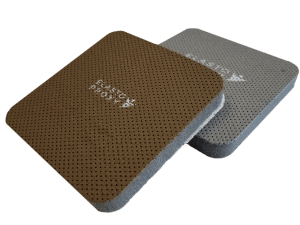
Elasto Proxy makes thermal, acoustic, and thermal-acoustic insulation for naval vessels. Because we use waterjet equipment to cut materials, there’s no tooling to wait for or pay for. Waterjet cutting is fast and precise, and Elasto Proxy can fabricate “sandwiches” of various insulating materials that we laminate together for custom solutions.

Rubber Flooring for Slip‑Resistant, Shock‑Absorbing Naval Ship Decking
Decking on naval vessels must withstand saltwater exposure, vibrations, and wear. Rubber flooring is used because it offers slip resistance, but also because it absorbs shock and dampens vibrations. Often, rubber flooring is found in passageways, berthing areas, engine rooms, workshops, and flight deck support areas. MIL-PRF-24667 and ASTM F2167 standards for decking systems apply.
Elasto Proxy distributes rubber flooring materials and fabricates custom flooring solutions. Our water jet cut products arrive ready-to-install and can include features such as holes for fasteners and straight or chamfered edges. We can also laminate rubber flooring to acoustic insulation for a custom solution that absorbs shock and sounds while reducing slip-and-fall hazards.
EMI Shielding Materials and EMI Gaskets for Naval Ships
Shipboard electronics in metal enclosures require protection against electromagnetic interference (EMI), unwanted signals from an external source. Whether EMI is caused by nearby motors or circuits, naturally occurring phenomenon such as solar flares, or electronic jamming from an adversary, EMI gaskets are used in the bridge, engine control room, and with weapons systems. They’re also used with deck side or shipyard enclosures that must withstand corrosion.
Elasto Proxy fabricates and distributes EMI shielding made of electrically conductive silicones that are filled with silver-coated or nickel-coated particles. Many of these materials are part of the MIL-DTL-83528 Qualified Products List (QPL) from the U.S. Defense Logistics Agency (DLA). We also fabricate EMI gaskets that resist galvanic corrosion caused by salt fog and humidity.

Molded Rubber and Plastic Parts for Mechanical and Electrical Protection
Molded rubber and plastic parts support nearly every mechanical and electrical system aboard a naval ship. These components protect wiring, hydraulics, sensors, and moving parts from environmental and mechanical stresses. Examples include grommets, boots and bellows, cable and connector seals, and custom molded components.
- Grommets made of EPDM or silicone rubber protect cables and hoses that pass through bulkheads or panels. They resist abrasion, dampen vibrations, and provide environmental sealing and electrical isolation.
- Boots and bellows protect joints, actuators, and mechanical linkages in steering systems, hydraulic actuators, and deck equipment. They resist saltwater spray, particulate intrusion, UV exposure, and mechanical wear. Some products meet MIL-R-3065 requirements.
- Cable and connector seals are used with watertight electrical connections and protect against corrosion. They can comply with MIL-STD-810 environmental standards.
- Custom molded components are available at high volumes for new naval ship classes and low volumes for ship repairs and maintenance.
Elasto Proxy supplies molded rubber and plastic parts in any volume. We also offer services like warehousing, kitting, and custom packaging so that defense contractors can secure their parts supply while gaining added value. We can store everything you need, ship it on-demand or in response to your forecasts, and help you reduce the number of SKUs that you need to manage.
Go Flank Speed and Full Ahead with Elasto Proxy
Flank Speed is for absolute maximum power and Full Ahead is maximum normal operating speed. Elasto Proxy is ready to support your naval projects and supply you with rubber and plastic components for shipbuilding, ship repairs, and maintenance activities. Whether you need parts for Canadian, American, or European naval vessels, we’re reporting for duty.
Elasto Proxy will be at the Canadian Naval Maintenance Symposium in March. We are ISO 9001:2015 and AS9100D certified, hold a Controlled Goods Certificate (CGC), and are a woman-owned small business that can help you strengthen your Value Proposition (VP) under Canada’s Industrial and Technical Benefits Policy (ITB).