Inventory waste refers to excess or unused materials in a manufacturing process. It can lead to operational inefficiencies, increased storage costs, and damage to materials. The causes of inventory waste are many and include inaccurate forecasting, inefficient production, and inadequate inventory management. By carrying too much inventory, manufacturers tie up cash, increase storage costs, risk material obsolescence, and reduce overall efficiency.
Elasto Proxy can help you to reduce inventory waste for industrial rubber products. Whether you need custom gaskets, thermal and acoustic insulation, or molded rubber and plastic parts, we can help you reduce this costly form of manufacturing waste. Elasto Proxy is a rubber fabricator and distributor, but we also offer value-added services like warehousing, kitting, and custom packaging. If you issue us a blanket purchase order, we can even release products based on your sales forecast.
Keep reading to learn more and ask Elasto Proxy about how working with us can improve your overall operations. We’re not just parts provider. We’re a manufacturing partner with 35+ years of experience, ISO 9001:2015 and AS9100D quality certifications, and a commitment to fully understanding your needs and meeting them.
Three Forms of Inventory
There are three forms of inventory and, therefore, three forms of inventory waste.
- Raw materials
- Work-in-process
- Finished goods
The following sections explain.
Raw Materials Inventory
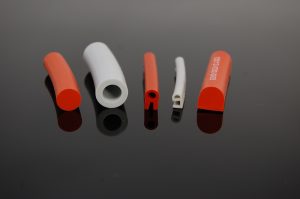
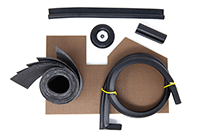
Raw materials are the basic components used in production. Examples include rubber coils that you plan to convert into door seals. When you store too many coils, you tie up cash that could be used elsewhere in your business, such as developing new products, marketing your company, or paying down debts. Reducing your financial flexibility and agility isn’t the only problem, however.
Storing raw materials isn’t free. There’s floor space, shelving, lighting, heating, and cooling to pay for. Insurance premiums on stored goods can be expensive, and you’ll need to protect raw materials from damage or theft. There are also labor costs to consider because workers need to receive, store, organize, track, and pay for these materials. In addition, there’s a risk that raw materials will become unusable because their shelf life has expired.

Work-in-Process Inventory
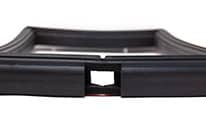
Work-in-process (WIP) inventory consists of partially completed products that are still undergoing manufacturing process. If you make door seals for heavy equipment, then the cut lengths you plan to bond into finished gaskets are an example. They’re no longer the rubber coils you kept in raw materials inventory, but they’re not finished goods that are ready to be installed either. Plus, there are labor costs you can’t recover because the cut lengths are un-sellable in their current form.
Like raw materials inventory, WIP inventory ties up cash, increases holding costs, and risks obsolescence and damage. Too much WIP can also contribute to longer cycle times because products take longer to move through your entire process. When there’s a buffer of partially completed products, it can also be harder to pinpoint problems like quality issues.
Finished Goods Inventory
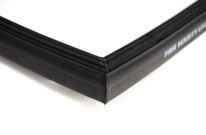
Finished goods are products that are completed and ready for sale to customers, either directly or as part of a larger assembly such the doors on heavy equipment. If you’re carrying too much finished goods inventory, then you’re tying up even more money than in raw materials or WIP inventory. That’s because you’ve added value during each step of your manufacturing process.
Having too much finished goods inventory can also disguise deeper problems, such as poor demand planning and inaccurate forecasting. If you’re a heavy equipment manufacturer, you won’t have to leave a build incomplete because it’s missing a door seal. However, you’ll pay for the storage cost of that item while also risking its damage or obsolescence.

Reduce Inventory Waste with Elasto Proxy
Imagine carrying only the inventory that you need while saving time and money in the process. Instead of storing rubber coils in your own warehouse, you can store them in ours. Then, instead of cutting coils into cut lengths (and storing them once again), you can ask us to convert them using our fast and efficient equipment. We can then ship finished gaskets when you need them, either on-demand or according to your production forecast,
Are you ready to reduce inventory waste for rubber products? Then take the first step and contact Elasto Proxy.