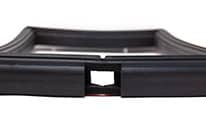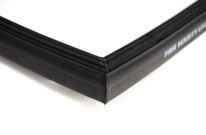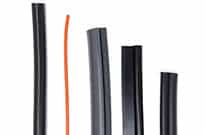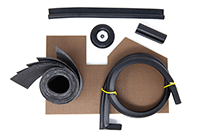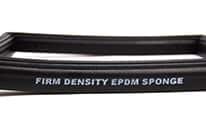
Elasto Proxy fabricates EMI shielding for enclosures and cables in military land systems. We are AS9100D and ISO9001:2015 certified and hold a Canadian Controlled Goods Certificate.
EMI shielding in military land systems helps protect onboard electronics from electromagnetic interference (EMI) that can degrade communications, disrupt navigation, disable weapons systems, or corrupt sensor data. Elasto Proxy fabricates electrically conductive elastomers into EMI shielding that also provides environmental sealing for enclosures and cables.
For more than 35 years, our global company has provided defense contractors with custom sealing and insulation solutions. This article covers material selection, compliance with military specifications, fabrication methods, and gasket installation. Whether you need a conductive gasket for a new platform or a refurbished vehicle, we’re ready to support your mission.
Keep reading to learn more contact us for a quote or to discuss your application.
Material Selection and MIL-DTL-83528
Engineers who design EMI shielding for military land systems may need to specify materials that meet MIL-DTL-83528 requirements. This MIL-SPEC for conductive elastomeric gaskets divides compliant materials into lettered types that provide specific levels of shielding at 10 GHz. A continuous use temperature range is also given.
Each MIL-DTL-83528 type corresponds to a base elastomer and a bimetallic filler. Silicone is a water-resistant polymer that withstands a wide range of temperatures. Fluorosilicone, with its fluorine additions, provides expanded chemical resistance. Elasto Proxy fabricates EMI shielding from the following types of MIL-DTL-83528 elastomers, all of which are solid rubber materials.
- Type A – Silver‑copper silicone (110 dB, -55°C to +125°C.)
- Type B – Silver‑Aluminum Silicone (100 dB, -55°C to +160°C.)
- Type C – Silver‑Copper Fluorosilicone (110 dB, -55°C to +125°C)
- Type D – Silver‑Aluminum Fluorosilicone (90 dB, -55°C to +160°C)
- Type K – Silver-Copper Silicone (110 dB, -45°C to +125°C)
MIL-DTL-83528 also covers compression set, the permanent deformation of a gasket after a compression force (such as a closed hatch) is removed. In addition, it defines mechanical and physical performance requirements. Elasto Proxy can help you to select the correct MIL‑DTL‑83528 material based on all your application requirements. We also offer design reviews prior to fabrication.
Military Vehicles and MIL-STD-461
Military-grade EMI shielding may need to meet MIL-STD-461, which defines specific shielding, grounding, and filtering requirements for electronics in military vehicles. Specifying MIL-DTL-83528 elastomers helps because materials that meet this MIL-SPEC have verified shielding effectiveness, stable electrical conductivity, and proven environmental resistance.
To achieve MIL-STD-461 compliance, military land systems need both enclosure and cable shielding.
- Enclosure shielding fills the gaps between mating surfaces in metal housings.
- Cable shielding eliminates electromagnetic leakage at seams and entry points.
EMI gaskets alone can’t ensure MIL-STD-461 compliance at the electronic system or subsystem level. However, engineers who consider EMI shielding early in their design process are better able to meet this demanding standard. Instead of waiting until your electronics enclosure or cable system is nearly complete, contact Elasto Proxy to discuss your application requirements.
Gasket Fabrication and Installation
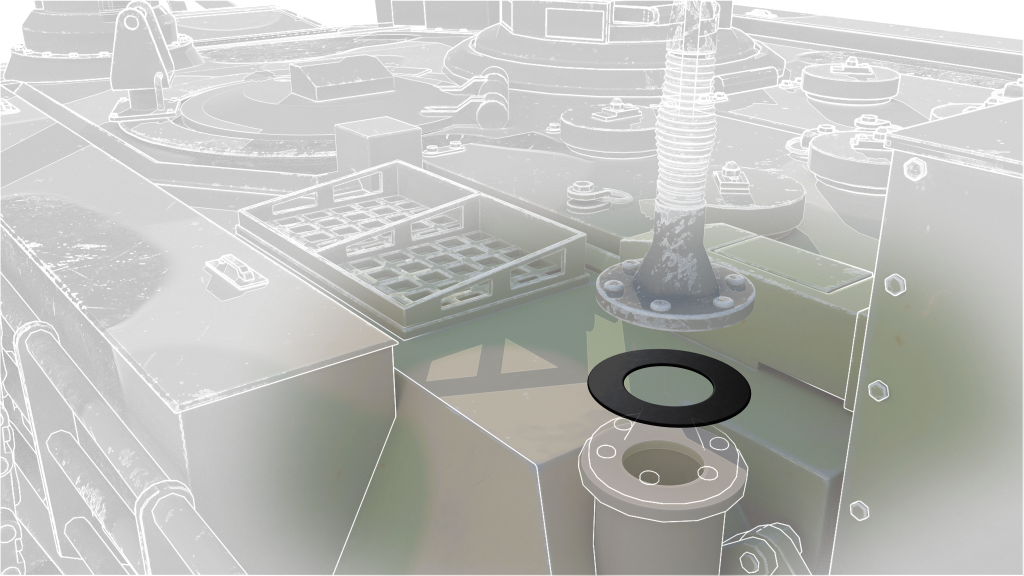
Elasto Proxy combines application knowledge and material expertise with fabrication capabilities that support military land systems from prototyping through production. To convert MIL-DTL-83528 materials into gaskets, we use water jet equipment to cut continuous rolls, sheet materials, and extrusions. This includes custom gaskets and standard M83528 part numbers known as slash sizes.
Water jet cutting is ideal for prototyping and low-to-medium volume production. There’s no tooling to wait for or pay for, and it’s fast and precise – even with complex gasket geometries. Flat EMI gaskets are cut from continuous rolls or sheet materials. EMI gaskets that are fabricated from extrusions are converted into cut lengths that are bonded together with an electrically conductive adhesive.
EMI O-rings that are cut and bonded from extrusions are also joined with an electrically conductive adhesive to prevent EMI leakage. Unlike flat or extruded gaskets, however, conductive O-rings are crushed into place during installation. Some extruded EMI gaskets are designed to be installed over a flange, but flat gasket can be attached with an electrically conductive adhesive backing.
Why Military Land Systems Need Elasto Proxy
Elasto Proxy is more than a gasket fabricator. We’re a manufacturing partner that offers:
- Material selection support
- Design reviews
- Rapid prototyping
- Low‑to‑medium volume production
- Quality assurance and traceability
- Installation guidance
From EMI protection to environmental sealing to manufacturability, we understand the EMI shielding challenges that military land systems face. How can we help you?