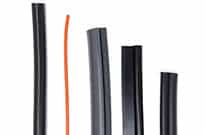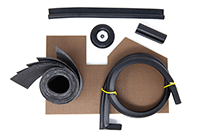
Elasto Proxy supplies rubber products for robots from prototyping through production.
Robots are complex electromechanical systems that are used in demanding environments ranging from factories and warehouses to farms, hospitals, and crime scenes. Metals and rigid plastics provide robots with strength, but rubber products provide sealing, insulation, and shock absorption. Specialized elastomers can also provide shielding against electromagnetic interference (EMI).
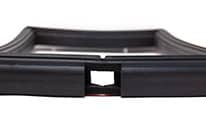
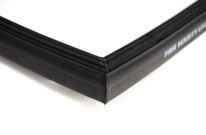
Elasto Proxy supplies the robotics industry with fabricated rubber components like enclosure gaskets and EMI O-rings. We also supply molded rubber parts like boots and bellows. From prototyping to production, Elasto Proxy can strengthen your supply chain and add greater value. Keep reading to learn more and contact us to discuss your application.

Rubber Materials for Robots
From EPDM seals in robotic arms to silicone skins in humanoid robots, rubber is an essential material. There are many different types of rubber, but most are elastic and resilient. That means they return to their original shape after being stretched or compressed, and they do so relatively quickly.
The table below describes some of the rubber materials that Elasto Proxy works with.
Material | Properties | Uses |
Silicone | High flexibility, thermal stability, biocompatibility | Grippers, skins, gaskets |
EPDM | Weather/ozone resistance, electrical insulation | Outdoor seals, boots |
Nitrile (NBR) | Oil/fuel resistance, moderate flexibility | Gaskets, suction cups |
Neoprene | Chemical/weather resistance, cushioning | Vibration isolators, covers |
Fluorosilicone | Fuel and solvent resistance, flexibility at low temperatures | Parts for aerospace robots |
Polyurethane (PU) | Abrasion resistance, mechanical strength | Wheels, bushings, gripper pads |
Where Rubber Products are Used in Robots
Rubber products are used in the following robotics applications:
- grippers and end effectors
- sealing and insulation
- shock and vibration isolation
- human-robot interactions
- EMI shielding and electrical conductivity
- soft robotics
The following sections explain.
Grippers and End Effectors
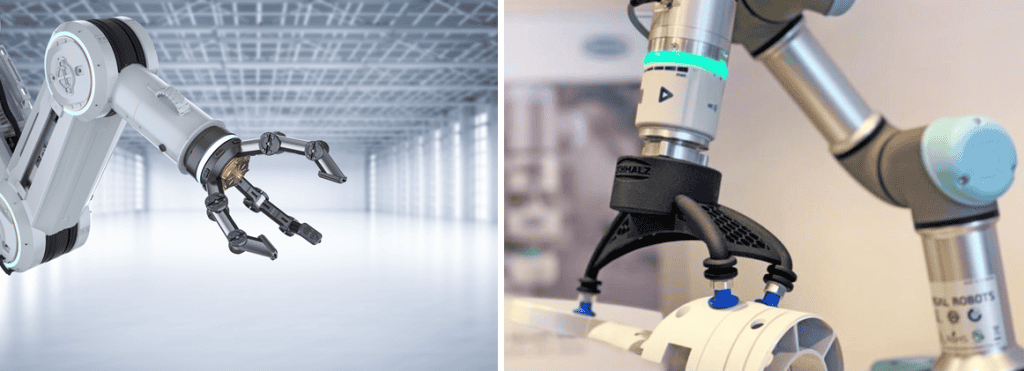
Robotic grippers need secure, adaptive gripping. For example, rubberized pads and liners made of silicone or polyurethane are used for gripping small or irregulary-shaped parts. Flexible suction cups made of silicone, nitrile, or EPDM can create vacuum seals on smooth surfaces for robotic pick-and-place operations.
Sealing and Insulation
Rubber products are also used to seal and insulate enclosures and joints against dust, liquids, and temperature extremes. For example, gaskets made of EPDM, nitrile, neoprene, and fluorosilicone seal sensor housings and control units. Flexible bellows and boots made of EPDM or thermoplastic elastomers (TPEs) protect moving joints and linkages from particulate matter.
Shock and Vibration Isolation
Robots are subject to mechanical shock and vibration from movement, tools, and terrain. That’s why mounts and bushings made of neoprene and polyurethane are used to isolate motors, cameras, and sensors from structural vibrations. The rubber tracks and tires for warehouse robots and autonomous ground vehicles (AGVs) are made of elastomers with high durability.
Human-Robot Interactions
Collaborative robots, or cobots, are designed to work safely alongside humans without the need for safety barriers like metal changes. Humanoid cobots use soft silicone skins and covers. There are also wearable robotic exosuits that use rubber-based sensors for motion tracking and haptic feedback, a technology that allows users to feel physical feedback through sense of touch.

EMI Shielding and Electrical Conductivity
Robots use EMI shielding to protect electronic electronic components from electromagnetic noise that can disrupt or degrade performance. EMI gaskets made from electrically conductive silicones are installed wherever there is an electronic enclosure or signal pathway that requires shielding. The table below lists some examples.
Robotic Subsystem | EMI Shielding |
Control cabinets | Panel seals, enclosure doors |
Servo motors | Housing seams, cable shielding |
Sensors (e.g., LiDAR, cameras) | Sensor covers, mounting points |
Communication ports | Connector gaskets |
Antennas and power systems | Radio frequency shielding |
In addition to EMI gaskets, electrically conductive silicones are used for robotic skins. Additional applications include embedded sensors, stretchable wiring, and strain gauges.

Soft Robotics
Soft robotics are made with flexible, compliant components and can interact safely with humans. Instead of rigid linkages, soft robotics use pneumatic networks and dielectric elastomer actuators.
- Pneumatic networks (pneunets) are systems of interconnected channels and chambers embedded within an elastomeric material.
- Dielectric elastomer actuators (DEAs) are made of stretchable rubber and actuate under electrical fields.
As Elasto Proxy for Rubber Products for Robots
From prototyping through production, Elasto Proxy supplies the rubber products that robotics engineers need. In addition to fabrication and distribution, we offer value-added services like kitting and custom packaging. We can also even bring your production forecast into our materials planning system.
Are you ready to get started? Contact Elasto Proxy.