Choosing the right rubber won’t guarantee a reliable seal. Compound selection is critical, of course. but a seal will fail in the field if it pulls away from its mounting surface. Loose or detached gaskets create leak paths for water, dust, air, and noise. Depending on your application, the consequences can include electrical or mechanical failure, operator discomfort, or costly warranty claims.
To prevent seal detachment, engineers need to balance holding strength with installation speed and long-term performance. Joint geometry, substrate materials, and the end-use application environment are also considerations for sealing success.
This article describes four proven methods for securing industrial rubber seals. Keep reading to learn more and contact Elasto Proxy for ready-to-install gaskets. We’re an experienced rubber fabricator that provides adhesive-backed, push-on, mechanically fastened, and push-in seals.
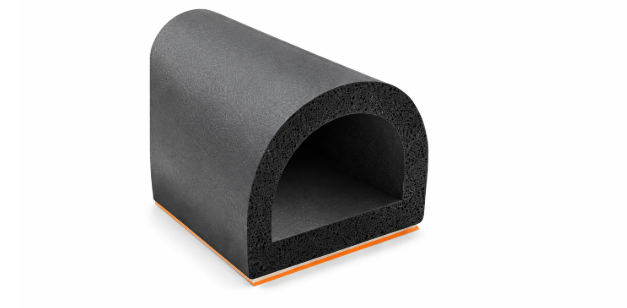
Adhesive-backed seals feature pressure-sensitive adhesive (PSA) tape with a release liner. That’s why they’re sometimes called peel-and-stick gaskets. During gasket fabrication, Elasto Proxy applies PSA tape to the base of the rubber profile or the bottom of the rubber sheet. During product assembly, your installers peel away the protective liner and firmly press the seal onto the mating substrate.
Installation Speed and Substrate Integrity
Gaskets like this don’t require hand drills and mechanical fasteners. That speeds installation, but eliminating drilled holes also preserves the structural integrity and corrosion resistance of painted sheet metal surfaces, powder-coated enclosures, or composite panels. Adhesive-backed seals also avoid creating potential leak paths through the mounting flange itself.
Performance Considerations and Surface Preparation
Peel-and-stick gaskets perform best under light compression – and when the rubber is pushed straight down against the substrate instead of shearing it sideways. However, bond strength depends on substrate compatibility and surface preparation.
- Surface Cleanliness: Oils, mold-release agents, dust, or moisture on the substrate can interfere with seal attachment..
- Surface Energy: Plastics like polypropylene and polyethylene have low surface energy, which interferes with adhesive wet-out. They require special PSAs instead of general-purpose tapes.
- Environmental Exposure: Extreme temperatures, constant immersion in fluids, or high-shear wiping forces can degrade a PSA’s adhesive bonds over time.
Typical Applications for Adhesive-Backed Seals
Adhesive-backed seals are used in stationary enclosures and low-stress joints that require a clean look and rapid assembly. Applications include:
- Electrical and telecom cabinet doors
- HVAC access panels and ductwork flanges
- Light-duty inspection hatches and lighting housings
- Acoustic and thermal insulation panels inside equipment cabs
Adhesive-backed seals are also used for initial fastening prior to the use of mechanical fasteners.
Push-On Seals with Metal Carriers
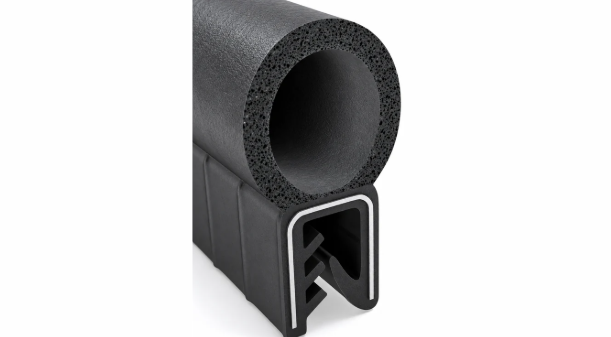
Push-on seals or bulb trim consist of a flexible sealing bulb and U-shaped trim that’s reinforced with an internal metal carrier. The carrier is made from segmented steel, wire, or aluminum and contains a series of clips that grip the edge of a sheet metal or fiberglass flange, such as on a heavy equipment cab or an industrial enclosure.
Rapid Installation and Easy Serviceability
To attach a push-on seal, an installer presses the U-shaped channel over the flange edge either by hand or with a rubber mallet. Inside the channel, gripping features called tongues help hold the rubber profile securely in place. Because there aren’t any adhesive bonds or mechanical fasteners, push-on seals are easy to remove and replace.
Vibration Resistance and Flange Requirements
Unlike adhesives, which can slowly deform under sustained vibration, the metal carrier for a push-on seal maintains consistent clamping pressure along the entire perimeter of the joint. To achieve optimal retention, however, the U-channel must match the thickness of the mounting flange. If the flange is rounded, such as with a hatch, consider the bend radii to avoid kinking and distortion.
Typical Applications for Push-On Seals
Push-on seals are used along exposed edges where durability, rapid assembly, and field serviceability are critical. Industrial applications include:
- Operator cab doors on agricultural, construction, and forestry equipment
- Engine compartment hoods and side access doors
- Removable machine guards and sheet-metal covers
- Storage compartments on service trucks, emergency vehicles, and transit buses
Mechanically Fastened Seals
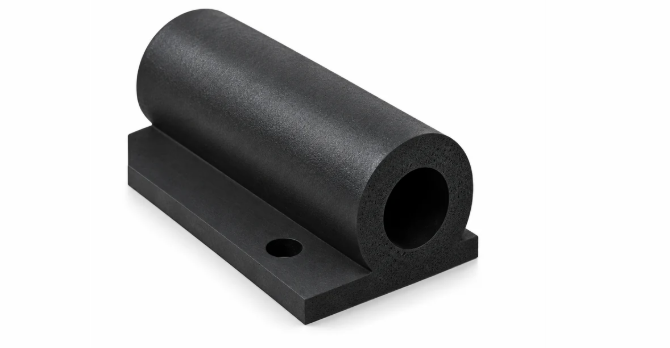
Mechanically fastened seals use physical hardware such as bolts, screws, rivets, clamps, or metal retainer strips for direct attachment to a substrate. With extruded seals, a flat metal bar is sometimes placed over the base of the rubber profile so that fasteners clamp down evenly without tearing through the elastomer.
Positive Mechanical Attachment
Unlike adhesive-backed seals or push-in gaskets, mechanically fastened seals rely upon a physical interconnection between the rubber seal and the mating surface. Consequently, the rubber won’t move away from the joint unless the hardware itself fails. When safety, containment, or extreme conditions leave zero margin for seal detachment, mechanically fastening is recommended.
Retention in High-Vibration and Harsh Environments
Mechanically fastened seals outperform adhesive-backed and push-in seals in high-vibration environments or applications exposed to heavy washdowns, caustic chemicals, and wide temperature swings. However, engineers must ensure proper torque control and bolt spacing so that rubber won’t bulge or extrude between fasteners.
Typical Applications for Mechanically Fastened Seals
Mechanically fastened seals are used with heavy equipment and for demanding industrial environments where maximum retention is required. Applications include:
- Bolted flange gaskets in pumps, valves, and fluid-handling systems
- Heavy-duty sweepers, snowplows, and material-handling skirts
- High-pressure washdown doors in food processing and pharmaceutical equipment
- Blast-resistant enclosures and heavy mining machinery
Push-In Seals (Christmas Tree Seals)
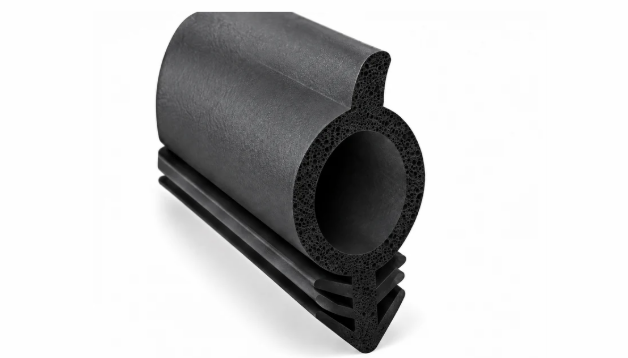
Push-in seals have an insertable stem that looks like an inverted Christmas tree. This stem extends from the base of the profile and contains flexible fins, branches, or barbs. During installation, these angled fins compress as they pass through pre-drilled or punched holes in a mounting panel. After they exit the hole, the fins spring outward to lock the seal into position.
Rapid Assembly Without Loose Hardware
Christmas tree seals combine the ease of push-on installation with the positive retention of mechanical fasteners. Installers simply align the stem with the mounting hole and press it into place. Eliminating separate fasteners reduces bill-of-materials complexity, speeds up repetitive assembly tasks, and prevents dropped hardware from becoming a foreign-object hazard in assemblies.
Secure Mechanical Retention and Hole Tolerances
The angled fins in these rubber seals resist pull-out forces, vibration, and thermal cycling. They also keep the fastening mechanisms completely hidden beneath the sealing bulb. To ensure reliable performance, however, engineers must control these design parameters:
- Hole Diameter: Undersized holes make installation difficult and risk tearing the rubber fins. Oversized holes reduce pull-out resistance and risk seal detachment.
- Panel Thickness: The space between the base of the seal and the top locking fin must match the thickness of the mounting substrate.
- Center-to-Center Spacing: Mounting holes must be close enough to prevent the rubber from sagging between attachment points.
Typical Applications for Push-In Seals
Christmas tree seals are used in high-volume production and when a clean appearance and reliable retention matter. Applications include:
- Military vehicle hatches, armor panels, and troop compartment doors
- Off-road equipment hoods, fenders, and battery box covers
- Commercial truck cab weather stripping and interior trim panels
- Mass transit railcars and specialty trailers
Partner with Elasto Proxy for Custom Seal Fabrication
Choosing the right attachment method can speed product assembly and improve sealing performance and longevity. As an experienced rubber fabricator, Elasto Proxy can help you select the best method for ready-to-install gaskets. Contact us to learn more or request a quote today.