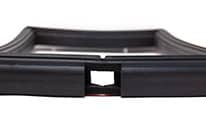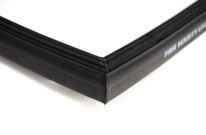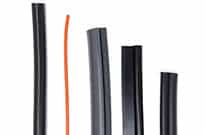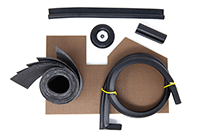
Rubber gaskets form a seal when they’re squeezed, or compressed, between two surfaces – such as a door and door jamb. Whether the gasket is made from solid or sponge rubber, the sealing force that’s generated is what prevents the entry or escape of air, water, and other substances.
The right amount of compression supports reliable sealing, but the wrong amount can cause gasket failure. Proper gasket compression isn’t the only factor in sealing success (or seal failure), but it’s one that engineers can’t afford to overlook.
This article from Elasto Proxy explains the mechanics of gasket compression, describes a failure mode known as permanent compression set, and compares sponge and solid rubber requirements. You’ll also find compression-percentage recommendations for commonly used gasket materials.
Keep reading to learn more and contact us if you’re an engineer who’s looking for a gasket fabricator that offers value-added services like design reviews and material selection assistance.
Why Compression Matters
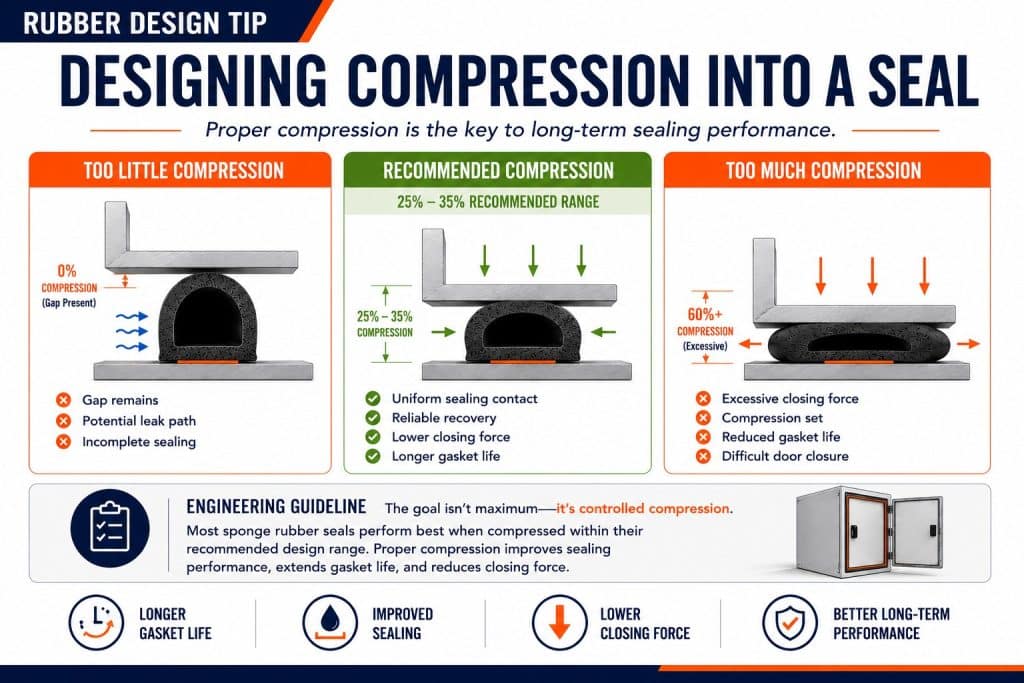
Rubber gaskets seal by creating a barrier under load. When rubber is compressed between two surfaces, it pushes back with a counterforce. Known as compressive stress, this counterforce fills surface irregularities, maintains contact pressure, and prevents fluid migration.
Compression is expressed as a percentage of the gasket’s original thickness. In other words, it indicates how much of the gasket’s original thickness is reduced when the rubber is squeezed between two surfaces.
If the compression is too low, the gasket can’t generate enough sealing force. If the compression is too high, the gasket may deform permanently and fail to bounce back to its original size when the compressive force is removed. In other words, the gasket reaches permanent compression set.
Solid Rubber Gaskets
Solid rubber gaskets require higher compression percentages because they don’t contain readily-compressible air pockets, or cells, like sponge rubber gaskets do. Solid rubber and sponge rubber are both elastomers, but the presence or absence of a cellular structure is a key difference.
Typical Compression Range for Solid Rubber
- 20–30% compression is recommended for most solid rubber materials
- 15% minimum is required to achieve a reliable seal
- Above 35% risks over‑compression and permanent deformation
Elasticity and Durometer in Solid Rubber
Elasticity is a material’s ability to stretch or deform under load and then return to its original shape once the load (such as a closed door) is removed. With gaskets, elasticity is what allows the rubber to rebound, maintain its sealing force, and recover after compression.
With solid rubber gaskets, the elastomer’s durometer or hardness affects its elasticity. More specifically, durometer measures how resistant a rubber is to indentation. It directly affects:
- Required compression force
- Ability to conform to surface irregularities
- Long‑term sealing stability
- Risk of permanent compression set
Soft, Medium, and Hard Rubber
The solid rubber materials that Elasto Proxy fabricates into gaskets have durometers that are measured on the Shore A scale. Depending on the durometer, a gasket material can be described as soft, medium, or hard.
- 40–50 Shore A: Soft, conforms easily, seals with lower bolt load
- 60–70 Shore A: Medium hardness, common for industrial gaskets
- 70–80 Shore A: Harder materials for high‑pressure or high‑temperature sealing
Compression Recommendations by Durometer
Durometer affects the amount of compression to apply to a solid rubber gasket. It’s not the only consideration, but it’s an important one.
- 40–50 Shore A: 20–25% compression
- 60 Shore A: 25–30% compression
- 70 Shore A: 30–35% compression
- 80 Shore A: 35% maximum (risk of compression set increases)
Harder materials require higher compression percentages to generate sealing force; however, harder materials also reach the limit of safe compression more quickly.
Sponge Rubber Gaskets
Sponge rubber gaskets contain tiny air pockets, or cells, that are either open or closed. Open cells allow fluids (including air) to pass between pockets. Closed cells do not. That’s why closed-cell sponge rubber is a better choice for water sealing.
When a sponge rubber gasket is compressed, its cellular structure allows the gasket to conform to surfaces with less force than a solid rubber gasket would require. However, because sponge rubber is less dense, more compression is needed to achieve a reliable environmental seal.
Typical Compression Range for Sponge Rubber
- 30–50% compression is standard for most closed‑cell sponge materials
- 50–60% may be required for soft open‑cell foams, cellular rubbers that are like sponge rubber but manufactured using a different process
- Above 60% risks crushing cells and losing resilience
Closed‑Cell vs. Open‑Cell
There are also compression differences to consider between closed-cell and open-cell sponge.
- Closed‑cell sponge: Best for water sealing; compress 30–40%
- Open‑cell sponge: Best for air/dust sealing; compress 40–60%
Tip: When comparing sponge rubber materials, remember that closed cells don’t require as much compression and are better at maintaining their sealing force under load.
Compression Set and Seal Failure
Permanent compression set, which is typically just called “compression set,” is the amount of permanent loss that a gasket experiences after being compressed and held under pressure. Think of a door gasket that fails to “bounce back” to its original shape when the door is opened.
If a rubber gasket takes a permanent “set”, it flattens out and will fail to block air, water, or dust. This results in leaks and requires the replacement of the gasket, which will not “bounce back” to its original thickness once it’s reached this failure mode.
How Compression Set Influences Compression Requirements
Gasket materials with a higher risk of compression set require:
- Lower compression percentages (i.e., you can’t compress them as much)
- More frequent replacement
- Avoidance of high temperatures or long-term static loads
Gasket materials with lower risk of compression set can tolerate:
- Higher compression percentages (i.e, you can compress them by a higher percentage)
- Long-term sealing loads
- Thermal cycling
Recommended Compression Percentages by Gasket Material
Here are some general guidelines for compression percentages by gasket material. Shore A durometer ranges are listed in parentheses.
Solid Rubber Materials: Recommended Compression
EPDM (40–70A)
- Recommended compression: 20–30%
- Excellent weathering and ozone resistance
- Good compression set performance
Nitrile (NBR) (50–70A)
- Recommended compression: 25–35%
- Resists oils and fuels
- Higher compression set than EPDM
Neoprene (50–70A)
- Recommended compression: 25–30%
- Good general-purpose industrial material
- Moderate compression set
Silicone (40–60A)
- Recommended compression: 20–25%
- Excellent high/low temperature performance
- Very low compression set
Fluorosilicone (50–70A)
- Recommended compression: 20–25%
- Resists fuels, solvents, and aggressive chemicals
- Low compression set
FKM (Viton) (60–80A)
- Recommended compression: 25–35%
- Excellent chemical and heat resistance
- Higher hardness requires more compression
Sponge Rubber Materials: Recommended Compression
Closed‑Cell EPDM Sponge
- Recommended compression: 30–40%
- Excellent for outdoor environmental sealing
Closed‑Cell Neoprene Sponge
- Recommended compression: 30–40%
- Good for HVAC, marine, and general industrial sealing
Silicone Sponge
- Recommended compression: 30–50%
- Used for extreme temperatures and electronics enclosures
Open‑Cell Polyurethane Foam
- Recommended compression: 40–60%
- Used for dust sealing, not water sealingo
Additional Engineering Considerations
The type of rubber (solid vs. sponge), the durometer, and the specific elastomer aren’t the only engineering considerations when it comes to gasket compression.
- Surface Roughness: Rougher surfaces require higher compression or softer materials.
- Bolt Load: Insufficient bolt load creates insufficient compression.
- Flange Design: At high compression, narrow flanges increase the risk of extrusion.
- Temperature: Heat accelerates compression set, especially in NBR and neoprene.
- Chemical Exposure: Swelling reduces sealing force and increases compression set.
Ask Elasto Proxy for Value-Added Gasket Fabrication
Proper gasket compression isn’t guesswork. It’s a controlled engineered parameter that can make the difference between sealing success and seal failure. Solid rubber materials typically require 20–35% compression, while sponge materials require 30–50%. Durometer directly influences how much compression is needed, but it’s not the only consideration.
By selecting the gasket right material and applying the correct compression percentage, you can achieve long-term sealing performance. If you’re an engineer who needs a gasket fabricator that offers design reviews and material selection assistance, we encourage you to contact us.