Elasto Proxy makes unmanned surface vehicle (USV) parts that provide sealing and insulation. We support USV prototyping and production in Canada, the United States, and Europe.
Unmanned surface vehicles (USVs) must withstand water and salt spray, ultraviolet (UV) radiation from the sun, ozone from the air, temperature changes, and shock and vibration. These conditions place tough demands on the rubber and plastic parts that are used to seal and insulate hulls and superstructures, payloads and propulsion systems, and sensors and electronics.
Whether you’re designing a USV for military or civilian use, it’s important to understand the conditions that rubber and plastic parts face and how material selection affects performance. After all, these parts provide the environmental sealing, vibration damping, corrosion resistance, and thermal and acoustic insulation that autonomous vessels need to operate safely and reliably.
This article provides an engineering‑level overview of how rubber and plastic components support unmanned surface vehicle performance across major subsystems. Keep reading to learn more, and contact Elasto Proxy for USV parts for sealing and insulation.

Hull and Superstructure Sealing
The hull is a USV’s primary structural element and provides buoyancy, strength, and shape. It also determines the vessel’s ability to withstand water and environmental exposure. Rubber and plastic parts are used at access points, openings (penetrations) and structural joints.
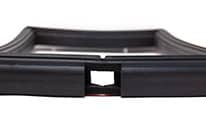
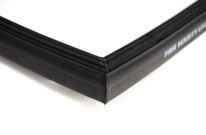
Hatch and Access Panel Gaskets
USVs need watertight hatches and access panels so that maintenance personnel can reach electronics bays, fuel tanks, batteries, and mission modules. Sealing solutions include:
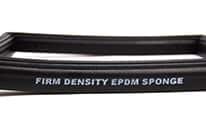
- EPDM sponge gaskets for UV and ozone resistance
- Silicone gaskets for high‑temperature stability
- Neoprene or nitrile gaskets for oil or fuel exposure
These seals compress when a hatch or access panel is closed and maintain their integrity with repeated opening and closing.
Hull Penetration Seals
The hull of an unmanned surface vehicle includes openings for components that need watertight sealing. Rubber products for these penetrations include:
- Cable glands for where electrical cables enter
- Cable boots for where cables meet electrical connectors
- Sensor seals for sonar, and for measuring depth and temperature
- Cooling water inlets for internal combustion engines
- Antennas seals for hull-mounted antenna masts.
Engineers have a choice of rubber materials, but thermoplastic elastomers (TPEs) can be molded into lightweight, recyclable USV parts.
Structural Joint Seals
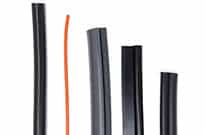
Modular USVs with interchangeable payload systems can have bolted hull sections. Structural joint seals keep out water while accommodating the hull flexing that’s caused by dynamic loading under marine conditions. Rubber extrusions are fabricated into gaskets and provide:
- Shear‑resistant joint seals that act as flexible shock absorbers
- Vibration mounts that dampen vibrations from waves, engines, and propulsion systems.
- Gap‑filling compression seals that fill gaps between hull panels

Unmanned Surface Vehicle Propulsion Systems
An unmanned surface vehicle can be equipped with an electric, diesel, gasoline, or hybrid propulsion system. Rubber and plastic parts protect these systems from water, vibration, and thermal stress.
Shaft Seals and Bearing Protection
Shaft seals include lip seals and face seals that prevent seawater from entering and lubricants from leaking. PTFE-reinforced seals provide low-friction and long service life. Viton combines high-temperature resistance with strong temperature resistance.
Engine Mounts and Vibration Isolators
Internal combustion engines produce vibrations that can damage USV electronics and degrade the accuracy of sensors. That’s why they use parts made of natural rubber, EPDM, or silicone.
- Engine mounts secure the engine and prevent excessive movement
- Vibration isolators absorb and dissipate kinetic energy that causes vibrations
Fuel System Hoses and Seals
USV fuel systems need hoses and seals that resist swelling and chemical degradation. Rubber compounds and components include:
- Viton O‑rings for fuel injectors and pumps
- Fluorosilicone hoses for wide temperature ranges
- Polyurethane fuel bladders for lightweight, flexible storage

Unmanned Surface Vehicle Sensors and Electronics
USVs are equipped with navigation systems, radar, LiDAR, automatic identification system (AIS) transponders, cameras, and communication modules. Rubber and plastic parts protect these systems from water, vibration, and electromagnetic interference (EMI).
Enclosure Gaskets
The electronics housings for an unmanned surface vehicle may require IP67 or IP68‑rated sealing or UL94V-0 fire protection. Enclosure gasket materials include:
- Closed‑cell EPDM for moisture resistance
- Silicone foam for wide temperature ranges
- Conductive silicones and fluorosilicones for EMI shielding
These gaskets are used in navigation computers, motor controllers, and communication radios.
Cable Boots and Wire Harness Protection
Rubber cable boots are used at antenna mast bases, radar housings, and deck-mounted sensors. The seal electrical connectors and help prevent cable fatigue. In wire harnesses, plastic heat-shrink tubing provides electrical insulation and resists abrasion.
Radomes and Sensor Window Frames
The radar, LiDAR, and optical sensors aboard an unmanned surface vehicle don’t just need rubber. They also need plastic parts like these:
- Polycarbonate radomes for impact resistance
- ABS or nylon frames for sensor windows
- Acrylic optical covers for camera protection
EMI Gaskets
EMI can degrade or disrupt the performance of GPS, radar, and communications systems. Gaskets made of electrically conductive silicones or fluorosilicones combine shielding with sealing and can resist galvanic corrosion, a problem in marine environments. EMI gaskets are installed around electronic enclosure doors, connector interfaces, and antenna bases.

USV Powertrain and Battery System Protection
Electric and hybrid USVs use high‑capacity lithium‑ion or lithium‑polymer battery packs. Rubber and plastic parts provide mechanical protection and environmental sealing.
Battery Enclosures
Battery enclosures consist of panels, gasketed access doors, venting systems, cable channels, and layers of thermal insulation. The panels can be made of plastic. The thermal insulation consists of solid or foam rubber materials such as silicones.
Vent Seals
Vent seals keep out water and support pressure equalization. That’s important because battery enclosures experience pressure changes due to temperature changes. Silicones are used for vent seals because they resist a wide range of temperatures and maintain their properties.
Connector Boots, Insulators, and Strain Reliefs
USV powertrains and battery systems also use these components:
- Connector boots protect against short circuits, corrosion, and mechanical damage
- TPE insulators resist high voltages
- Rubber strain reliefs prevent cable fatigue.

Payload and Mission System Sealing
USV payloads range from hydrographic sensors and mine countermeasure systems to electro-optical/infrared (EO-/IR cameras) and environmental monitoring packages. Rubber and plastic parts help keep these payloads safe and operational.
Sonar and Acoustic System Interfaces
Underwater acoustic systems need to maintain acoustic transparency so that sound waves can pass through with minimal loss or reflection. They use:
- Isolation mounts to reduce hull-borne noise
- Sealing boots to protect underwater connectors
- Transducer windows made of acoustic‑grade polyurethane
Camera and Optical Payload Sealing
EO/IR cameras provide USVs with situational awareness, including the ability to detect, identify, and track targets at long range in all-light conditions. EO/IR cameras use:
- Optical‑grade acrylic or polycarbonate windows such as focus windows for distance
- Low-outgassing silicone gaskets for sealing without outgassing that can cloud lenses
- Shock‑absorbing rubber mounts for camera stabilization
Modular Payload Bay Seals
An unmanned surface vehicle that supports interchangeable payloads needs to support rapid reconfiguration. Rubber parts include compression seals for module interfaces and quick-disconnect cable boots for electrical cables.
Deck Hardware, Fittings, and Safety Components
Rubber and plastic parts also support the deck‑level systems on an unmanned surface vehicle.
- Rubber bumpers absorb impact energy, protect hull coatings, and reduce structural stress. Materials include EPDM, natural rubber, and reinforced elastomers.
- Plastic fairings reduce drag and protect components such as thruster housings, mast bases, and sensor mounts. Materials include ABS, polycarbonate, and glass-filled nylon.
- Anti‑slip deck mats improve safety during maintenance operations. They combine slip resistance with UV stability and, in some cases, oil and fuel resistance.
Ask Elasto Proxy for Unmanned Surface Vehicle Parts
Rubber and plastic parts provide the sealing, insulation, vibration control, and environmental protection that’s required for marine environments. From hull gaskets and shaft seals to battery enclosures and sensor radomes, they ensure that USVs remain watertight and mission‑ready.
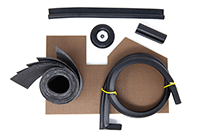
Elasto Proxy fabricates low-to-medium volumes of parts like USV seals and gaskets. We can also provide you with molded rubber and plastic components in any volume. In addition, we offer value-added services that simplify parts procurement and management. Ready to learn more?