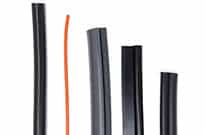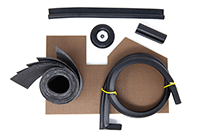
Elasto Proxy makes rubber and plastic UAV parts for manufacturers of civilian and military drones. We can support you from prototyping to production in Canada, the U.S., and Europe.
Manufacturers of unmanned aerial vehicles (UAVs), or drones, use rubber and plastic parts as structural, functional, and protective components. Whether these parts are cut or molded, rubber and plastic components weigh less than metal or composite ones. Rubber and plastic UAV parts also combine design flexibility and manufacturability with dependable sealing and insulation.
For drone designers and engineers, it’s important to understand where these UAV parts are used and how they support lighter, more reliable, and easier to manufacture products. Elasto Proxy supplies components to UAV manufacturers and can help you solve challenges ranging from material selection and fabrication to inventory and delivery.
Keep reading to learn more and contact Elasto Proxy for a quote. We’re ready to supply you with custom solutions for the airframe, propulsion system, avionics, battery, powertrain, and more.
Airframe Interfaces and Structural Isolation
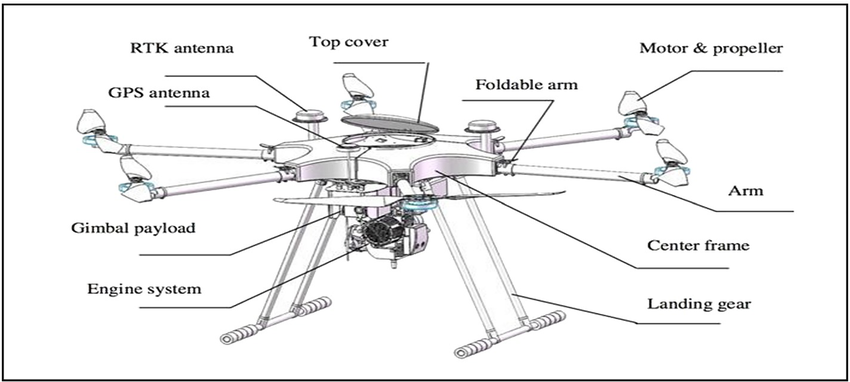
The airframe is the drone’s main body. All major subassemblies, such as propellers and motors, are mounted to this chassis. Rubber and plastic parts are used throughout the airframe for vibration isolation and damping, environmental sealing, and protection against shock.
Vibration Mounts
Vibration mounts help protect avionics, motors, and camera systems. Brushless DC motors (BLDC) have a superior power-to-weight ratio but generate high-frequency vibrations that can degrade the accuracy of inertial measurement units (IMUs): electronic sensor modules that use gyroscopes and accelerometers. BLDC vibrations can also loosen fasteners and fatigue structures.
Bumpers and Skids
Landing gear bumpers and drone skids absorb impact energy during takeoff and landing. On multi-rotor drones such as quadcopters, molded rubber feet protect carbon tubes and distribute loads. Fixed-wing UAVs, including vertical takeoff and landing (VTOL) drones, use rubber shock blocks in the belly skids of wheel assemblies to prevent structural damage from vibrations.
Gimbal Isolators
Gimbal isolators decouple or physically separate the camera or sensor payload from the airframe. By breaking the direct path through which vibrations travel, they prevent high-frequency, small-amplitude disruptions from reaching the camera. In addition to supporting image quality, gimbal isolators protect components such as pan motor bearings from strain or deformation.

Propulsion System UAV Parts
A drone’s propulsion system exposes UAV parts to heat, fluids, lubricants, and continuous dynamic loading. Rubber and plastic parts are available in compounds that can withstand these conditions. They can also support UAV lightweighting for greater fuel efficiency or longer battery life.
Propeller Hubs and Guards
Propeller hubs attach to the motor shaft and help cushion vibrations. Propellers guards (prop guards) are cage-like frames that surround the rotor blades. As their name suggests, they’re designed to protect the propellers and prevent direct contact with objects during flight. Government regulations, such as FAA Part 107, require prop guards for civilian drones that will fly over people.
Fuel System Seals and Hoses
Drones with internal combustion engines (ICE) use lightweight, high-performance fuel seals and hoses. Self-sealing hoses can withstand punctures and are made of fuel-resistant elastomers such as Viton™ or fluorosilicones. Fuel seals and O-rings are also made of these materials. Fuel bladders are made of rubberized fabrics or polyurethane for flexibility and light weighting.
Engine Mounts and Exhaust Isolators
Engine mounts and exhaust isolators are used on ICE or hybrid-electric drones to manage heat and high-frequency vibrations. Unlike all-electric drones, which typically use rigid mounts, hydrocarbon-powered drones require more flexible materials to protect the airframe and avionics. In hybrid-electric UAVs, rubber bushings isolate the fuselage to prevent vibration transfers to avionics.

Avionics, Sensors, and Electronics Protection
Avionics, the electronics used on drones, are among a UAV’s most sensitive subsystems. Consequently, rubber and plastic parts are used to seal, insulate and protect them. Electromagnetic interference (EMI) can also affect drone performance, but EMI gaskets can help.
Environmental Seals and Gaskets
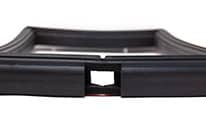
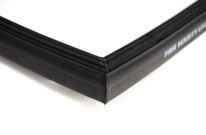
Environmental seals and gaskets are used for sealing sensitive electronic components against dust, moisture, water, and vibration. These rubber and plastic parts are used with flight control units, camera pods, sensor housings, and battery compartments. Some environmental seals and gaskets can help drones achieve IP65 or IP66 ratings. Others can also provide EMI shielding.
Wire Harness Boots
Wire harness boots protect electrical connections against vibration, moisture, and debris. They’re used where wiring harnesses connect to electronic speed controllers and around heavy-duty connectors on power cables. Custom rubber boots are also used for landing gear protection and with flight controllers and battery connectors.
Sensor Window Frames and Radomes
Sensor window frames are structural components that hold and surround the clear, optical glass or dome that covers a sensor. They protect cameras, LiDAR, and thermal imagers from dust, debris, and moisture. A drone radome is a protective, weatherproof, and electromagnetically transparent housing that covers antennas and radar sensors.
EMI Gaskets
EMI gaskets shield flight controllers, global positioning systems (GPS), and other avionics from electromagnetic interference. These gaskets use silicones or fluorosilicones as the base elastomer and contain metal or metal-coated particles. EMI gaskets for UAVs are installed within electronic enclosures or connector interfaces.

Battery and Powertrain UAV Parts
All-electric and hybrid-electric drones typically use lithium-ion or lithium-polymer battery packs, assemblies of individual battery cells that deliver a specific voltage. Rubber and plastic UAV parts are used for mechanical protection, thermal stability, and electrical insulation.
Battery Housings
Battery housings on drones are protective cases that are typically made of ABS, polycarbonate, or nylon blends for impact resistance and flame retardancy. These plastics can be molded into lightweight enclosures with integrated latches, vents, and cable channels. Battery housings also provide a secure mounting point for attaching the battery to the drone’s frame.
Gaskets and Vent Seals
In drone powertrains, rubber gaskets and vent seals protect motors and avionics from dust, moisture, and environmental contamination while allowing for pressure equalization. Rubber gaskets create a weatherproof seal around battery housing doors. Vent seals are used for managing pressure differentials caused by temperature changes.
Connector Boots and Insulators
Connector boots are protective, flexible covers that shield electrical connectors for damage, environmental hazards, and strain. Insulators prevent accidental short circuits by insulating the exposed metal parts of a connector. Both types of UAV parts can use thermoplastic elastomers (TPE) or silicone to protect high‑current connectors from vibration and environmental exposure.

Airframe Sealing and Aerodynamic Components
Rubber and plastic UAV parts also contribute to a drone’s aerodynamic efficiency and environmental sealing across the fuselage and wing structures. The drone fuselage houses electronics such as flight controllers and provides an attachment point for arms, motors, and landing gear.
Access Panel Gaskets
Drone access panel gaskets are used for sealing inspection hatches, electronic bays, and battery compartments. Depending on their materials of construction, these gaskets can also provide EMI shielding around sensitive avionics. Specialized UAV gaskets are also used to seal the area between the antenna base and the drone’s outer shell.
Wing Root Seals
Wing root seals (wing root gag seals) reduce drag by preventing air leakage and maintaining aerodynamic smoothness at structural joints. They’re typically fabricated from rubber extrusions made of neoprene, EPDM, or silicone. Stabilizer root seals or tail root seals also serve to close the gap between the airframe and the stabilizer surface.
Fairings and Aerodynamic Covers
Fairings and aerodynamic covers are also used to minimize drag. Fairings are made of plastic and cover motor housings, enclose landing gear components, and smooth wing-to-fuselage joints. Aerodynamic covers are typically molded from ABS, polycarbonate, or glass‑filled nylon: materials that offer a balance of stiffness, impact resistance, and manufacturability.
Choose UAV Parts from Elasto Proxy
Rubber and plastic UAV parts are essential for drone reliability, performance, and manufacturability. They’re used in propulsion systems, airframes, avionics, payloads, and powertrains to provide sealing, insulation, vibration dampening, structural support, and environmental protection. UAV manufacturers have a choice of vendors, but it pays to pick a partner who provides greater value.
Elasto Proxy fabricates low-to-medium volumes of parts like UAV gaskets but we can also provide you with molded rubber and plastic components in any volume. In addition, we can store materials or products for you and release them upon request or according to your sales forecast. Our kitting and custom packaging services can also simplify your purchasing and inventory management.