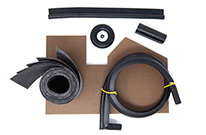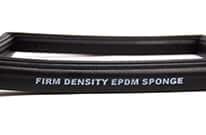
Avionics EMI Gaskets

EMI Gasket FabricationEMI gasket fabrication requires more than just cost-effective cutting. Precision, accuracy, and reliability are critical. In Part 2 of this series, you’ll learn how Elasto Proxy fabricates EMI gaskets made of particle-filled silicones for military and defense applications.
Clyde Sharpe
General Manager at Elasto Proxy

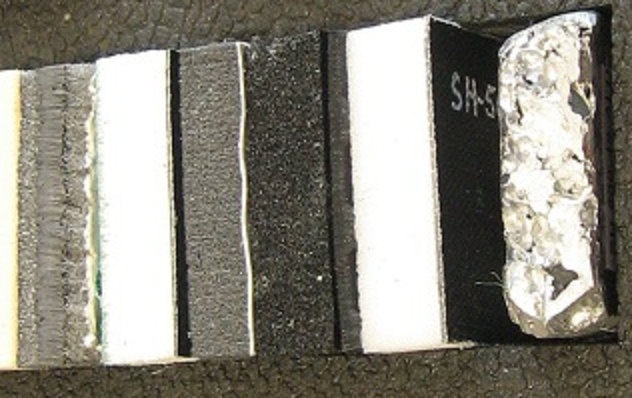
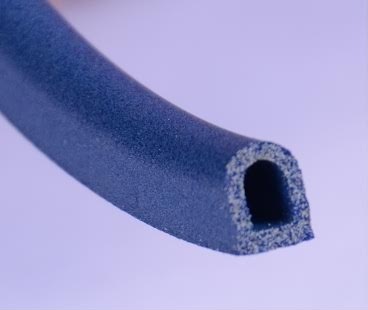
EMI gaskets made of particle-filled silicones are used with joints and seams in metal-to-metal interfaces. This EMI shielding conducts electricity and ensures conductivity even when there are discontinuities along metal surfaces. As we learned in Part 1 of this series, elastomeric shielding gaskets are filled with either metal- or metal-coated particles. These shielding materials combine the useful physical and chemical properties of silicone rubbers with reliable electrical conductivity and specific levels of resistance to electromagnetic interference (EMI).

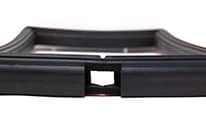
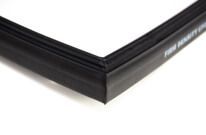
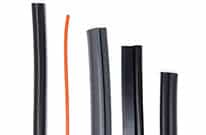
In Part 2 of this series, we’ll examine how the custom fabrication of EMI gaskets supports shielding for military and defense applications. Accordingly, it’s important to note that product designers need these EMI gaskets in many different shapes and sizes. In addition to square gaskets and knife-edge profiles, examples include C, D, L, and M-shaped profiles. There are various ways to convert particle-filled silicones from sheets or rolls into specialized shapes, but water jet cutting offers advantages over methods such as die cutting.
(more…)

Continue ReadingAvionics EMI Gaskets

EMI Shielding and Conductive Silicones

EMI Gaskets from Elasto Proxy

Particle-filled silicones are elastomeric compounds that combine the advantages of silicone rubber with the electrical properties of metals. In Part 1 of this series, you’ll learn how shielding silicones support custom EMI gaskets.

Silicone rubber is a synthetic elastomer with useful physical and chemical properties over a wide range of temperatures. Silicones resist weathering, ultraviolet light, oxidation, moisture, and many chemicals. Polydimethylsiloxane (PDMS) compounds are also flexible, permeable, and non-irritating to human skin. With applications ranging from medical gaskets and oven seals to building expansion joints and lubricants, silicone rubbers are versatile materials.

(more…)

Continue ReadingEMI Shielding and Conductive Silicones

Butyl Rubber Gaskets

Butyl Ruber Applications: Seals and Gaskets

Learn about the properties of butyl rubbers and the applications for butyl rubber seals and gaskets.

Doug Sharpe
President of Elasto Proxy

Did you drive to work today? Maybe you took the bus instead. If your commute involved traveling on tires, then butyl rubber helped get you there. Tires are made of several different elastomers, but butyl plays a special role. Because this synthetic rubber resists the passage of gases, butyl is used for the inner liner, the part of the tire that holds the compressed air. Butyl also resists moisture, and that helps keep the steel belts that are embedded in car, truck, and bus tires from rusting. Butyl resists chemicals, too.

(more…)

Continue ReadingButyl Rubber Gaskets

High Temperature Thermal Insulation

Learn how to select thermal insulation for ovens, engine bays, and other high-temperature applications.

Clyde Sharpe
General Manager of Elasto Proxy

Acoustic and Thermal InsulationThermal insulation is used in high-temperature environments such as ovens and engine compartments. Many different types of materials, including fireproof rubber, are available. Choices include ceramic fiber, fiberglass, mineral fiber, mineral wool, polyurethane, silicone, and various specialty or proprietary materials. As you can see from this list, some thermal insulation is made of polymers. Others, such as metal foils, are not.

Thermal insulation materials come in different forms, too. Choices include boards, blocks, cords, coated fabrics, flexible sheets, foams, paper, and tapes. As a custom fabricator, Elasto Proxy can source thermal protection materials in these and other form factors. We then convert stock items to create specialty thermal insulation that meets all of your application requirements.

For example, using our water jet cutting machine, Elasto Proxy can convert sheets of melamine foam into thermal insulation with specific length and width dimensions. Our skilled production personnel can also convert thin sheets of aluminum foil-faced fiberglass fabric. Sometimes, however, cutting isn’t that all you need. That’s because your application requires more than just thermal insulation.

(more…)

Continue ReadingHigh Temperature Thermal Insulation

Rubber Bumpers for Shock Absorption, Stopping, Safety, and Illumination

Doug Sharpe President of Elasto Proxy Elasto Proxy designs and custom-fabricates elastomeric bumpers with metal inserts, LED lights, and other features for a wide range of applications.  These high-quality, low-to-medium…

Continue ReadingRubber Bumpers for Shock Absorption, Stopping, Safety, and Illumination