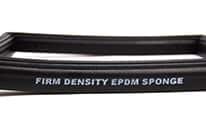
Fluorosilicone Gaskets for Sealing and Insulation

Fluorosilicone Gaskets
Video: Fluorosilicone Gaskets from Elasto Proxy

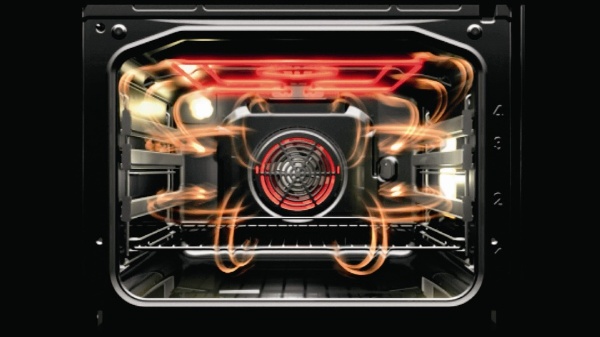
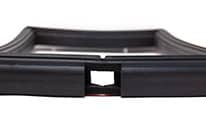
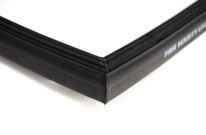
Fluorosilicone gaskets combine the high and low temperature resistance of silicones with the fuel and oil resistance of fluorocarbons. Some fluorosilicone gasket materials also resist abrasion and provide EMI shielding. Is fluorosilicone the right rubber for your gasketing application?

Fluorosilicones combine the temperature resistance of silicones with the fuel, oil, and solvent resistance of fluorocarbons. Applications for these extreme-environment elastomers include automotive, aerospace, defense, electronics, and semiconductor manufacturing.

For technical buyers and design engineers, however, choosing the right rubber can involve more than just specifying a temperature range, oil or fuel type, and industry. Is flurosilicone rubber right for your sealing and insulation application? If so, what type of fluorosilicone compound do you need? Some provide specialized properties that you might not expect.  (more…)

Continue ReadingFluorosilicone Gaskets for Sealing and Insulation

How to Choose Rubber Edge Trim

Video: Rubber Edge Trim from Elasto Proxy

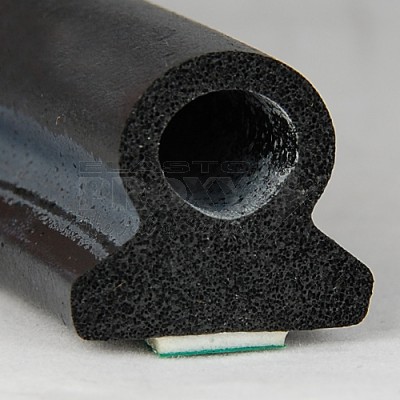
Rubber edge trim protects metal surfaces and provides sealing and insulation. Learn how to choose edge trim for your application, and how durometer (hardness), core type, and elastomer type affect product selection. Then when you’re ready, download the product catalog.

Rubber edge trim is used to finish and protect exposed metal edges while providing sealing and insulation. Applications include car doors, truck cabs, machine guards, kitchen equipment, and other sheet metal surfaces. For technical buyers and design engineers, choosing the right edge trim means selecting the right rubber based on the application requirements. Buyers and designers also need to specify rubber edge trim with wire cores or segmented cores. Durometer, or the rubber’s hardness, is also important. (more…)

Continue ReadingHow to Choose Rubber Edge Trim

Rubber Channels for Sealing and Insulation

Rubber Channels from Elasto Proxy
Video: Rubber Channels from Elasto Proxy

Rubber channels keep window glass from rattling and seal out wind, weather, and water. Learn how to select rubber channels for your application, and how custom channels are fabricated from standard rubber profiles.

Rubber channels help to secure window frames and hold window glass in place. They eliminate rattling and provide protection against weather, water, dust, rust, and drafts. Most rubber channels are formed through extrusion, a manufacturing process that creates profiles with complex cross-sections and a smooth surface finish. Beaded rubber channels contain stainless steel beads to support installation without stretching or pulling. Unbeaded glass run channels with coated linings are also available.  (more…)

Continue ReadingRubber Channels for Sealing and Insulation

Neoprene Gaskets for Oil Resistance and Outdoor Sealing

Video: Neoprene Gaskets

Neoprene gaskets are made of oil-resistant elastomers that also provide weather resistance and environmental sealing. Learn more about neoprene rubber’s applications and advantages, and how finished neoprene gaskets are custom-fabricated from standard neoprene profiles.

Neoprene gaskets provide resistance to oils, greases, and waxes; oxidation and ozone; and weathering and water immersion. A type of synthetic rubber (SR), neoprenes are a large family of elastomeric materials that are available in various types or grades. Some are compounded with EPDM or NBR to impart specific properties. Chemical, temperature, and flame resistance varies by neoprene compound, but neoprene rubber is generally known for its oil resistance and use in outdoor applications. (more…)

Continue ReadingNeoprene Gaskets for Oil Resistance and Outdoor Sealing

Extruded Rubber Seals: Five Types You Need to Know

Extruded Rubber Seals - Video
Video: Extruded Rubber Seals

Extruded rubber seals support complex cross-sections and a smooth surface finish. They include bulb, bulb trim, lip, door, and accordion seals. You’ll find all five types in Elasto Proxy’s catalog, along with many other rubber extrusions that are ready for custom fabrication.

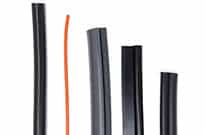
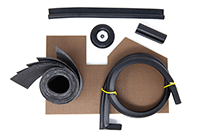
Rubber profiles are made of elastomeric compounds and produced through molding or extrusion. Lengths of standard rubber products are then custom-fabricated to meet application requirements such as length. Rubber molding processes such as injection, compression, and transfer molding have their advantages, but extrusion supports the creation of rubber profiles with complex cross-sections and a smooth surface finish. As a custom fabricator, Elasto Proxy stocks extrusions made of solid rubber and sponge rubber, and can convert these standard products into specialty seals that meet your specific requirements. (more…)

Continue ReadingExtruded Rubber Seals: Five Types You Need to Know

Adhesive Taping vs. Mechanical Fastening

Video: How to Attach Taped Rubber Parts

Learn how adhesive taping attaches rubber parts to plastic, metal, and glass surfaces – and why taped gaskets provide a strong, reliable alternative to mechanical fasteners such as bolts and screws. Then, download the Make It or Buy It? E-Book. 

Rubber parts such as door seals, edge trim, and weather stripping can be attached to plastic, metal, or glass surfaces. Mechanical fasteners like screws and bolts are strong and reliable, but installation is time-consuming. The use of adhesive tapes can speed assembly, but taping also offers other important advantages. By understanding these benefits, and how high-strength adhesive tapes compare to mechanical fasteners, you can choose the best attachment method for your rubber parts. If taping is right for your sealing or insulation application, you can then decide which type of taping you need. (more…)

Continue ReadingAdhesive Taping vs. Mechanical Fastening

EPDM Gasket Fabrication: Water Jet Cutting, Bonding, Taping

EPDM gasket fabrication supports environmental sealing and electrical insulation. Learn how Elasto Proxy custom fabricates EPDM profiles into finished EPDM rubber gaskets. Then, download the Sealing Essentials E-Book. EPDM gaskets…

Continue ReadingEPDM Gasket Fabrication: Water Jet Cutting, Bonding, Taping

Extruded Rubber Profiles for Custom Seals and Gaskets

Video - Extruded Rubber Profiles
Click to Watch the Video

Learn how extruded rubber profiles are made, and how custom fabrication converts elastomeric stock materials into specialty seals and custom gaskets. Click here for Elasto Proxy’s catalog of standard profiles.

Rubber extrusion is a manufacturing process that creates stock materials or profiles with a fixed cross-section such as a U-shaped channel. First, uncured elastomers are pushed or drawn through a specialized metal tool called a die. Later, the rubber compound is cured through vulcanization, a chemical conversion process that uses heat and sulfur to impart durability and improve mechanical properties.

Rubber extrusion is used with many different types of elastomers, and this rubber manufacturing method supports complex cross-sectional profiles with an excellent surface finish. Because extrusion mixes and blends the raw materials, the cured rubber offers consistent strength and a uniform appearance along the length of the profile. Standards from the Rubber Manufacturers Association (RMA) define part tolerances based on physical dimensions and an RMA class of high precision, precision, or commercial. (more…)

Continue ReadingExtruded Rubber Profiles for Custom Seals and Gaskets

Vulcanized Gaskets and Rubber O-Rings

Hot SplicingLearn about hot splicing for rubber gaskets, and how vulcanization creates O-rings, door gaskets, window gaskets, and other spliced seals.

Hot splicing or vulcanization is a cost-effective joining technique for creating continuous seals or endless gaskets from cut lengths of rubber products. First, a heat-activated adhesive is applied to the ends of sponge or solid profiles. In addition to rectangular profiles, rubber products such as round cords, industrial tubing, and irregularly-shaped rubber profiles can be hot spliced, too.

Next, the ends of the profiles are pressed together and placed in a hot mold or vulcanizing press. The heat activates the rubber-based glue, and pressure from the mold or press creates a reliable, attractive joint for continuous sealing. Proper dwell time is important, and hot spliced gaskets should be stored under controlled conditions in warehouse environments according to standards such as DIN 776 or ISO 2230.

(more…)

Continue ReadingVulcanized Gaskets and Rubber O-Rings