When buyers source industrial rubber products, they often focus on a single metric: the unit price. On paper or in a spreadsheet, purchasing individual components from multiple vendors might seem economical. Line by line, rubber parts like boots, bellows, and grommets are relatively inexpensive – especially compared to fabricated metal assemblies.
Yet the unit price doesn’t tell the full story.
The true cost of rubber products is about more than what’s on the invoice. It includes vendor management overhead, inventory management inefficiencies, and labor and material waste on the shop floor. When you examine the entire lifecycle from purchase order to final assembly, buying rubber parts individually can inflate your total expenses.
Kitting is an enterprise-level strategy that reduces or eliminates these hidden costs. By grouping related components into a single stock-keeping unit (SKU), manufacturers can save time and money while improving efficiency. There are times when buying individual parts makes sense, but buyers who write-off kits as “too expensive” are missing the big picture.
This article from Elasto Proxy compares the true costs of kitted parts versus individual parts across procurement, warehouse management, and production. Keep reading to learn more and contact us to learn how buying parts in kits can help you to reduce manufacturing waste.
Understanding Total Cost of Ownership
Total Cost of Ownership (TCO) captures direct and indirect expenses throughout a component’s entire lifecycle. For industrial rubber products, costs are added during three distinct stages:
- Procurement and Administration: Sourcing components, evaluating vendor scorecards, issuing separate purchase orders, and reconciling multiple accounts payable invoices.
- Material Handling and Inventory: Receiving shipments, inspecting lots, managing warehouse racking, tracking discrete SKUs, and absorbing inventory carrying costs.
- Assembly and Production: Moving parts to the production line, unpackaging them, sorting lookalike components, navigating staging areas, and keeping things moving.
If you’re only looking at the unit price, you’re missing the big picture.
Individual Parts: The Hidden Costs of Component Sourcing
For many manufacturers, ordering rubber parts individually is a long-standing practice; however, it introduces administrative and logistical liabilities.
Vendor and SKU Proliferation
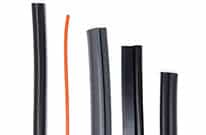
Purchasing extruded profiles, molded grommets, vibration mounts, and thermal-acoustic insulation can require multiple suppliers. In turn, working with each supplier involves contract negotiations, performance scorecards, audits, and inbound shipping logistics.
Internally, this creates SKU sprawl. Managing dozens of individual part numbers increases more than just your inventory holding costs. Front-office personnel must spend time tracking purchase requisitions and resolving billing discrepancies across separate suppliers.
Complex Receiving and Warehouse Handling
Every shipment that arrives at your receiving dock requires physical unloading, intake logging, quality inspection, and transport to warehouse shelving. When parts arrive in disparate bulk cartons or generic protective wrap, stockers spend more time sorting, labeling, and shelving.
Production Inefficiencies and Manufacturing Waste
Sourcing individual parts also affects other personnel:
- Excessive Transit Time: Assemblers or pickers make repeated trips from workstations to warehouse bins to gather all the rubber parts for a build.
- Picking Errors: Different rubber products may have the same color or similar features. Picking the wrong part can result in slowdowns or manufacturing downtime.
- Handling Damage and Waste: Bulk packaging forces workers to pick parts from many boxes. Parts can become damaged, and there’s packaging waste to discard.
Kitted Parts: Driving Down True Costs
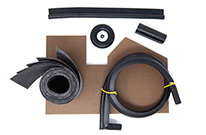
Kitting groups and packages two or more related components together under a single, unified SKU. Taking this approach reduces TCO in measurable ways.
Vendor and SKU Management
Instead of issuing five separate purchase orders to five suppliers, a buyer issues one purchase order to a single vendor. There are fewer vendor scorecards to review, and having fewer SKUs simplifies inventory management.
Logistics and Volume Discounts
Manufacturers who buy kitted parts can reduce costs by eliminating shipping fees for multiple small packages. They can also simplify logistics by consolidating freight into organized, regular deliveries. Agreeing to buy a certain number of kits on a schedule can also help you get volume discounts.
Custom and Assembly Packaging
Individual parts usually arrive in standard packaging that requires unboxing and manual sorting. By contrast, kitted parts can come in custom packaging that’s tailored to your assembly environment:
- Tag-and-Bag / Labeled Bags: Individual bags marked with part numbers, barcodes, or sub-assembly designations simplify identification and tracking.
- Custom Boxed Sets: All the rubber parts installed at one workstation arrive in one box, and all the rubber parts installed at another workstation arrive separately.
- Assembly Packaging (Installation Order): Inside the container, parts are arranged in the sequence of installation. The part to install first is on top, and the part to install last is on the bottom. Assemblers can pull and place each item without sorting and visual inspection.
Reduced Scrap and Shop-Floor Waste
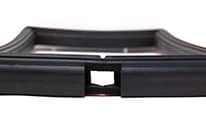
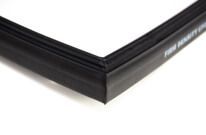
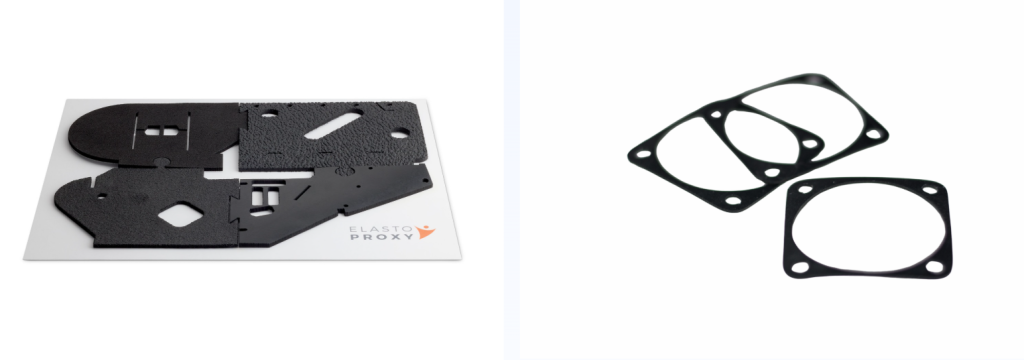
When kitted parts arrive pre-cut, pre-sorted, and properly protected, handling is minimized. For example, finished door gaskets arrive defect-free and ready-to-install. There isn’t a need to measure and cut rubber extrusions, bond the cut lengths, and spray-on adhesives.
When to Choose Kitted Parts vs. Individual Parts
Kitting promotes efficiency but are still scenarios when buying individual parts makes more sense.
When to Choose Kitted Parts
Kitted parts are recommended when multiple components are installed together during a specific manufacturing stage or operation. For example:
- Heavy Equipment and Automotive: All the insulation that’s needed for a heavy equipment cabin, or all the molded parts needed for an automotive seat assembly.
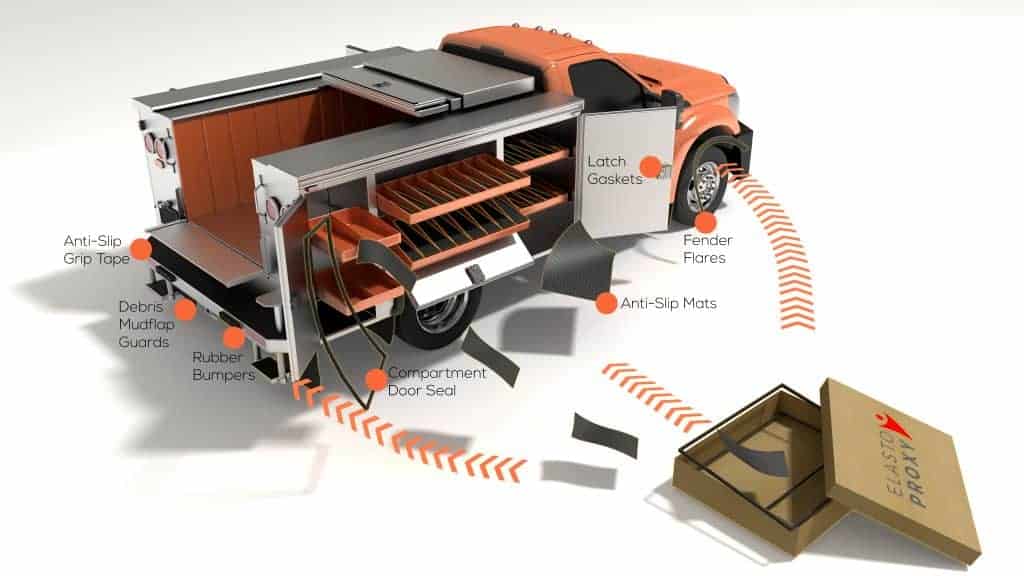
- Service Truck Bodies: Latch gaskets, compartment door seals, fender flares, anti-slip grip tapes, and mudflap guards that are installed at the same time.
- Enclosures and Machinery: Door or hatch seals, acoustic insulation, and grommets for wire feed-throughs.
When to Choose Individual Parts
Buying individual parts is recommended when components are installed alone or used outside regular production activities. For example:
- Aftermarket Field Service and Repairs: Replacing an isolated part like a worn door or hatch seal during routine equipment maintenance.
- Low-Frequency Replacement Parts: Components with highly variable replacement cycles that do not coincide with other sub-assembly maintenance intervals.
- Simple, Single-Component Assemblies: Products that require only one rubber part on a bill of materials (BOM) that includes mainly machined metal products.
Partnering with Elasto Proxy for Custom Kitting
Comparing kitted parts to individual parts means balancing unit price against TCO. Buying rubber parts separately may look economical on a purchase order, but there are hidden costs that don’t show up under the total amount.
Elasto Proxy provides custom fabrication plus value-added services like kitting, warehousing, and logistics. We can package everything your assemblers need into clean, clearly marked kits – and we can even package your parts in assembly order.
Are you ready review a BOM ad find opportunities for SKU reduction and kitting?