Learn how flange finish affects sealing with bulb trim and other rubber gaskets.
Flanges are protruding lips, ridges, or rims that are used to connect components together. When you open a car door, for example, there’s a metal flange where the inner body panel, outer quarter panel, and roof structures are welded together.
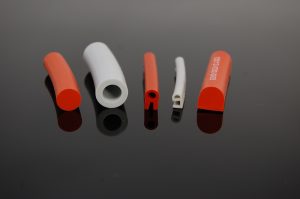
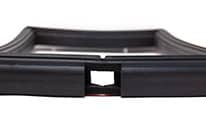
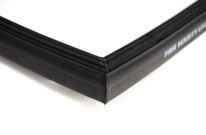
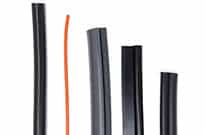
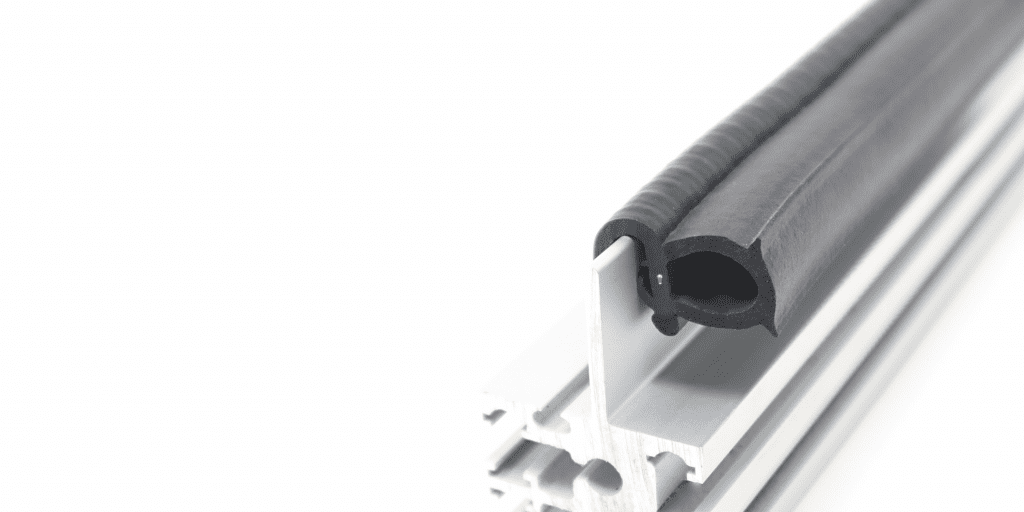
If you can’t see this metal flange, it’s probably because a rubber bulb trim has been pushed directly onto it to provide sealing and insulation. A bulb trim seal consists of a retainer or trim section that grips the flange and a compressible bulb that flattens when the door is closed.
The surface texture of the flange – the flange finish – determines how well the bulb trim conforms to the metal and maintains a seal over time. A flange finish that’s too smooth, too rough, or has the wrong surface texture can cause the gasket to leak immediately or experience gradual failure.
This article from Elasto Proxy examines how surface roughness and machining patterns can affect bulb trim and other types of rubber gaskets. Keep reading to learn more and contact Elasto Proxy for gasket fabrication that’s backed by over 35 years of industrial sealing expertise.
Understanding Flange Finish Metrics
Engineers who want to understand how a flange’s finish will interact with a rubber gasket need to look beyond the cleanliness of the metal’s surface. It’s important to remove any dirt or contaminants, but don’t overlook the flange’s micro-geometries.
There are three metrics that affect flange finish:
- Roughness average (Ra) is the mathematical average of surface height deviations measured across a sample length. It’s typically expressed in microinches (µin) or micrometers (µin).
- Mean peak-to-valley height (Rz) is the average distance between the highest peak and the lowest valley over adjacent sampling lengths. Two lengths can have the same Ra, but a length with high Rz peaks can over-stress thin rubber.
- Surface lay is the predominant surface pattern that’s created by machining or manufacturing operations. Examples include concentric serrations, continuous spirals, and parallel lines.
How Rubber Materials Interact with Surface Imperfections
Rubber gaskets provide sealing through a process called elastic deformation. When compressive stress is applied to the gasket, the rubber flows into the microscopic peaks and valleys (Ra) of the mating flange.
A gasket’s ability to fill these tiny valleys depends on three physical factors.
- Durometer (Hardness): Softer elastomers (30 to 50 Share A) readily conform to rougher surfaces under lower sealing stress. Harder elastomers (70 to 90 Shore A) require higher clamping loads to force the rubber into the flange’s micro-grooves.
- Compressive Stress: Without enough initial stress, the rubber cannot completely fill the grooves in the flange’s surface. This leaves leak paths for liquids or gases.
- Gasket Thickness: Thicker rubber profiles or sheet materials are better at conforming to flanges with wavy finish or surface irregularities.
Too Rough, Too Smooth, and Just Right
What’s the right flange finish then? It’s about striking a balance. A flange finish that’s either too rough or too smooth can cause seal failure.
Flanges That Are Too Rough
Flanges that have an Ra greater than 250 µin or 6.3 µm can cause the following problems.
- Micro-Leak Paths: If the surface roughness exceeds the rubber’s ability to deform under load, microscopic channels stay open beneath the gasket’s face.
- Localized Stress Risers: High peaks on machined surfaces concentrate compressive loads. This risks shearing the rubber during installation or creating localized tears.
- Permeation and Creep: Uneven stress across a rough flange accelerates localized bolt relaxation, which causes the gasket to thin.
Flanges That Are Too Smooth
Flanges that have an Ra less than 250 µin or 6.3 µm can cause the following problems.
- Gasket Extrusion and Blowout: Rubber requires friction against the flange face to resist lateral movement, or extrusion. Under compressive load, a flange with a mirror-smooth finish can cause the rubber to slide laterally, distort, or blow out entirely.
- Friction Lock Deficit: Grooves left behind by machining help anchor the rubber to the flange. Without these micro-valleys, low-durometer rubber gaskets may squeeze out of the joint during initial torquing.
The Right Flange Finish
Most rubber gaskets work best with a flange finish that’s between 125 µin or 250 µin Ra (3.2 µm to 6.3 µm). This includes solid EPDM, NBR, neoprene, and silicone rubber – materials that Elasto Proxy commonly fabricates into seals and gaskets.
For softer sponge rubber or cellular silicone materials, smoother finishes can be used in lightweight enclosures. Typically, the recommended flange finish ranges from 63 µin to 125 µin Ra (3.2 µm to 6.3 µm). Elasto Proxy also fabricates sponge rubber materials.
Surface Lay and Serration Types: Concentric vs. Continuous Spiral
Roughness average is important, but so is surface lay and the type of serration.
- Concentric Serrations: Grooves in a concentric circle pattern create a series of independent barriers across the flange face. This is the ideal flange finish for fluid and gas containment because a leak would have to cross every individual barrier to escape.
- Continuous Spiral Serrations: These grooves resemble a vinyl record and are better for soft metallic or semi-metallic gaskets than for rubber ones. That’s because if a rubber gasket doesn’t completely fill the grooves, there’s a risk of creating a continuous leak path.
- Smooth or Un-serrated Finishes: These finishes are common with sheet metal housings, extruded aluminum frames and plastic injection-molded enclosures. However, they require controlled surface roughness to maintain adequate friction for sealing.
Best Practices for Design Engineers
For best results, don’t wait to think about sealing until your metal flanges have been machined. Instead, integrate the following guidelines into your design and procurement process.
- Specify Ra and Surface Lay on Your Flange Drawings: Never leave flange finish as “standard shop finish”. Call out explicit Ra ranges and specify a concentric or non-directional lay for critical sealing applications.
- Match Rubber Durometer to Flange Condition: Choose harder rubber for smooth surfaces that are precision-machined. Choose lower-durometer rubber or sponge profiles for rougher cast iron or legacy flanges.
- Account for Thermal Expansion and Chemical Exposure: Temperature fluctuations and chemical contact affect rubber over time. Make sure that the initial friction at the flange face is enough to retain the gasket throughout its service life.
- Consider Fastener Spacing and Flange Stiffness: A gasket where there’s bowing between bolts has uneven seating stress. Even an ideal flange finish can’t compensate for this severe structural deflection between fasteners.
Partner with Elasto Proxy for Engineered Sealing Solutions
Achieving a leak-tight seal requires evaluating the entire sealing system, from the rubber material and gasket geometry to fastener loading and flange surface characteristics. At Elasto Proxy, we help customers achieve sealing success. Contact us to discuss your gasket designs and discover the benefits of value-added fabrication.