
Cold Bonding vs. Injection Molding for Rubber Gaskets

Finished Gaskets - BlogCold bonding for finished gaskets joins cut lengths of rubber without the use of heat. This bonding technique isn’t performed under low-temperature conditions but is manual process that requires a brush and glue. By contrast, injection molding is a semi-automated process that uses a C-press machine with a heated barrel, metal plates, and tons of pressure. To join cut lengths, uncured rubber is used.

By understanding how these joining processes work, engineers can make better decisions about which types of finished gaskets to choose. It’s also important to understand the advantages of disadvantages of each bonding technique. In this week’s article, we’ll compare cold bonding with injection molding in terms of capabilities, costs, and quantities. (more…)

Continue ReadingCold Bonding vs. Injection Molding for Rubber Gaskets

Hot Splicing vs. Vulcanizing for Rubber Gaskets

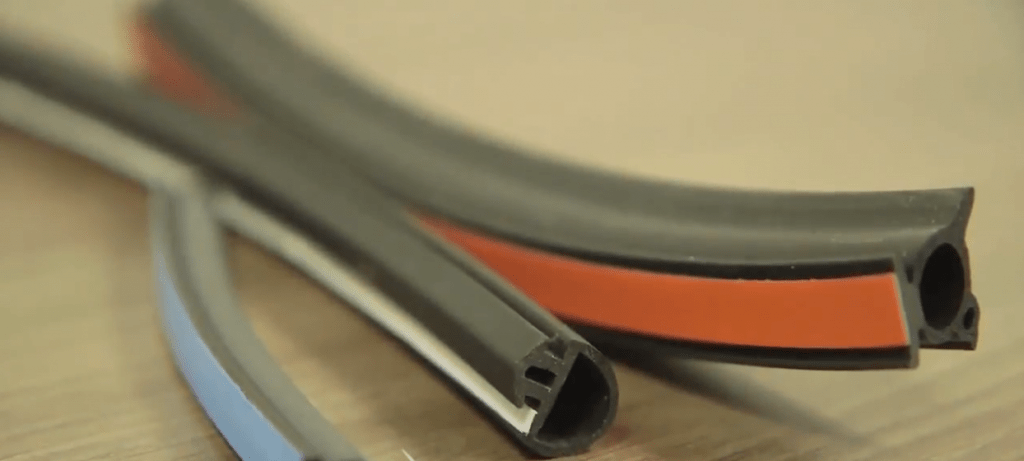
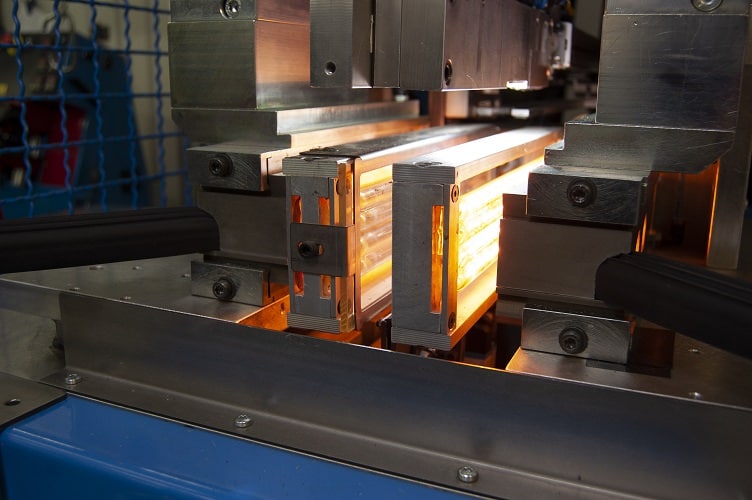
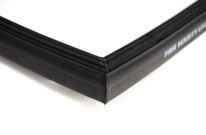
Bonded GasketsHot splicing uses heat, pressure, and a film splice to join the ends of rubber profiles into bonded gaskets. This joining technique uses either a conventional heating source or infrared (IR) light and polyethylene (PE) film. Hot splicing creates strong bonds at the molecular level and generally provides better results than vulcanization, a bonding technique that uses uncured rubber instead of a film splice.

Choosing the best way to bond rubber gaskets can be a complex decision, however. The profile material is just one of many considerations. You also need to consider the size and shape of the seal, production quantities and costs, and the way that lengths of rubber are cut. In addition, it’s important to inspect and install your gaskets properly to ensure reliable sealing and prevent avoidable waste.

Is hot splicing better than vulcanizing for the rubber gaskets that you need? Let’s take a closer look. (more…)

Continue ReadingHot Splicing vs. Vulcanizing for Rubber Gaskets

What’s the Best Way to Bond Rubber Gaskets?

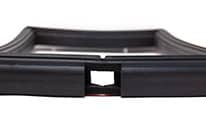
Bonding GasketsRubber profiles come in lengths that are cut-to-size and fabricated into finished gaskets. Examples include picture frame or bezel gaskets, O-rings, and gaskets with rounded corners.

There are four ways to bond or join the ends of rubber profiles.

  • Hot Splicing
  • Vulcanization
  • Cold Bonding
  • Molding

Each bonding or joining method has its advantages, but what’s the best choice for your application? Let’s examine each method in detail so that you can make the right decision. (more…)

Continue ReadingWhat’s the Best Way to Bond Rubber Gaskets?

Rubber Floor Mats Reduce Wear, Danger, and Noise

Rubber Floor MatsRubber floor mats for mobile equipment protect cabin floors from damage and operators from slip-and-fall hazards. Rubber flooring that’s laminated to acoustic insulation also absorbs noise from the engine compartment, which is often directly below the cab where the operator sits. Rubber matting can even be used as a kick-plate to protect cabin walls from contact with an operator’s boots.

For mobile equipment manufacturers, choosing the right type of cabin flooring is an important design consideration. The metal floors that are used inside a cab are durable, but operators track mud, snow, dirt, and water inside. Rubber floor mats can protect these metal surfaces from rust, corrosion, and scratching. Sheet metal flooring can become slippery, but rubber surfaces can offer surer footing.

As manufacturers are discovering, rubber floor mats are part of a complete cabin solution that promotes operator safety and equipment performance. By understanding how rubber flooring is designed and made, manufacturers can determine if a custom-fabricated solution is the right choice. For starters, however, engineers may want to compare rubber to other flooring materials. (more…)

Continue ReadingRubber Floor Mats Reduce Wear, Danger, and Noise

Custom Cab Insulation Reduces Sound, Costs, and Mistakes

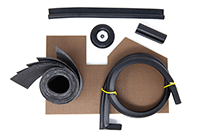
Custom Cab InsulationCustom cab insulation absorbs sound and provides a finished appearance to mobile equipment interiors. This acoustic insulation can be cut by hand and applied with spray adhesives, but that process is expensive, wasteful, and even hazardous to human health. Plus, manual cutting can result in cabin insulation that’s unappealing. Buyers who see mis-cuts may question the quality of your overall equipment design.

As mobile equipment manufacturers are discovering, there’s a better way to design and build quieter cabs. Custom-fabricated insulation that’s waterjet cut creates straight lines and chamfered angles. There’s less material waste, reduced cutting times, and closer control of material usage. Engineers can also get design assistance and help with material selection. Installers can avoid messy, toxic spray adhesives.

Parts marking, kitting, and packaging provide benefits, too. By taking a closer look at how custom-fabricated cab insulation is made, you can determine if it’s the right choice for your company. (more…)

Continue ReadingCustom Cab Insulation Reduces Sound, Costs, and Mistakes

Window Channel Selection Tips

Window ChannelWindow channels are rubber gaskets that hold window glass in place and help to secure window frames. They also eliminate rattling and provide protection against wind, water, dust, and debris. Applications for window channels include mobile equipment, defense, medical and health, stainless steel and food equipment, infrastructure, and aerospace.

For engineers and product designers, window channel selection begins by understanding the types of products that are available. It’s also important to define your application requirements and to compare product specifications. In this article from Elasto Proxy, you’ll learn how to select window channels that provide the sealing and insulation you need. (more…)

Continue ReadingWindow Channel Selection Tips

Industry 4.0 for the Real World

Industry 4.0Industry 4.0 is a catchphrase and buzzword that you can no longer afford to ignore. This fourth phase of the Industrial Revolution isn’t just about the increased digitization of manufacturing. It’s not just about advances in automation either. Industry 4.0 could change how your company competes and whether or not you’ll continue to win. Industry 4.0 isn’t just about technology. It’s about profitability. (more…)

Continue ReadingIndustry 4.0 for the Real World

Gasket Shapes for Extruded Rubber Seals

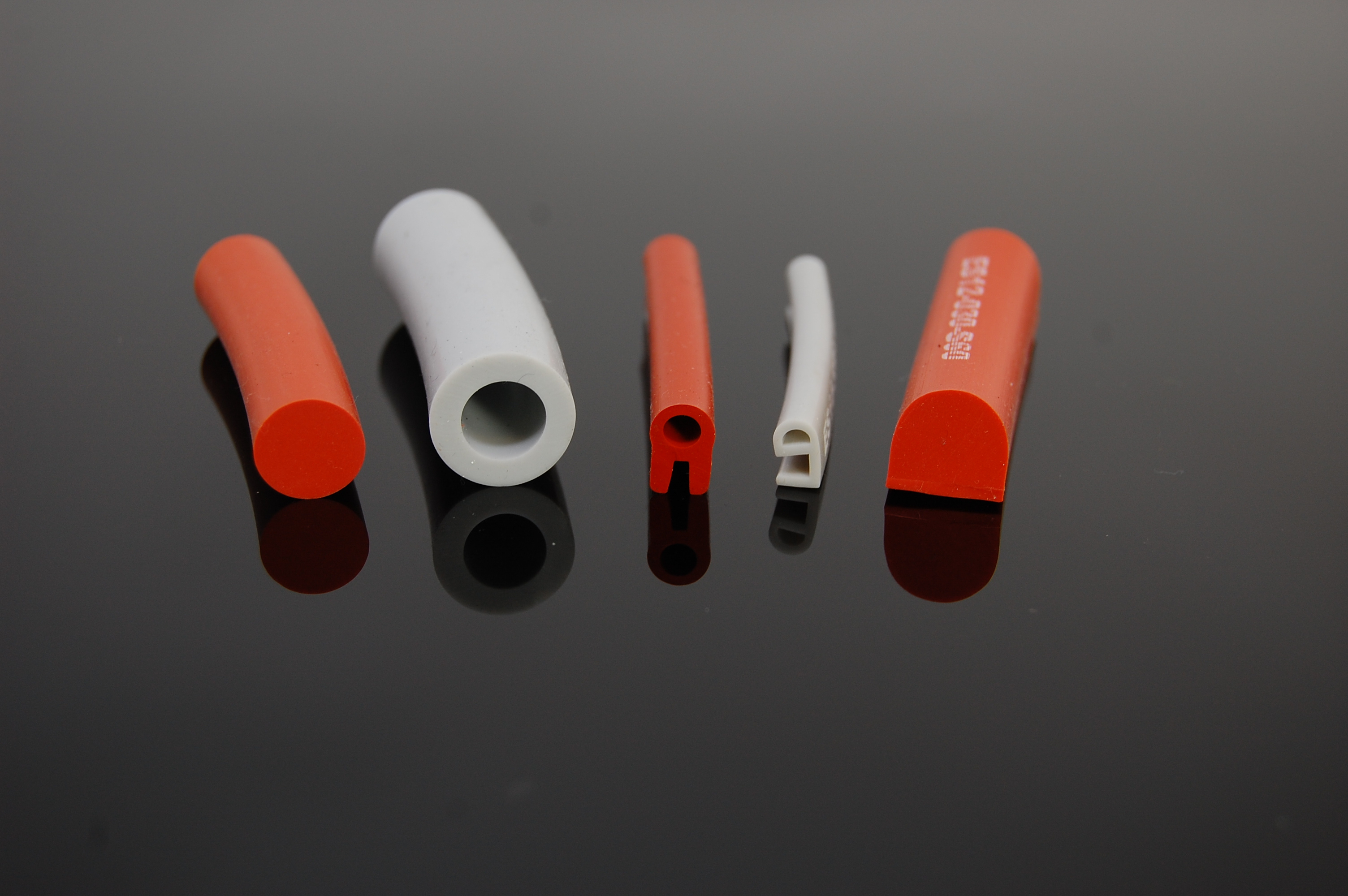
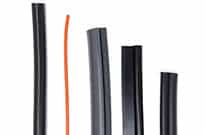
Shapes for SealsThere are four common shapes for extruded rubber seals. Do you know which shape is the right choice for your gasket application? Engineers and seal designers can choose P-shapes, D-shapes, E-shapes, and lip seals. Purchasing agents can either order cut lengths or buy spliced gaskets.

In this article from Elasto Proxy, you’ll learn when to choose and how to use the four common shapes for extruded rubber seals. We also invite you to stay tuned for a series of short videos that will explain what you need to know about P-seals, D-seals, E-seals, and lip seals. (more…)

Continue ReadingGasket Shapes for Extruded Rubber Seals

Rubber Bulb Trim Selection Tips

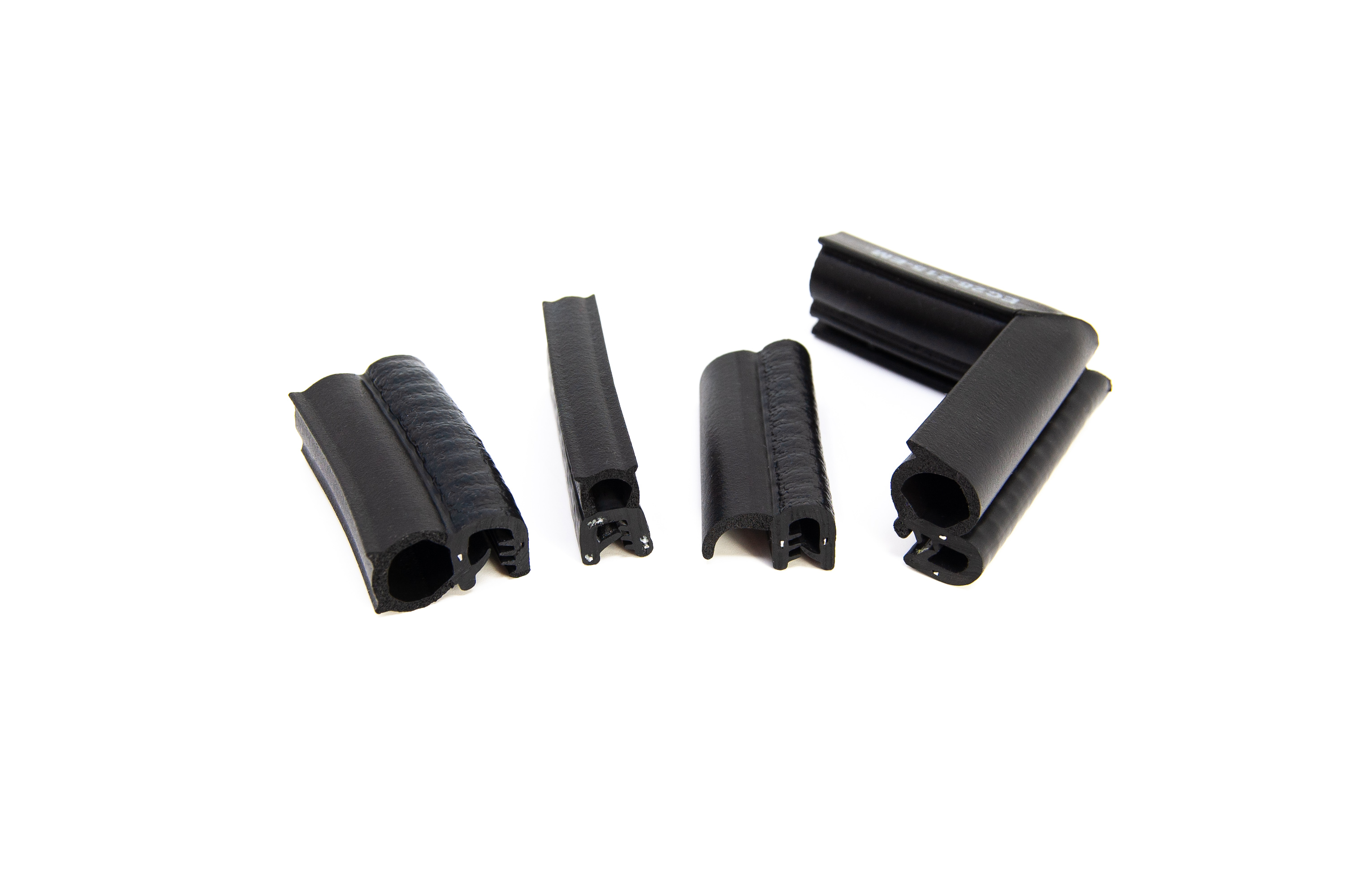
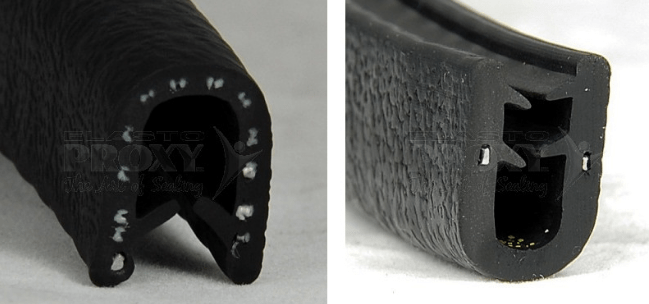
Bulb Trim Bulb trim provides sealing and insulation for doors, hatches, and enclosures with rounded corners. These industrial rubber products have separate bulb and retainer sections, each of which can have a different durometer or hardness. The bulb forms a seal under low-to-medium closure force. The retainer or trim is pressed into place over a flange and may have an integral tongue or metal clips to promote attachment.

Elasto Proxy supplies a wide variety of bulb trim seals and can custom-fabricate finished gaskets that save time and money on your assembly line. In this article, you’ll learn how to choose the right bulb trim for your application. Whether you work in engineering, procurement, or production, compound selection and part dimensions are critical. Product features vary, too. (more…)

Continue ReadingRubber Bulb Trim Selection Tips